

Essential Insights
-
Historical Significance and Resilience: In-wheel motors, originally developed by Ferdinand Porsche in 1900, have gained renewed attention despite past failures like Lordstown Motors; Elaphe, the motor supplier, continues to innovate and refine its technology.
-
Enhanced Performance: Elaphe’s in-wheel motors (188 hp, 1,254 lb-ft torque each) transform vehicles like the Ioniq 5, offering smoother power delivery, better handling, and exciting driving experiences compared to standard setups.
-
Advanced Control Systems: The motors’ direct placement in the wheels allows for rapid grip adjustments, improving vehicle dynamics and enabling exciting features like drift mode without sacrificing control.
-
Future Potential: Elaphe anticipates introducing mass-market vehicles powered by their technology in collaboration with OEMs, particularly performance hybrids by 2030, promising a significant shift in EV performance standards.
The Rise of In-Hub Motors
In-hub motors offer a promising glimpse into the future of electric vehicles. Historically, these motors date back to the early days of electric motoring, with Ferdinand Porsche’s innovation in 1900. Despite their long-standing presence, these motors have yet to achieve widespread adoption outside of niche markets, primarily e-bikes. Recent attempts, such as Lordstown Motors’ project, have faltered. Nevertheless, companies like Elaphe continue to refine in-hub technology, showing significant potential for performance vehicles. Their motors promise enhanced control, extended range, and improved handling characteristics.
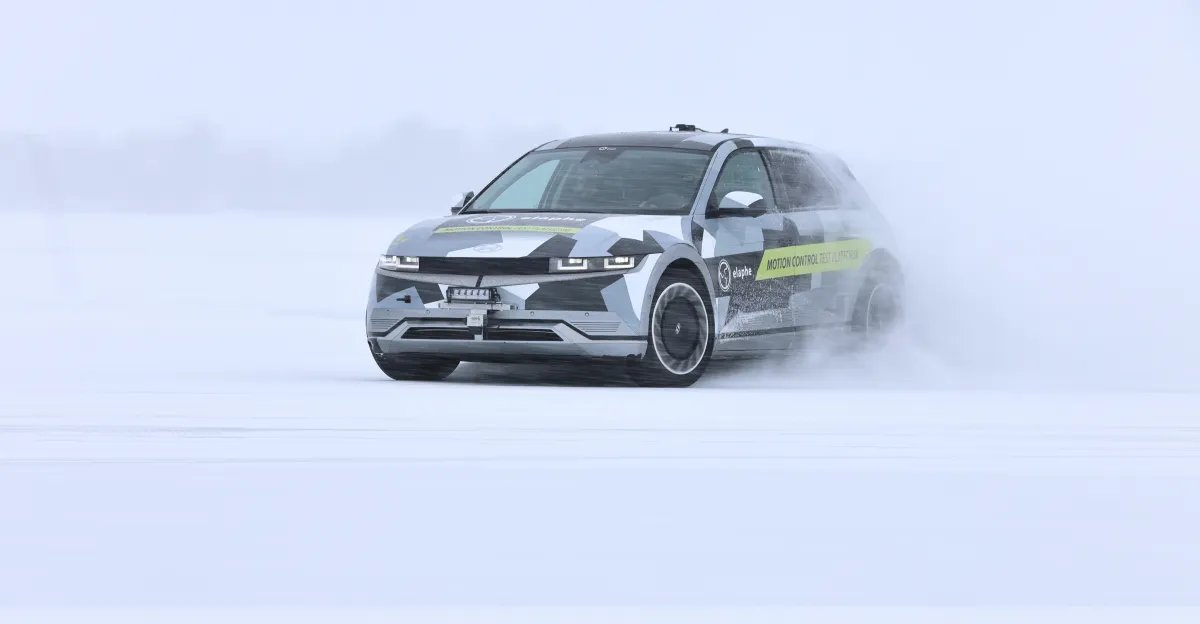
Testing Elaphe’s modified Hyundai Ioniq 5 proves this potential. The standard version struggles to deliver an engaging driving experience, highlighting the limitations of conventional electric systems. However, Elaphe’s in-wheel motors transform the Ioniq 5 into a nimble contender on ice. This is not just hype; it’s a profound shift in vehicle dynamics. By placing motors directly in the wheels, the system can respond to changing grip in real-time, offering smooth transitions in power and control. This feature allows drivers to maneuver effortlessly, making the driving experience not just manageable but enjoyable.
The Path to Practicality
The practicality of in-hub motors lies in their ability to redefine vehicle design. By eliminating the need for traditional drivetrains, manufacturers can produce lighter, more efficient vehicles. Additionally, the integration of precise control technology may counteract the challenges presented by the added weight of in-wheel motors. As Elaphe CEO notes, this innovation could lead to a more responsive ride without compromising comfort.
While the technology shows promise, widespread adoption remains uncertain. Elaphe aims to collaborate with various original equipment manufacturers (OEMs) to bring these advancements to market. Early models may surface as hybrids in the coming years, with a push for fully electric performance vehicles projected post-2030. As these developments unfold, enthusiasts can remain hopeful. The fusion of excitement and practicality in electric vehicles could truly enhance our driving experiences and contribute meaningfully to the rapidly evolving landscape of transportation.
Expand Your Tech Knowledge
Dive deeper into the world of Cryptocurrency and its impact on global finance.
Stay inspired by the vast knowledge available on Wikipedia.
TechV1
