

Top Highlights
- NASA celebrates the U.S.’s 250th birthday with cosmic images in red, white, and blue.
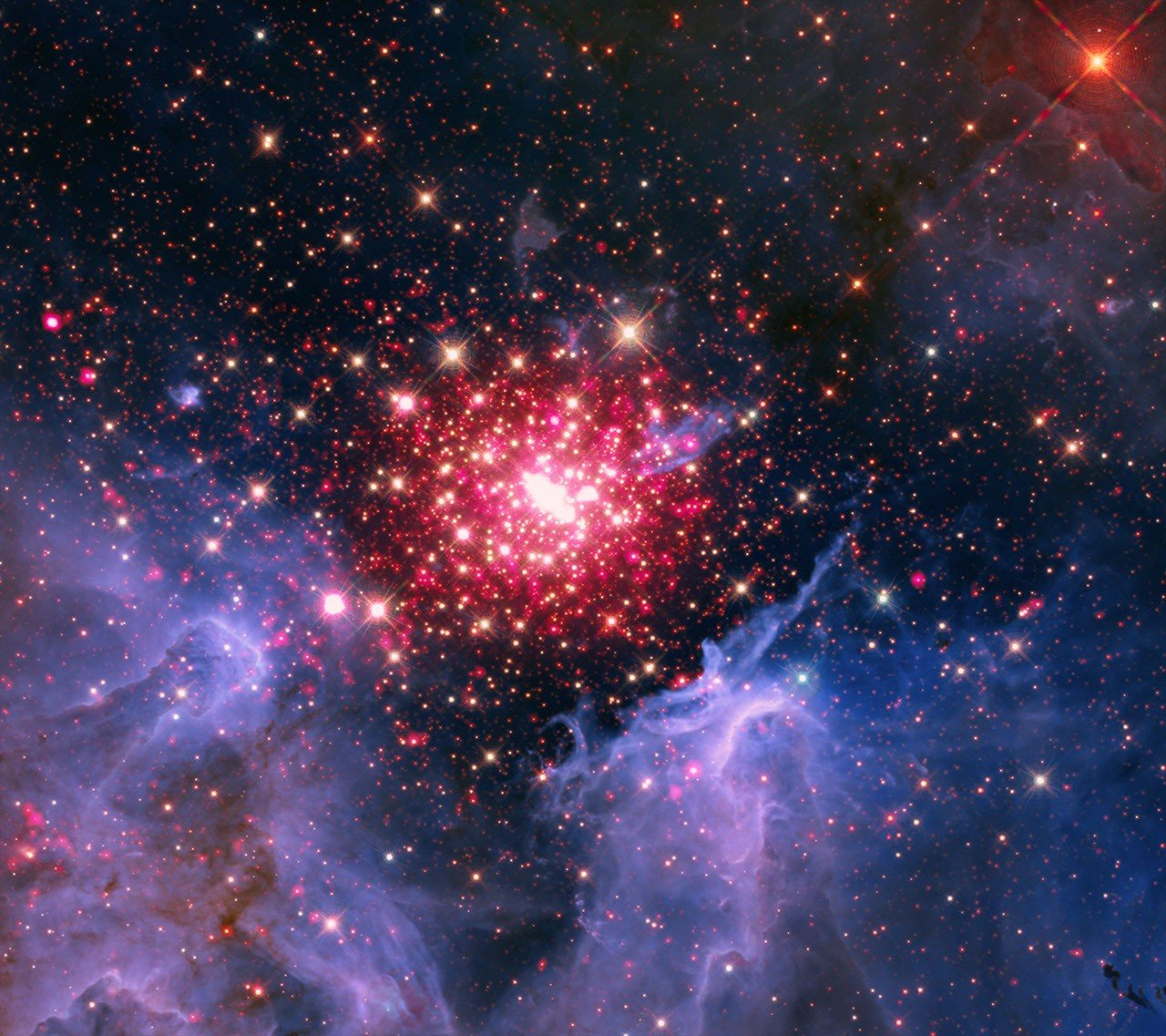
- The images feature Cassiopeia A, NGC 3603, Messier 94, and ZwCl 0024+1652.
- New sonifications turn astronomical data into sound, enhancing the visual experience.
- Collaboration includes experts from Chandra, Hubble, and the Universe of Learning program.
NASA’s Chandra Unveils Cosmic Imagery for a Historic Celebration
To mark the 250th birthday of the United States, NASA has revealed a stunning series of cosmic images featuring the universe in red, white, and blue. These images, crafted using data from the Chandra X-ray Observatory, represent a colorful celebration of the wonders that lie beyond our planet. Each image combines X-ray observations with optical and infrared data from renowned telescopes like the Hubble Space Telescope and the James Webb Space Telescope.
The collection starts with Cassiopeia A, a stellar remnant viewed in magnificent detail. X-rays from Chandra, shown in shades of blue and purple, illustrate the aftermath of a supernova explosion. This fiery remnant contains elements like iron, calcium, and oxygen, all visible through the intricate layering of colors that represents the expanding debris field. Complementing Chandra’s data, infrared images from Webb highlight cosmic dust and the explosion’s blast wave, painting a picture of destruction and rebirth.
The second image showcases the nebula NGC 3603, nestled within the Milky Way. Here, a cluster of stars shines prominently, surrounded by a swirl of red, white, and blue hues. The image beautifully combines X-ray data from Chandra and optical inputs from Hubble, revealing young stars and the gases that fuel their formation. This dynamic visual embodies the life cycles of stars, illustrating the ever-evolving landscape of our galaxy.
Sonifications: Experiencing the Universe Through Sound
Alongside the visual artistry, NASA has introduced new sonifications of three images featured in the lower panel. This innovative technique translates astronomical data into sound, allowing a new dimension of interaction with cosmic discoveries. The audio experiences aim to make the data accessible to a wider audience, creating an immersive way to engage with the universe.
For instance, the sonification of NGC 3603 employs piano notes to represent compact sources, while the diffuse X-ray emissions translate into a range of audio frequencies. In contrast, NGC 4736 produces a wind-like sound reflective of its X-ray emissions, while stars and background galaxies resonate with soft piano tones. Lastly, for the galaxy cluster ZwCl 0024+1652, the sounds vary from airy synthesizer notes reflecting superheated gas to piano notes illustrating individual galaxies.
These initiatives, facilitated by the Chandra X-ray Center and its collaborators, bridge the gap between visual and auditory experiences of space. With technological advances, NASA continues to explore innovative ways to share the findings of its missions, fostering a deeper understanding of the universe. This celebration not only honors a milestone in U.S. history but also emphasizes the agency’s commitment to unveiling the mysteries of the cosmos.
Discover More Technology Insights
Explore the future of technology with our detailed insights on Artificial Intelligence.
Explore past and present digital transformations on the Internet Archive.
Space
