

Top Highlights
- CHIME can detect faint hydrogen signals to study dark energy more efficiently.
- Dark energy drives cosmic expansion, causing potential universe catastrophes like the Big Rip.
- Hydrogen maps reveal matter distribution, helping understand dark energy’s influence.
- This new Canadian method enables faster, cheaper cosmos investigation, advancing cosmology research.
A faint glow from the early universe could help solve the mystery of dark energy
The universe is constantly expanding. But what controls this expansion? Scientists believe dark energy is the force behind it. Dark energy is mysterious and invisible. It makes up about 68% of all matter and energy in the universe. Yet, scientists struggle to understand what it truly is. Now, a new discovery involving hydrogen could point them in the right direction.
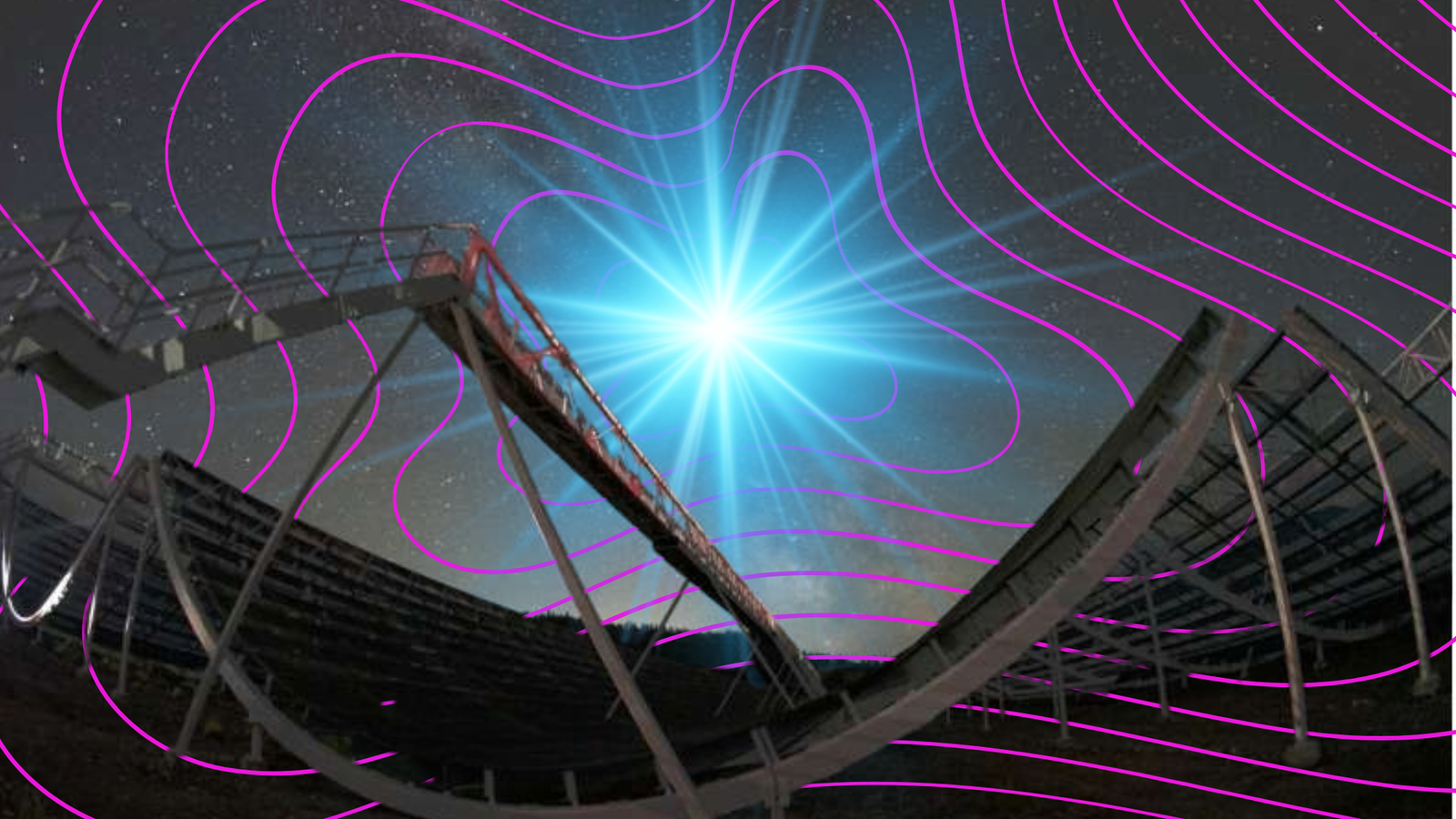
Hydrogen may be the most common element in the cosmos, but scientists could use it to do something unique: uncover the nature of dark energy. Researchers have found that the Canadian Hydrogen Intensity Mapping Experiment (CHIME) can detect a faint radio glow from hydrogen that dates back to the universe’s early days. This breakthrough offers a faster, cheaper way to study dark energy, marking a major milestone for the project.
This new method could reshape how we understand the universe. During a recent statement, Mark Halpern, the principal investigator of CHIME from the University of British Columbia, explained, “This is a completely new technique for probing the cosmos, delivered by an instrument that was conceived and built by Canadians. It’s a bold new step in the global cosmology program and a Canadian success story.”
### How Hydrogen Clues Could Unlock Dark Energy
Dark energy is difficult to understand because it acts strangely in the fabric of space. It began influencing the universe after the expansion from the Big Bang had paused. Imagine pushing a child on a swing, then stopping. Suddenly, without another push, the swing starts moving again and swings faster. That is similar to how dark energy behaves—acting unexpectedly, driving the universe to expand faster and faster.
This accelerating expansion worries scientists. If it continues to grow stronger, it could lead to a cold death of the universe or even cause space itself to rip apart, known as the “Big Rip.” On the other hand, if dark energy weakens, gravity might take over and cause the universe to contract again, ending in a “Big Crunch.” Because dark energy influences so much of what happens in space, understanding it is a top priority.
Hydrogen, the most abundant element in the universe, is at the center of this research. It was used in the past mainly to map matter in the universe by comparing data from other telescopes. Now, CHIME can map the faint radio signals from hydrogen all by itself, opening new possibilities for study.
### Using Hydrogen to Probe the Past
Hydrogen emits a faint radio signal when it is in a neutral, atomic form. This radio emission acts as a cosmic tracer. It helps scientists see how matter is spread across space. Once, mapping this hydrogen relied on combining data with other galaxy surveys. That process was costly, requiring millions of dollars, and could only focus on dense regions of the universe.
Now, with CHIME, scientists have shown they can map hydrogen directly from its radio glow, making large-scale scans faster and more affordable. The team already analyzed 94 nights of data from 2019. Their findings showed they could detect hydrogen from when the universe was about 5 billion years old—roughly half its current age. The data suggests that around 2% of hydrogen was in neutral atomic form at that time, similar to other measurements.
The team has collected seven years of data. They plan to use it to look even farther back, to when the universe was just 3 billion years old after the Big Bang. This research was published in The Astrophysical Journal and may lead to new insights into how galaxies formed and evolved.
By observing the faint glow from hydrogen in the universe’s past, scientists hope to understand how dark energy has worked over billions of years. This approach offers a promising window into one of the most mysterious forces shaping the cosmos.
Continue Your Tech Journey
Learn how the Internet of Things (IoT) is transforming everyday life.
Access comprehensive resources on technology by visiting Wikipedia.
Space
