

Fast Facts
- Ancient asteroid impacts significantly shaped Earth and aided habitability.
- Collisions created hydrothermal systems essential for early life conditions.
- Researchers modeled impact scenarios revealing increased crust permeability from collisions.
- Impact bombardment was crucial for prebiotic chemistry and hydrothermal environments.
Asteroids as Catalysts for Life
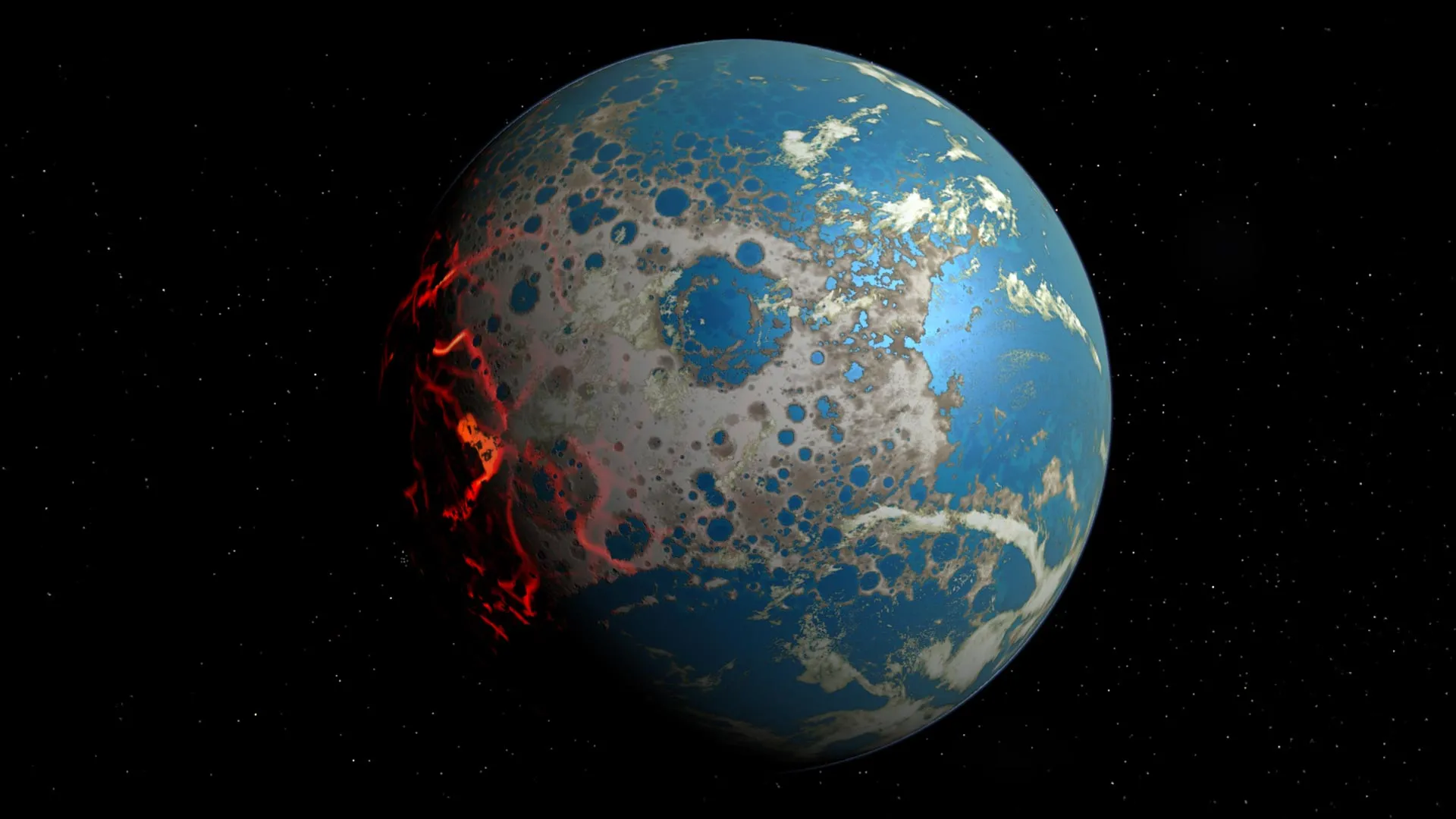
New research from scientists at the Southwest Research Institute (SwRI) offers a compelling perspective on Earth’s violent beginnings. They suggest that ancient asteroid impacts did more than reshape our planet’s surface. These high-velocity collisions created extensive hydrothermal systems, potentially paving the way for life.
When Earth formed about 4.5 billion years ago, it entered an era of intense asteroid bombardment. These impacts shattered rock and generated extreme heat. The heat, combined with the planet’s natural geothermal energy, drove hot water through the fractured crust. This process resembled the geysers found today in Yellowstone National Park. Researchers modeled asteroid impacts across varying sizes and speeds. Their simulations indicate that a single large impact could generate as much hydrothermal activity as 100 times the current activity around Yellowstone.
Amanda Alexander, lead author of the research, emphasizes that this study opens a new understanding of how life might have emerged. Asteroid impacts, often viewed as destructive events, played a vital role in creating habitable environments. Repeated collisions forged pathways in the crust, allowing water to circulate. These pathways were crucial for prebiotic chemistry, setting the table for life to take root.
Long-Term Impacts on Earth’s Geochemistry
The models reveal that the energy of collisions primarily controlled how much fractured rock remained permeable. Factors such as the speed and size of the impacting asteroid also influenced this permeability. The researchers estimated that by 4.3 billion years ago, the upper 5-mile shell of the Earth’s crust was highly permeable, likely remaining so until about 3.5 billion years ago.
The cumulative effects of ongoing impacts shaped the geochemical landscape of early Earth. Hydrothermal systems likely altered the crust’s structure, creating environments rich in the necessary elements for life. Understanding these ancient systems helps clarify how early organisms may have thrived in extreme conditions, highlighting the dual role of asteroid impacts as destructive forces and life-giving catalysts.
As research continues, it becomes clear that the narrative of our planet’s origins is complex. Asteroids did not merely deliver destruction; they laid the groundwork for life itself. This evolving understanding offers a fresh perspective on both Earth’s history and the potential for life beyond our planet.
Stay Ahead with the Latest Tech Trends
Learn how the Internet of Things (IoT) is transforming everyday life.
Discover archived knowledge and digital history on the Internet Archive.
TechV1
