

Summary Points
- Uranus, an ice giant, is challenging to observe compared to other planets.
- The author finally viewed Uranus through a large telescope at Bryce Canyon.
- A conjunction of Mars and Uranus occurs on July 4, 2026.
- Use Mars as a guide to locate Uranus in the sky.
Strategies for Locating Uranus This Week
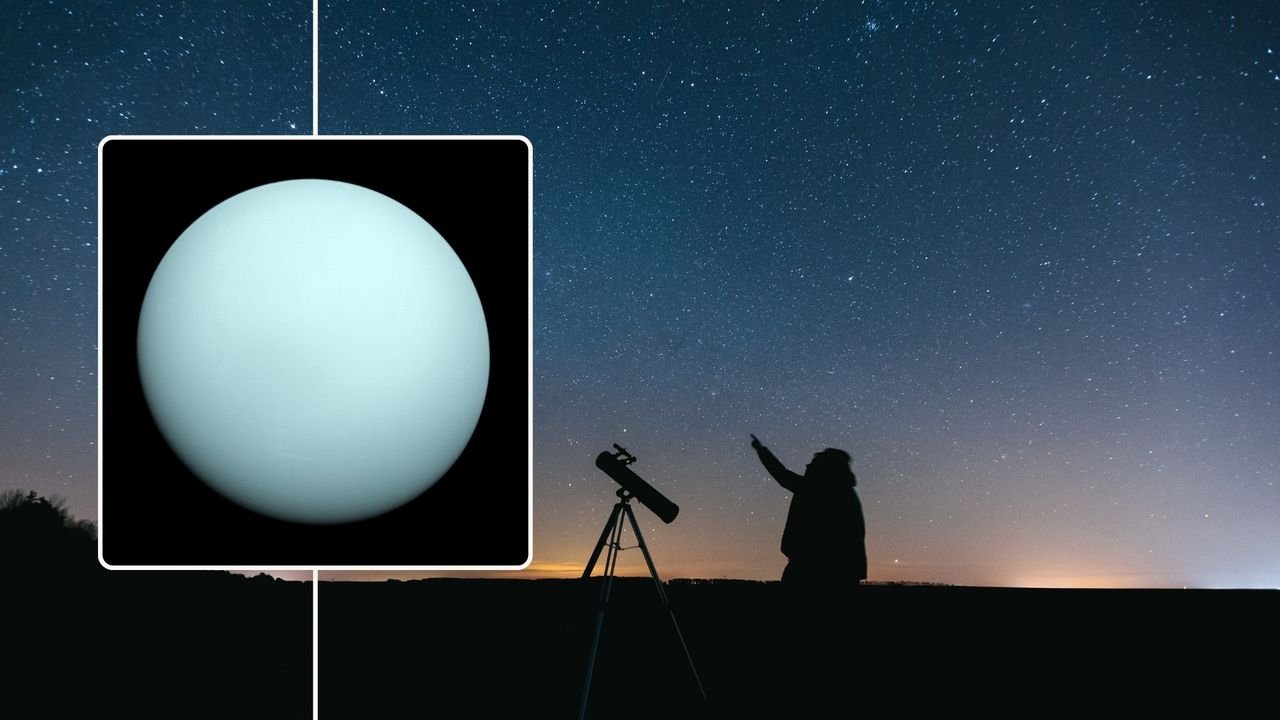
Finding Uranus can feel like an uphill battle. This week, however, presents a unique opportunity to see the seventh planet. It will be in conjunction with Mars, acting as a reliable guidepost in the vast expanse of the night sky. Mars shines at a magnitude of 1.3, making it more visible than Uranus, which appears at a faint 5.7. The two planets will be approximately 11 arc minutes apart, making it easier to identify Uranus by looking just above Mars.
The best time to observe this conjunction is about 3:45 a.m. local time on July 4. Don’t be confused by the early hour; the planets will be low on the eastern horizon, close to the Pleiades open cluster. The clear skies will be essential, so aim for a location free from light pollution. Bringing binoculars, preferably 10×50, can enhance your view. While Uranus may appear as a subtle blue-green dot, the thrill lies in discovering it with your own eyes.
Using Mars as a reference point can simplify what has traditionally been a challenging search. Stargazers often face uncertainty, constantly questioning if they’re looking at a star or the distant planet. This conjunction removes that guesswork. Your reward will be the unique experience of directly observing a body that is nearly 1.8 billion miles away.
The Significance of the July 4 Conjunction
The choice of date—July 4—is historically interesting, aligning with the 250th anniversary of the United States. Uranus takes 84 years to orbit the sun, having completed about three orbits since the Declaration of Independence was signed. Its discovery in 1781 by William Herschel was a landmark event, expanding our knowledge of the solar system. When Uranus was found, only six planets were known, marking a significant shift in our understanding of celestial bodies.
This week, Uranus is not just a distant ice giant; it symbolizes a connection to our astronomical heritage. As we observe it alongside Mars, we are reminded of the meticulous exploration that led to its identification. Future astronomy involves both established planets and the search for new ones. The quest continues for a ninth planet, showcasing the ever-expanding boundaries of our cosmic curiosity.
As you prepare for observing this conjunction, remember that every sighting of Uranus is a milestone. The challenges of finding it only heighten the joy of discovery, making it a treasured memory for stargazers. Whether you are an experienced observer or a casual enthusiast, take the time to witness this celestial event. Armed with knowledge and the right tools, you can successfully spot Uranus this week.
Discover More Technology Insights
Stay informed on the revolutionary breakthroughs in Quantum Computing research.
Access comprehensive resources on technology by visiting Wikipedia.
Space
