

Summary Points
- Reciprocity complicates independent control of heat absorption and emission in materials.
- New magneto-optical devices can separate thermal absorption and radiation directions.
- Researchers created a programmable material that retains thermal configurations without power.
- This technology aims for compact devices effectively managing heat like circuits handle electricity.
A Breakthrough in Thermal Management
In most materials, heat absorption and emission work hand in hand. This principle of reciprocity has hindered scientists’ efforts to control thermal energy independently. When a material absorbs heat efficiently from a specific direction, it usually emits that heat in the same way. This intertwined behavior limits the ability to direct heat precisely. However, new advancements in material science may change this landscape.
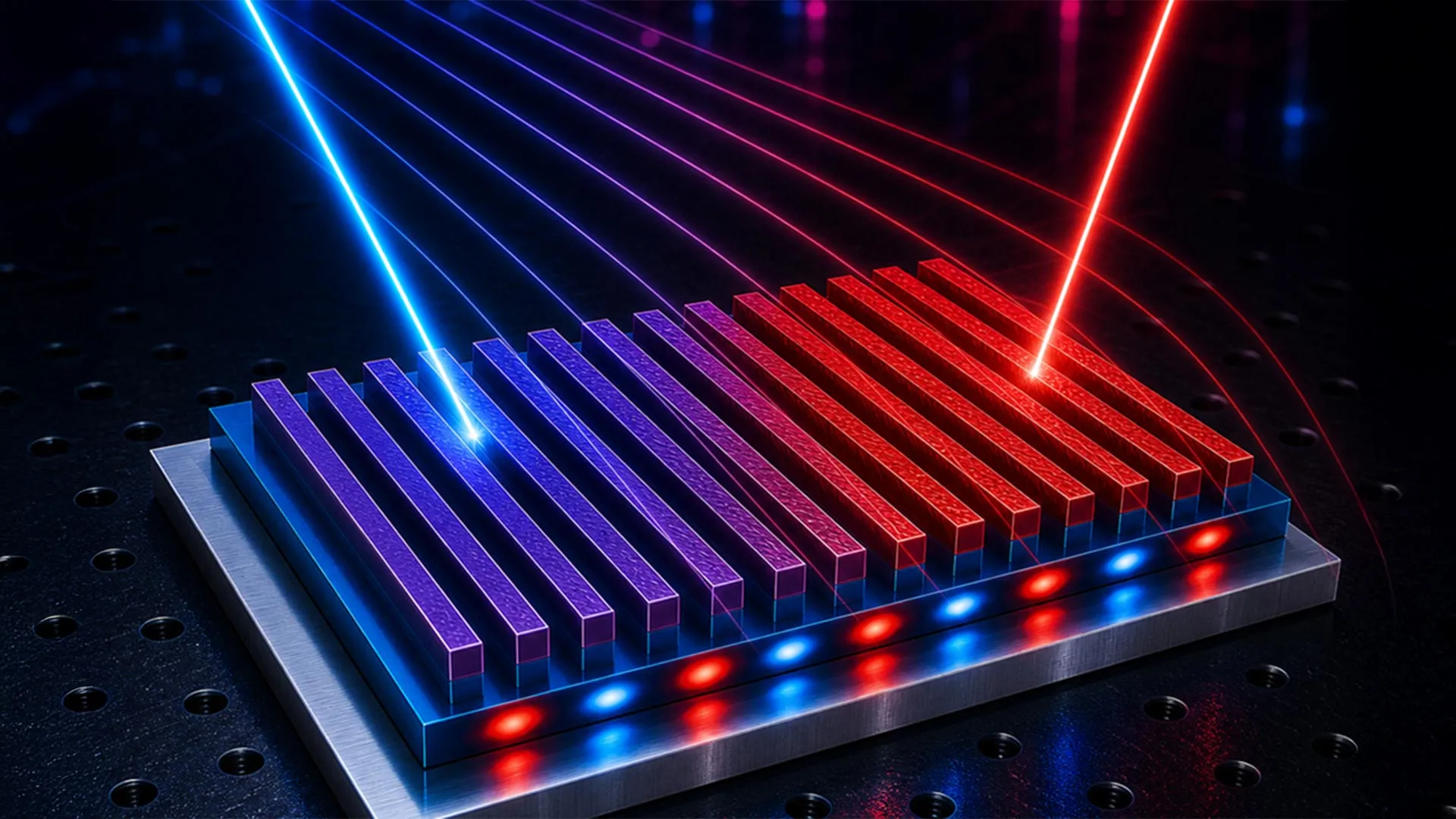
A team at Osaka Metropolitan University has developed a groundbreaking device using magneto-optical materials. These materials can alter their interaction with light when exposed to a magnetic field, allowing engineers to tweak their thermal behavior. By combining this technology with a phase-change material known as GST, the researchers have created a device capable of controlling the direction of thermal radiation. The ability to switch this function on or off—and retain its configuration even after power is turned off—offers a level of control akin to programming data in a computer chip.
Transforming Thermal Energy Management
The implications of this new material extend beyond theoretical marvels. Current technologies often suffer from inefficiencies when it comes to thermal management. Traditional devices require light to strike at steep angles for effective absorption and radiation. The new design eliminates this barrier, allowing for more effective heat management even when light hits the material almost straight on.
Additionally, past devices struggled with inconsistent switching between “on” and “off” states. Many lost their stored configurations after power was removed. The new magneto-optical device reliably switches between states while preserving its memory, making it vastly more practical for various applications. This reliability opens doors to a range of technologies that depend on precise thermal control, including infrared sensors and energy-efficient systems.
As researchers aim to develop compact devices that manage heat like electronic circuits control electricity, the potential for smarter infrared technologies looms large. While the path to widespread adoption will require further refinement, this development marks a crucial advance toward programmable thermal devices that could revolutionize how we interact with energy in our daily lives.
Continue Your Tech Journey
Stay informed on the revolutionary breakthroughs in Quantum Computing research.
Stay inspired by the vast knowledge available on Wikipedia.
TechV1
