

Top Highlights
- NASA celebrates JWST’s four-year anniversary with stunning Centaurus A images.
- Centaurus A’s unique shape results from a collision of two galaxies.
- JWST’s infrared capabilities reveal structures invisible to previous telescopes.
- Ongoing research explores Centaurus A’s black hole effects on star formation.
### Celebrating Four Years of Discovery
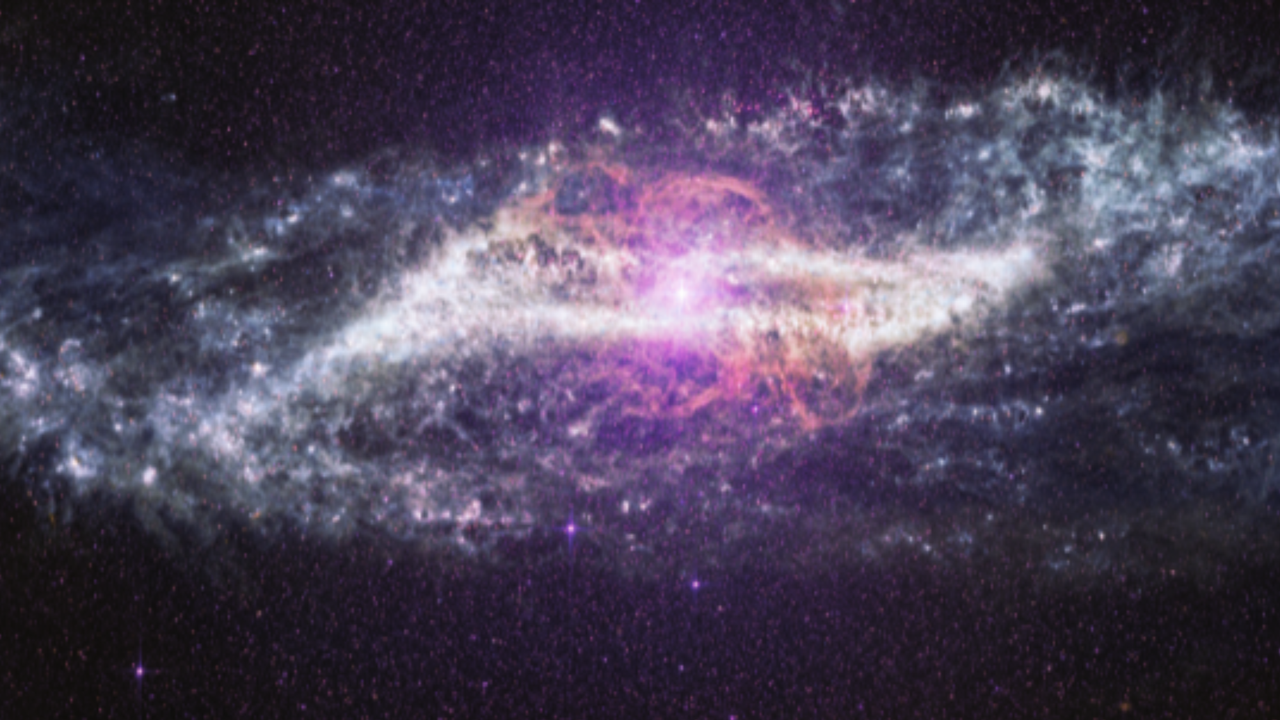
July 2026 marks a significant milestone for the James Webb Space Telescope (JWST). It has been four years since NASA unveiled its stunning images to the public, initiating a new era in astronomy. To celebrate this anniversary, NASA released an awe-inspiring image of Centaurus A, an oddly shaped galaxy located about 11 million light-years from Earth. This galaxy owes its unique structure to a collision between two galaxies approximately 2 billion years ago. The merger provided an abundance of gas and dust, which are essential for star formation. It also fueled the supermassive black hole at its center, creating a bright and turbulent active galactic nucleus (AGN) that emits powerful jets of plasma.
Despite being much closer than many of the early galaxies studied by the JWST, Centaurus A offers invaluable data. Its intricate details have eluded previous telescopes, making this latest observation essential. “No single telescope tells the whole story,” said Shawn Domagal-Goldman, division director of Astrophysics at NASA Headquarters. The JWST opens new windows into wavelengths and details that were previously inaccessible, allowing scientists to examine structures and processes in unprecedented ways.
### Advanced Technology Unveils Hidden Mysteries
The JWST’s capabilities stem from its advanced infrared vision. The dense dust shrouding Centaurus A blocks visible light, which the Hubble Space Telescope relied on for its observations. In contrast, infrared light penetrates these dense clouds, revealing hidden structures. The now-retired Spitzer Space Telescope previously studied this galaxy in infrared, but it lacked the power to resolve individual stars and finer details.
The JWST, equipped with the Mid-Infrared Instrument (MIRI) and the Near-Infrared Camera (NIRCam), has taken these observations to a new level. Its images showcase millions of stars and dense stellar nurseries where new stars are born. Yet, intriguing mysteries remain. For instance, an S-shaped feature discovered in the MIRI image poses unanswered questions about its formation and the role of the central black hole.
JWST data indicates that this black hole significantly influences the galaxy’s morphology. It reveals fast-moving ionized gas moving away from the black hole and warmer molecular hydrogen in a warped disk near the galaxy’s center. This evidence suggests that black holes can both stimulate intense star formation and stifle it by depleting the gas necessary for creating new stars.
The exploration of Centaurus A through the JWST is reshaping our understanding of galaxy evolution. As scientists analyze this data, they can build a more intricate cosmic history, not just for Centaurus A, but for other galaxies as well. The journey through the cosmos continues, promising further discoveries in the years ahead.
Stay Ahead with the Latest Tech Trends
Explore the future of technology with our detailed insights on Artificial Intelligence.
Stay inspired by the vast knowledge available on Wikipedia.
Space
