

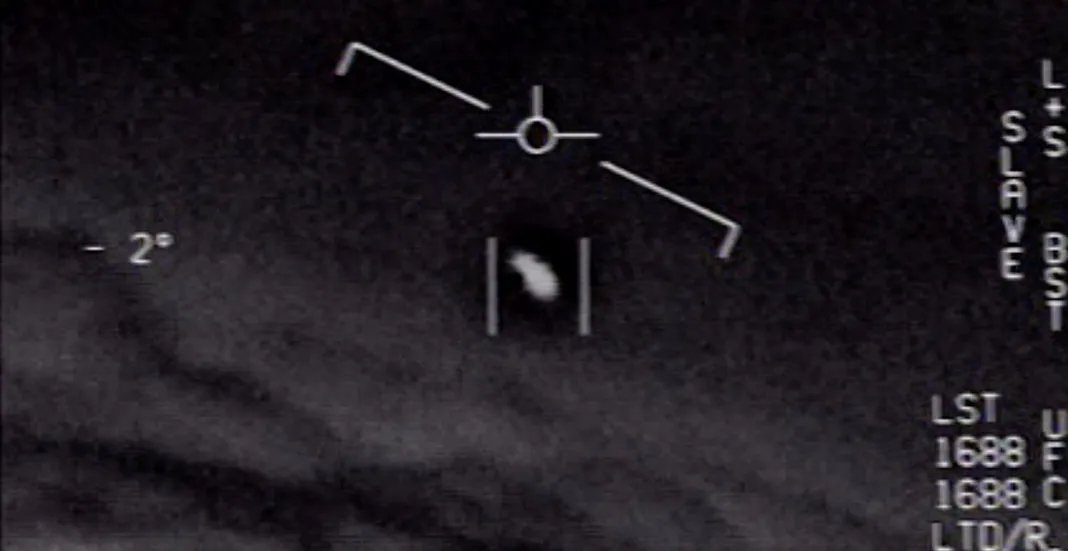
Fast Facts
- Avi Loeb will lead the UAP Science Advisory Council established by multiple agencies.
- The Council aims to investigate the nature of unidentified anomalous phenomena (UAP).
- Loeb’s team comprises experts from diverse backgrounds, enhancing Council’s credibility.
- His controversial claims about alien life include Oumuamua and oceanic metal spheres.
Expertise or Fringe? The Debate Over Loeb’s Leadership
The White House recently appointed Avi Loeb to lead the Unidentified Aerial Phenomena (UAP) Science Advisory Council. Loeb, an astrophysicist from Harvard, has gained notoriety for his claims about alien life. His position may lend credibility to an initiative focused on the scientific exploration of unexplained aerial phenomena. However, questions arise about whether his controversial views will guide sound investigation or sensationalism.
Loeb’s reputation rests on a long career filled with significant academic contributions. He has surrounded himself with professionals from diverse fields, including physics, psychology, and philosophy. Yet, his assertions, such as suggesting that the interstellar object Oumuamua was an alien probe, draw skepticism. Critics argue that these claims divert resources from serious scientific inquiry.
The establishment of the UAP Science Advisory Council signals a commitment to investigate unexplained phenomena rigorously. It offers a chance to prioritize scientific methodologies in what has often been a sensationalized arena. The presence of experts from varied disciplines may provide balance. Insights from psychologists and philosophers can enrich discussions, taking into account not just the physical evidence, but societal implications as well.
Balancing the Fine Line Between Inquiry and Speculation
Navigating the complexities of UAP research involves balancing curiosity with caution. The potential implications of alien contact bring excitement but also anxiety. A focused, methodical approach to studying UAP fosters a responsible discourse. Instead of yielding to immediate speculative narratives, the council has the opportunity to establish rigorous standards for evidence and analysis.
Establishing a governing board for UAP research encourages transparency and promotes critical thinking. The challenge lies in holding to these standards while staying open to investigation. Loeb’s past claims may evoke skepticism, but his appointment shouldn’t overshadow the objective. The council must maintain a clear focus on scientific validation, ensuring headlines do not dictate research agendas.
The pursuit of understanding UAP is vital. The council could illuminate our knowledge of the universe. How it navigates the tumultuous waters of public perception and scientific integrity will shape the future of this inquiry. Congress, the Pentagon, and the intelligence community have shown seriousness in exploring the unknown. Real progress will depend on whether this will become a quest for truth or a platform for sensationalism.
Discover More Technology Insights
Explore the future of technology with our detailed insights on Artificial Intelligence.
Stay inspired by the vast knowledge available on Wikipedia.
TechV1
