

Essential Insights
-
Testing Remotely Piloted Operations: NASA and partners recently evaluated a ground-based radar tool integrated into urban airspace operations, aiming to enhance the efficiency of transporting people and goods using eVTOLs.
-
Key Flight Tests: On August 21, a Bell 206 helicopter flight tested the Collins Aerospace radar, crucial for detecting and avoiding nearby aircraft, marking progress in the safe operation of remotely piloted aircraft.
-
Data Integration Success: The Collins radar successfully provided real-time air traffic data to NASA’s Command Center, demonstrating effective data exchange capabilities crucial for future shared airspace management.
-
Future of Urban Transportation: Ongoing collaborations between NASA and Wisk Aero aim to safely integrate eVTOLs into airspace, improving transportation and delivery services in congested urban communities.
NASA, Partners Push Forward with Remotely Piloted Airspace Integration
NASA and its partners recently made significant progress in integrating remotely piloted aircraft into urban airspace. On August 21, they conducted a successful flight test in Hollister, California. This test involved Wisk Aero flying a Bell 206 helicopter, which helped evaluate a new ground-based radar developed by Collins Aerospace.
The goal of this initiative is clear: to allow operators to transport people and goods more efficiently while maintaining safety in crowded skies. As urban areas grow, so does the need for innovative transportation solutions. Researchers are focused on using electric vertical takeoff and landing vehicles (eVTOLs) to meet this need.
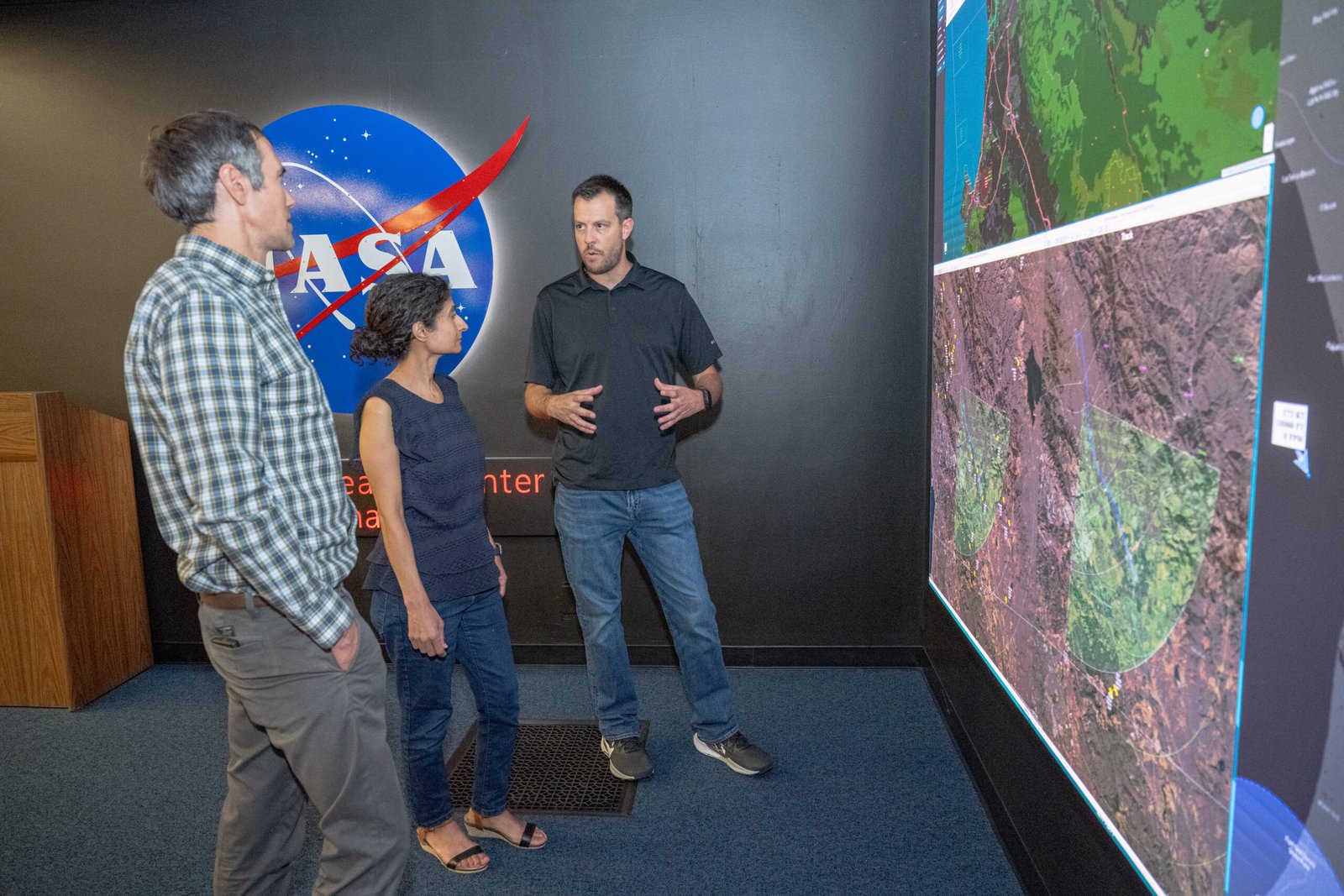
During the flight test, the Collins radar provided crucial location data about the helicopter. This capability enables future remotely piloted aircraft to detect and avoid other planes, ensuring smoother operations in shared airspace. Notably, the radar transmitted real-time information to NASA’s Mission Visualization Research Command Center in California’s Silicon Valley.
Initial findings from this test showed that the radar effectively monitored airspace. This success builds on previous work from November 2024 and lays the groundwork for future testing involving other advanced technologies.
Remotely piloted eVTOL aircraft could revolutionize transportation, especially in congested urban communities. They promise to offer more affordable and accessible delivery services, reducing the strain on ground transportation systems.
NASA and Wisk continue their collaboration on eVTOL technology. Their upcoming flight tests aim to gather data that will enhance understanding of these aircraft’s performance. Each step forward brings society closer to a future where air travel is part of everyday life.
As this technology advances, the potential benefits for urban transportation and logistics become increasingly clear. These innovations could ultimately transform how people and goods move, leading to improved quality of life in busy city environments.
Stay Ahead with the Latest Tech Trends
Dive deeper into the world of Cryptocurrency and its impact on global finance.
Discover archived knowledge and digital history on the Internet Archive.
SciV1
