

Summary Points
- Severny Island features alluvial fans formed by sediment from rivers.
- It has glaciers melting into streams, supplying fan-building sediment.
- Warmer temperatures increase river flow and sediment transport during summer.
- Recent studies show glaciers on Severny Island are thinning significantly.
Fans of the Arctic – NASA Science
Editor’s Note: Today’s story is the answer to the July Puzzler.
Understanding Alluvial Fans
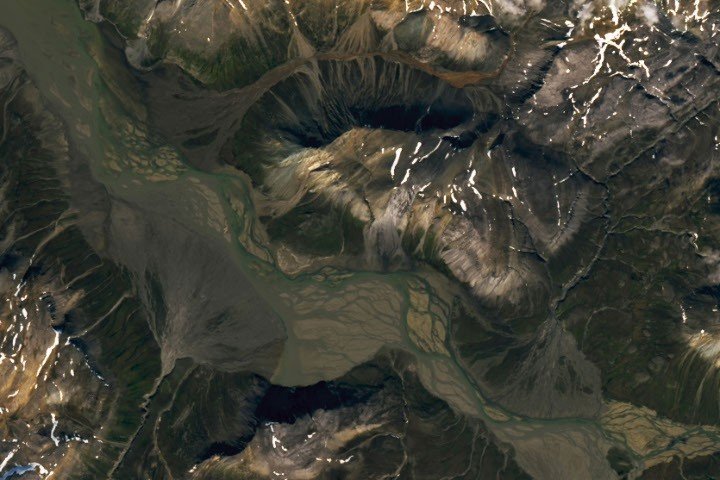
The Arctic holds secrets beneath its icy veneer, particularly on Severny Island in the Russian Arctic. Here, rivers cascade down mountainous terrain, creating alluvial fans—a unique geological feature. These fans form when rivers slow upon reaching flatter land, spreading their sediment into cone-shaped deposits.
Severny Island, a desolate part of the Novaya Zemlya archipelago, is largely glacial. Glaciers end in the sea or on land, feeding glacial streams that carve pathways through the rugged landscape. Alluvial fans typically materialize at the base of steep mountains, where narrow channels widen and slow down. As rivers meander, they deposit material over time, forming striking fan-shaped features.
These alluvial fans become particularly pronounced in the context of the island’s geographic and climatic elements. Seasonal snowmelt and glacial runoff play pivotal roles in maintaining the rivers’ sediment-laden flow. During warmer months, hydrologists observe increased river volumes. More water means more sediment is transported from the mountains, contributing to alluvial fan formation. Glaciers also contribute as they erode materials while descending.
The Impact of Climate Change
Climate change significantly influences the dynamics of Severny Island’s glaciers. Smaller, land-terminating glaciers face heightened risks due to global warming. Satellite observations reveal that glaciers on Severny Island have thinned over recent decades, particularly at lower elevations. This thinning can lead to changes in sediment delivery to rivers, potentially impacting alluvial fan growth.
Remote, ice-covered regions such as Severny Island remain understudied, yet satellite technology provides insights into glacier health. Recent digital elevation models show that the glaciers across the Novaya Zemlya archipelago experienced significant thinning in the 2000s and 2010s.
As warming temperatures continue, understanding these alluvial fans gains importance. They may serve as indicators of ongoing environmental change. The intricate relationship between glaciers, rivers, and sediment transport highlights the delicate balance within these Arctic ecosystems. Keeping an eye on these developments can help scientists predict future changes in the Arctic landscape.
Continue Your Tech Journey
Learn how the Internet of Things (IoT) is transforming everyday life.
Explore past and present digital transformations on the Internet Archive.
Space
