
Close Menu
    Facebook X (Twitter) Instagram
    Sunday, July 19
    Top Stories:
    • Hope in a Pill: Antidepressants May Alleviate Long COVID Fatigue
    • Sweet Relief: Therapy Boosts Brain Cancer Survival in Mice by 50%
    • Alibaba challenges Nvidia with open-source AI ecosystem dominance
    Facebook X (Twitter) Instagram Pinterest Vimeo
    IO Tribune
    • Home
    • AI
    • Tech
      • Gadgets
      • Fashion Tech
    • Crypto
    • Smart Cities
      • IOT
    • Science
      • Space
      • Quantum
    • OPED
    IO Tribune
    Home » Redefining Flight: Unleashing the Future of Wing Design
    Space

    Redefining Flight: Unleashing the Future of Wing Design

    Staff ReporterBy Staff ReporterJuly 18, 2026No Comments3 Mins Read
    Share Facebook Twitter Pinterest LinkedIn Tumblr Reddit Telegram Email
    Share
    Facebook Twitter LinkedIn Pinterest Email

    Quick Takeaways

    1. NASA tested a new lightweight wing design for potential fuel efficiency.
    2. SWEET-15 wing passed tests, confirming its strength beyond design limits.
    3. Unique manufacturing methods and materials enhance future aircraft design potential.
    4. Data analysis will guide advancements in efficient aviation technologies.

    Navigating Innovation in Aircraft Design

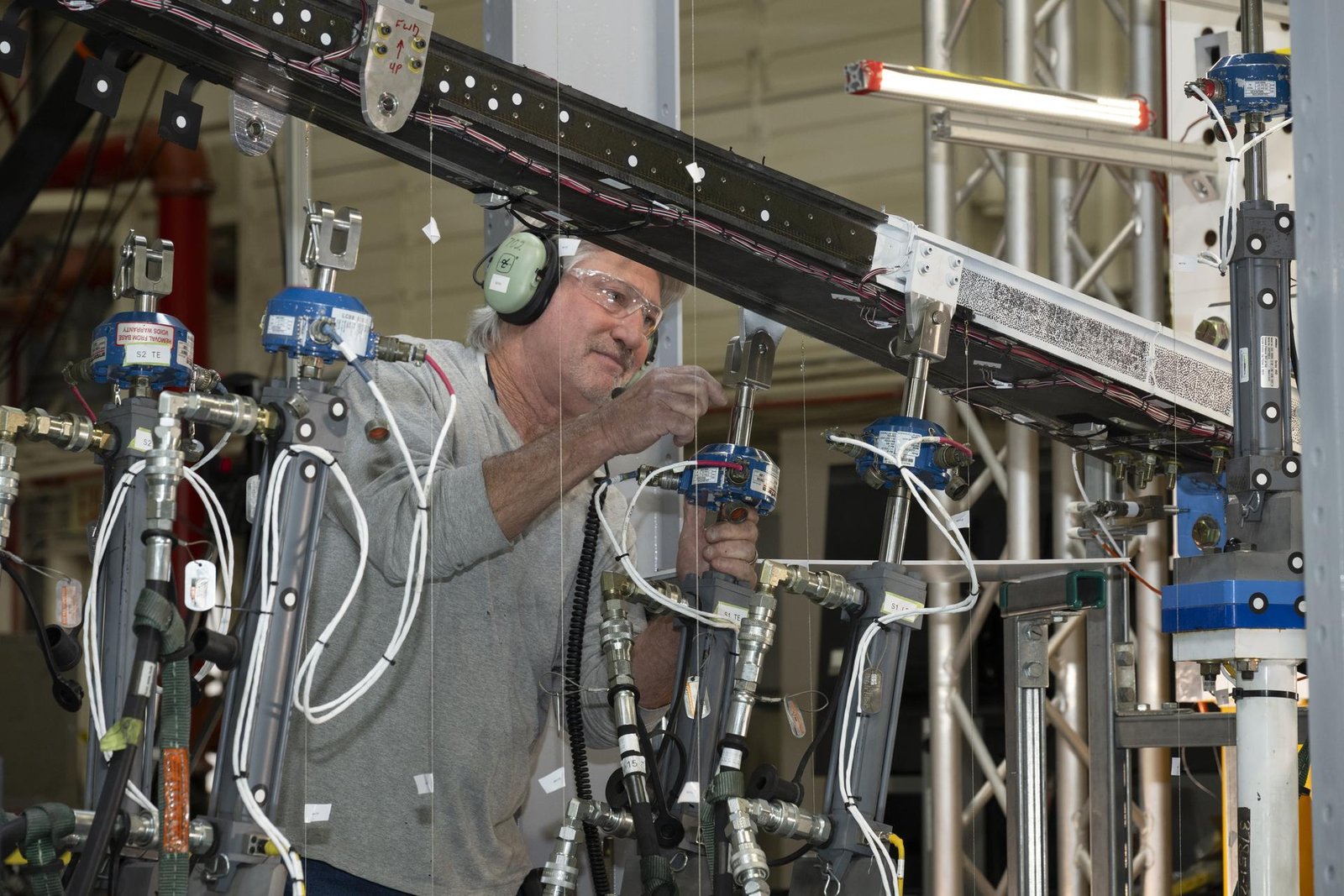
    NASA researchers recently tested a new wing design, known as the Structural Wing Experiment Evaluating Truss-bracing (SWEET-15). This wing, measuring 15 feet long, features a lightweight and aerodynamic structure. Tests push the limits of design, giving insights into its potential for future ultra-efficient aircraft. The design builds on NASA’s earlier Transonic Truss-Braced Wing concept, aiming to shape the next generation of commercial airliners.

    The study focuses on weight reduction and fuel savings. The SWEET-15 design integrates five advanced composite manufacturing technologies. Engineers crafted this innovative structure at NASA’s Langley Research Center in Hampton, Virginia, before sending it to the Armstrong Flight Research Center in Edwards, California, for rigorous testing. Here, team members bent the wing under controlled conditions, using numerous sensors to monitor strain and load responses throughout the structure.

    The sensors offered data that validated the team’s computer models. The wing successfully endured the forces expected in flight, providing confidence in both the new design and the manufacturing methods used. This approach, developed at Langley, aims to create lighter, stronger aerospace components, which is crucial for the future of efficient aviation.

    Testing Beyond Limits

    The testing program included a deliberate “test-to-failure” phase. Engineers increased loads beyond the wing’s design limits to assess its behavior under extreme conditions. The wing ultimately failed at approximately 127% of its design load limit. Visible damage occurred near the back edge and upper wing cover, revealing critical data about the structural joints and their responses under unexpected forces.

    This evaluation is a landmark achievement, marking the first time a composite truss-braced wing has undergone such comprehensive structural testing. Collaboration among NASA’s various centers made this possible, alongside advanced data-gathering technologies like the Fiber Optic Sensing System.

    Data collected during this experimental phase will inform future aviation design efforts. The work contributes to NASA’s Subsonic Flight Demonstrator project under the Research Technology Mission Directorate. Focusing on innovation and functionality, NASA’s aeronautics research continues to pave the way for advancements in aircraft performance and efficiency. For additional insights, explore: NASA Aeronautics.

    Stay Ahead with the Latest Tech Trends

    Stay informed on the revolutionary breakthroughs in Quantum Computing research.

    Discover archived knowledge and digital history on the Internet Archive.

    Space

    Advanced Air Vehicles Program Aeronautics Aeronautics Research Mission Directorate Armstrong Flight Research Center Cosmos Langley Research Center NASA Space Subsonic Flight Demonstrator Subsonic Vehicle Technologies and Tools VT1
    Share. Facebook Twitter Pinterest LinkedIn Tumblr Email
    Previous ArticleSilly Sprinklers Unlock Feynman’s Mystery
    Next Article Are Tiny Plastics Supercharging Dangerous Bacteria in Our Water?
    Avatar photo
    Staff Reporter
    • Website

    John Marcelli is a staff writer for IO Tribune, with a passion for exploring and writing about the ever-evolving world of technology. From emerging trends to in-depth reviews of the latest gadgets, John stays at the forefront of innovation, delivering engaging content that informs and inspires readers. When he's not writing, he enjoys experimenting with new tech tools and diving into the digital landscape.

    Related Posts

    Space

    Clouds of Comfort: Smoother Air Taxi Journeys Ahead!

    July 19, 2026
    AI

    Analog AI Returns—Can It Overcome Its Clamor?

    July 19, 2026
    Quantum

    Bringing AI Models to Real-World Reality

    July 19, 2026
    Add A Comment

    Comments are closed.

    Must Read

    Clouds of Comfort: Smoother Air Taxi Journeys Ahead!

    July 19, 2026

    Analog AI Returns—Can It Overcome Its Clamor?

    July 19, 2026

    Discovering the Fourth Dimension: Unraveling Its Mysteries and Secrets

    July 19, 2026

    Bringing AI Models to Real-World Reality

    July 19, 2026

    Your 5G Network Tracks Rogue Drones

    July 19, 2026
    Categories
    • AI
    • Crypto
    • Fashion Tech
    • Gadgets
    • IOT
    • OPED
    • Quantum
    • Science
    • Smart Cities
    • Space
    • Tech
    Most Popular

    India’s Offgrid Secures $15M to Revolutionize Battery Storage Without Lithium

    September 2, 2025

    Are Cardano Whales Making Big Moves?

    August 11, 2025

    Charge Ahead: Your Mercedes EV Powered by Samsung Battery Cells!

    April 21, 2026
    Our Picks

    China’s ‘Little Nvidia’ Soars 468%: Aiming for Global Domination

    December 5, 2025

    I Tested Android Auto’s New Kids’ Games — They’re a Bad Idea

    March 29, 2026

    Parker’s Bankruptcy: A Fintech Startup’s Unexpected Turn

    May 9, 2026
    Categories
    • AI
    • Crypto
    • Fashion Tech
    • Gadgets
    • IOT
    • OPED
    • Quantum
    • Science
    • Smart Cities
    • Space
    • Tech
    • Privacy Policy
    • Disclaimer
    • Terms and Conditions
    • About Us
    • Contact us
    Copyright © 2025 Iotribune.comAll Rights Reserved.

    Type above and press Enter to search. Press Esc to cancel.