

Quick Takeaways
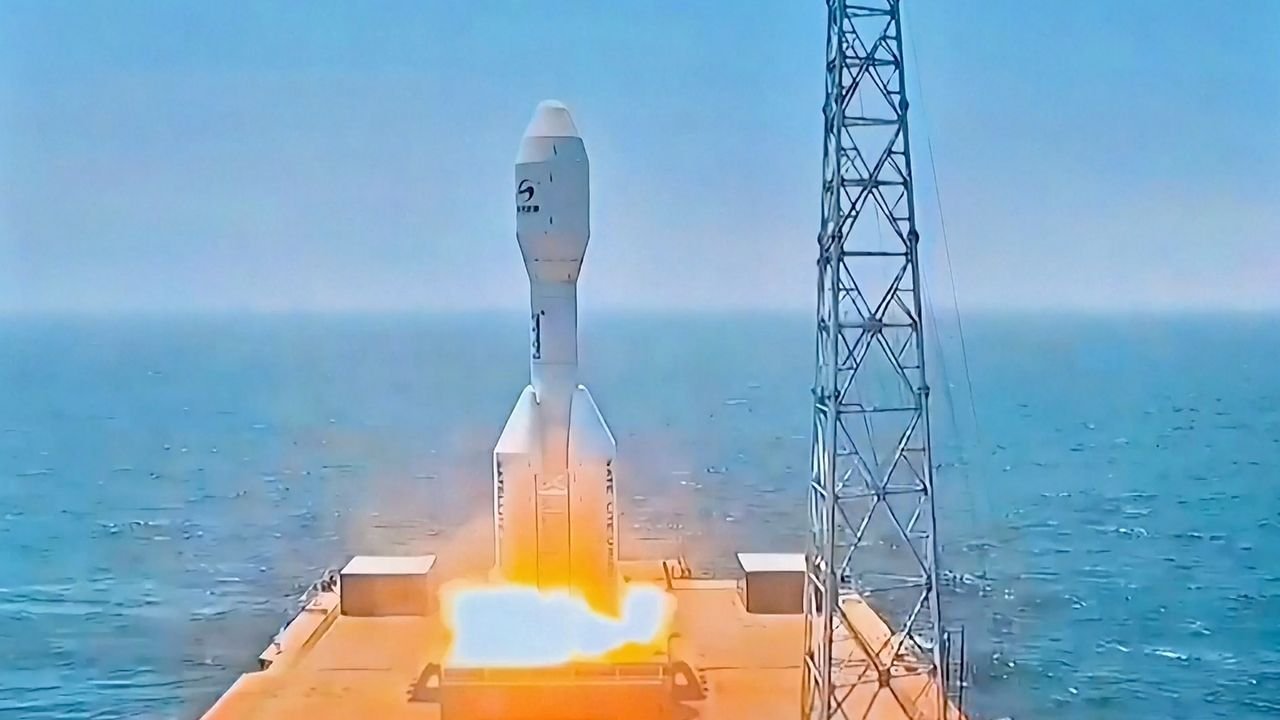
- Gravity-1, a powerful solid-fuel rocket, successfully launched nine satellites to orbit.
- Operated by Orienspace, it stands 100 feet tall and is highly capable.
- The rocket has completed three successful missions since its debut in 2024.
- Orienspace plans to develop larger rockets, Gravity-2 and Gravity-3, soon.
### Groundbreaking Launch and Mission Success
China’s Gravity-1 rocket continues to make headlines. On July 21, 2026, it successfully launched nine satellites from a ship off the coast of Shanghai. This event marks the third mission for the Gravity-1 and cements its status as the world’s most powerful solid-fuel rocket. Liftoff occurred at 10:54 p.m. EDT, with all satellites reaching their designated orbits. However, details about the satellites remain unspecified.
Operated by Orienspace, the Gravity-1 rocket stands at just 100 feet, making it notably shorter than SpaceX’s Falcon 9. Its design is powerful yet compact, featuring three core stages and four strap-on boosters, all utilizing solid rocket motors. The rocket can deliver payloads up to 14,300 pounds to low Earth orbit (LEO). For context, the Falcon 9 can carry over 50,000 pounds in similar conditions.
### Future Prospects and Technological Ambitions
Orienspace has grand ambitions beyond Gravity-1. The company is in the early stages of developing Gravity-2 and Gravity-3, which will be larger and more powerful. These future rockets will incorporate liquid-fueled core stages alongside solid rocket boosters. Reports indicate that Gravity-2 could see its first flight by the end of this year, likely launching from a maritime platform.
The success of sea launches demonstrates new avenues for space exploration. “Sea launch of solid-propellant rockets paves the way for future launch of liquid rockets at sea,” stated Gravity-1 chief designer Xu Guoguang. The potential to launch from drilling platforms further expands the scope of practical applications.
As the global space industry evolves, China’s advancements with the Gravity-1 signal a shift in how rockets can be launched and the opportunities this technology presents in making space more accessible.
Discover More Technology Insights
Learn how the Internet of Things (IoT) is transforming everyday life.
Explore past and present digital transformations on the Internet Archive.
Space
