

Quick Takeaways
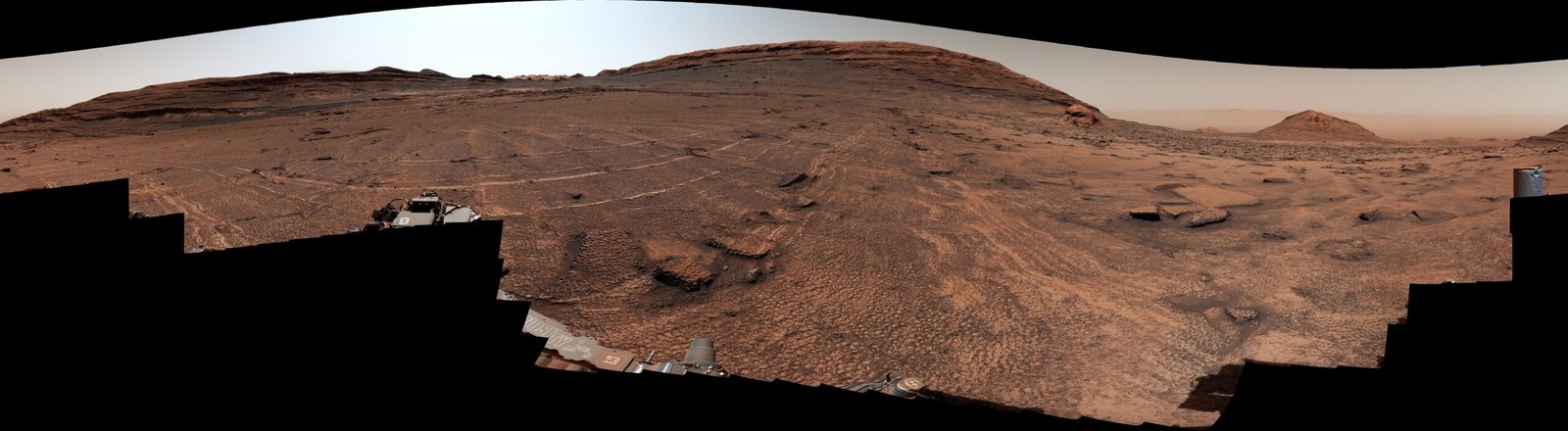
- Curiosity rover discovered expansive honeycomb-like polygons in Valle Grande, Mars.
- The polygonal fractures vary in size and wrap around a nearby butte.
- Curiosity has revealed clues about ancient Mars supporting microbial life.
- The mission continues to uncover significant geological and chemical evidence.
Discovery of Polygonal Fractures in Valle Grande
NASA’s Curiosity rover has revealed a stunning geological feature on Mars: a field of honeycomb-like textures known as polygonal fractures. As Curiosity climbed the Martian valley nicknamed “Valle Grande,” it captured images of these unique formations, each measuring about 1.5 to 3 inches (4 to 8 centimeters) across. While the rover has observed small patches of these geometric shapes before, the recent discovery marks the first time scientists have seen them at this expansive scale.
The images captured on June 19 and 20—a span covering the rover’s 4,930th and 4,931st Martian days—showed these polygonal shapes spreading endlessly in every direction. They extend up the sides of a nearby butte, named “Miraflores,” which stands 20 feet (6 meters) tall and is crowned with a thick layer of sand. “We’ve seen a lot of fascinating landscapes through Curiosity’s eyes, but this sea of polygons took our breath away,” said Ashwin Vasavada, project scientist at NASA’s Jet Propulsion Laboratory. He noted that the team measured the shapes and chemistry of the polygons, hopeful that this data will reveal how these intriguing features formed.
Understanding the Geological Processes
Polygonal fractures can form through various geological processes, though some observed by Curiosity are likely mud cracks. These textures may arise from cycles of temperature changes or compression that squeezes water from sediment layers when the surface is buried. The formation of these polygons offers a glimpse into Mars’ complex geological history.
This discovery adds to the many surprises Curiosity has uncovered since it landed on Mars on August 5, 2012. Over the years, the rover has documented a range of fascinating materials, from sulfur crystals to shiny meteorites. Most importantly, Curiosity has helped scientists understand ancient Mars as a planet that once possessed the water, chemistry, and nutrients necessary to support microbial life.
In its mission, Curiosity has explored the lower foothills of Mount Sharp, a three-mile-tall (five-kilometer-tall) mountain it has been climbing since 2014. The rover has identified remnants of ancient waterways, discovering carbon-based molecules that may serve as precursors to RNA and DNA—key components that carry genetic information. While it remains uncertain whether these molecules originated from biological or geological processes, their presence reinforces the notion that ancient Mars had the right conditions to support life.
Curiosity continues to send back vital data, deepening our understanding of the Red Planet. For those eager to learn more about the mission, additional resources are available through NASA’s dedicated website.
Expand Your Tech Knowledge
Stay informed on the revolutionary breakthroughs in Quantum Computing research.
Access comprehensive resources on technology by visiting Wikipedia.
Space
