

Essential Insights
- Fossil evidence shows early structures that became spider fangs date back 518 million years.
- The creature Urokodia had pincer-like appendages, ancestors of modern chelicerae.
- X-ray scans revealed soft tissues, offering insights into ancient chelicerate evolution.
- Urokodia’s discovery helps understand the origins of predatory features in spiders and relatives.
Unlocking the Origins of Spider Fangs Through Ancient Fossils
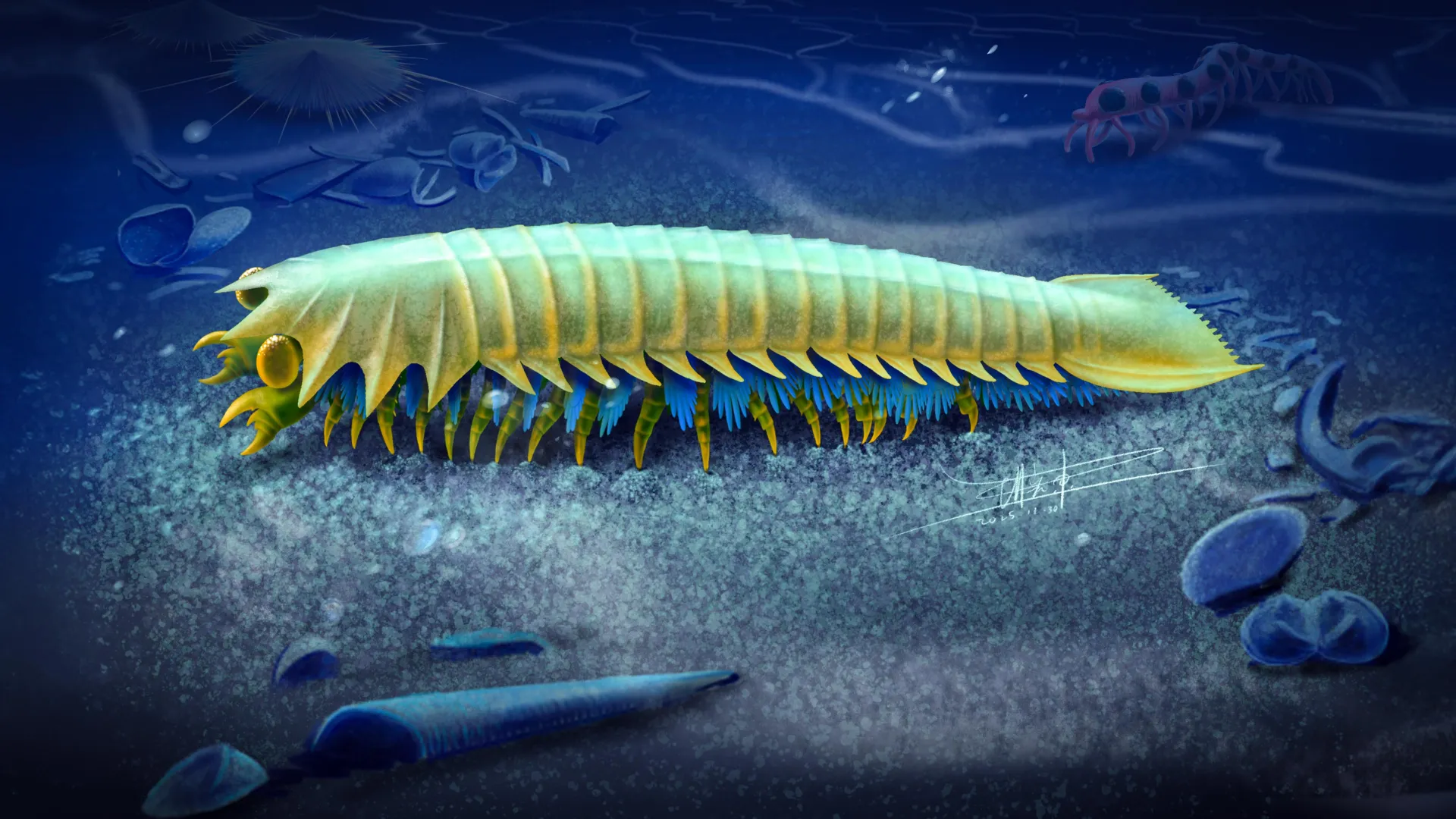
Scientists recently discovered the earliest evidence of structures that became spider fangs in a 518-million-year-old fossil. This find was made by researchers at Yunnan University and the University of Leicester. The fossil belongs to Urokodia, a small marine creature from the early Cambrian Period. Its discovery sheds light on how ancient animals began developing the tools that modern spiders and other chelicerates use to hunt.
Fossil evidence shows that Urokodia had pincer-like appendages behind its eyes. These structures are early forms of chelicerae, the specialized limbs that eventually turned into fangs. The researchers used X-ray technology to examine the fossil without damaging it. They found that much of Urokodia’s soft body parts had been preserved in fossilized form. This allowed them to see the fine details of its anatomy, including the chelicerae. The fossil also had features on its legs that might have helped it breathe underwater, similar to the respiratory structures of horseshoe crabs.
The Evolutionary Journey from Urokodia to Modern Spiders
The discovery of Urokodia shows that chelicerates, the group that includes spiders, scorpions, and ticks, have a long evolutionary history. Over hundreds of millions of years, these animals became experts at hunting. Those that moved onto land evolved into predators capable of capturing larger prey. Today, chelicerates are one of the most successful animal groups, thriving in both land and sea.
Most spiders are not dangerous to humans. Their venom and bites help them catch small prey. The evolution of fangs allowed them to be effective hunters without harming themselves. The ancient origins of these structures, like those seen in Urokodia, reveal how nature developed tools for survival. The fossil illustrates that the simple pincer-like limbs of early chelicerates eventually turned into the deadly fangs known today. This research offers a glimpse into the dawn of animal life and the long journey of adaptation that led to the complex predators we now see.
Stay Ahead with the Latest Tech Trends
Learn how the Internet of Things (IoT) is transforming everyday life.
Explore past and present digital transformations on the Internet Archive.
TechV1
