

Quick Takeaways
- NASA delivered NavCube3-mini to Intuitive Machines for lunar relay satellite integration.
- Compact NavCube3-mini uses GNSS signals to determine precise lunar positions.
- The satellite network will support Moon missions, including Artemis South Pole landing.
- Extensive spaceflight readiness tests verified NavCube3-mini’s functionality and performance readiness.
NASA Delivers Advanced Navigation Technology for the Moon
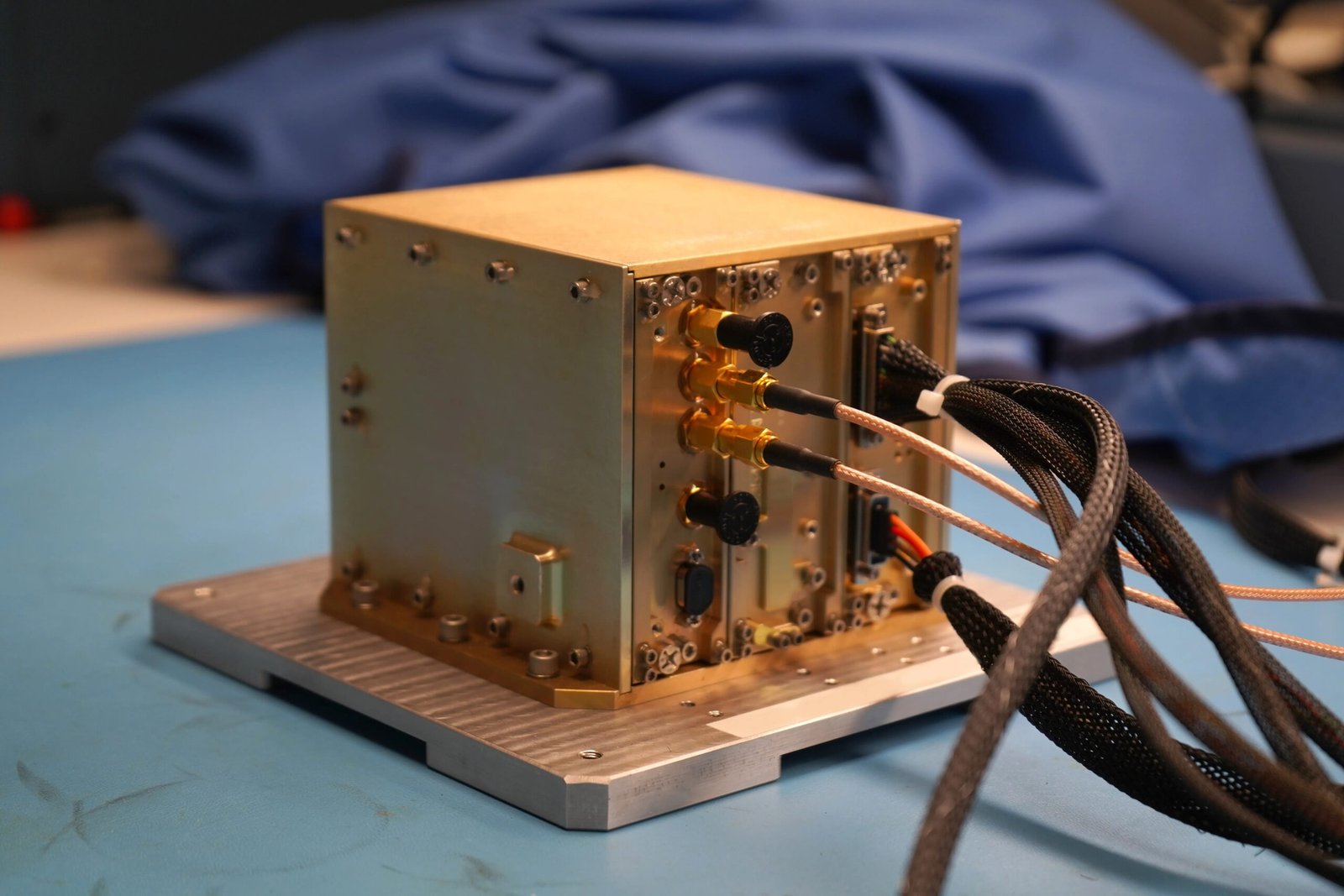
NASA has delivered a new navigation system to support lunar exploration. On July 13, the agency handed over the NavCube3-mini payload to Intuitive Machines. The company will integrate this device into Altus-1, its first lunar relay satellite. This milestone marks significant progress in communication and navigation services for future Moon missions. The relay satellites will help astronauts and robotic explorers stay connected and find their way on the lunar surface.
The NavCube3-mini is small but powerful. It is about half the size of a shoebox and weighs only 3.5 pounds. Despite its size, it can accurately determine a spacecraft’s position far from Earth. The device uses signals from GPS and Galileo, the Global Navigation Satellite Systems (GNSS). It operates on less than 20 watts, about the same as a laptop. The technology builds on previous NASA innovations that extend GPS navigation to much greater distances. These advances make it possible to navigate spacecraft on long lunar missions, pushing the boundaries of what GNSS can do beyond Earth.
Before the handoff, NASA tested the NavCube3-mini extensively. It went through environmental tests like vibration, thermal vacuum, and electromagnetic compatibility. These tests ensured the device can withstand launch conditions, extreme space temperatures, and electromagnetic interference. Performance tests used simulated signals in lunar orbit, comparing pre- and post-test data. This process confirmed the payload remains functional and reliable. The extensive testing ensured the device could succeed in real-world space environments, ready to support lunar missions.
Supporting Lunar Missions and Future Human Presence
The NavCube3-mini will fly on Altus-1, part of a new network of lunar relay satellites under NASA’s partnership with Intuitive Machines. The relay satellites will provide vital communication and navigation support for missions on and around the Moon. This is especially important for areas like the lunar South Pole, where Artemis astronauts plan to land in 2028. The region’s challenging terrain often makes direct communication with Earth difficult. The relay network will help extend coverage, making lunar operations safer and more efficient.
This technology demonstration will also generate valuable data. It will validate GNSS-based navigation in lunar conditions and support infrastructure development for future missions. NASA aims to create reliable communication systems that work across commercial providers and NASA’s own networks. These systems will support a broad lunar ecosystem—including orbiters, landers, rovers, and astronauts living and working on the Moon. The delivery of NavCube3-mini is a step toward building the solid communication backbone needed for long-term lunar exploration. Partnering with commercial companies like Intuitive Machines helps NASA foster a more connected, capable lunar environment. As activity around the Moon increases, these advancements will enable spacecraft and astronauts to operate more safely, efficiently, and autonomously.
Continue Your Tech Journey
Learn how the Internet of Things (IoT) is transforming everyday life.
Access comprehensive resources on technology by visiting Wikipedia.
Space
