

Quick Takeaways
- Total solar eclipse occurs on August 12, 2026, mainly in Iceland and Spain.
- Iceland’s Snæfellsjökull National Park offers prime viewing, with historic volcanoes nearby.
- The eclipse’s path crosses the Arctic, Greenland, Iceland, and Spain, with partial views elsewhere.
- Clearer skies expected in Spain increase chances of observing the eclipse compared to Iceland.
Stops Along the Path of Totality for the August 12, 2026 Solar Eclipse
On August 12, 2026, the Sun, Moon, and Earth will line up to produce a total solar eclipse. This event will be visible only along a narrow path called the path of totality. Outside this path, viewers will see a partial eclipse. The total eclipse will last only a few minutes at any given location. The shadow of the Moon, called the umbra, will pass over select areas in the Northern Hemisphere, offering a rare opportunity for viewers within the path of totality.
The eclipse begins in the Arctic, crossing northern Russia and Greenland. It then moves over Iceland and parts of Spain. In Iceland, the eclipse will start around 5:45 p.m. local time on August 12. The western part of the country, including the Snæfellsnes peninsula, will experience totality. This area is famous for the Snæfellsjökull volcano, a glacier-covered stratovolcano. It last erupted about 1,800 years ago and is part of a designated UNESCO biosphere reserve. The volcano is also well known from Jules Verne’s novel A Journey to the Center of the Earth, where characters venture into its crater. The peninsula’s unique landscape, with volcanic features and wetlands, attracts many visitors who come to watch the eclipse.
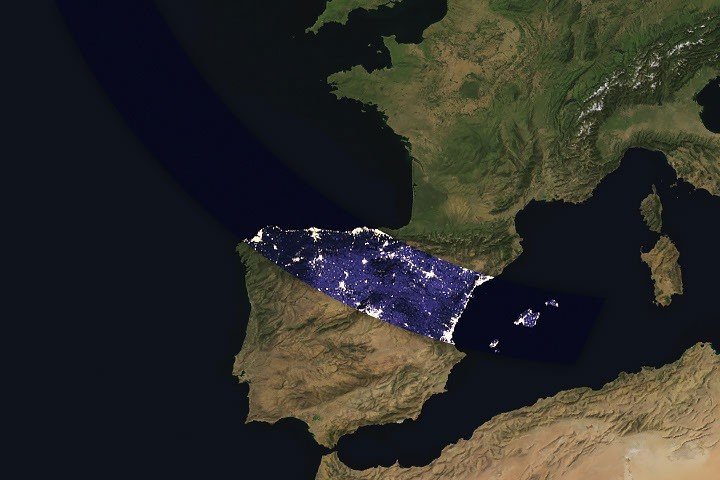
After Iceland, the Moon’s shadow heads across the North Atlantic Ocean toward northern Spain. In Spain, the eclipse will run east-southeast across the country, passing over regions such as La Rioja, known for its vineyards, and carving a path along the Ebro River. The Ebro, which starts in the Pirineos mountains, flows southward toward the Mediterranean. Satellite data shows that Spain has a good chance of clear skies during the eclipse, which increases the likelihood of an unobstructed view.
While only a handful of locations will witness a total eclipse, many areas will see a partial eclipse. In North America, parts of the United States, Canada, and some European countries will experience this partial view. Scientists and sky gazers often emphasize the importance of good planning and weather checks to optimize viewing conditions. Whether partial or total, viewing this celestial event offers an extraordinary glimpse into the mechanics of our solar system.
Understanding the Path and Key Viewing Locations
The path of totality for the 2026 eclipse is narrow, stretching across limited land areas. Iceland’s Snæfellsnes peninsula will be a prime spot for totality, with its dramatic volcanic landscapes and relatively favorable weather conditions increasing the chances of clear skies. The region’s natural beauty enhances the viewing experience, making it a popular destination for eclipse chasers. Nearby, the Snæfellsjökull volcano and the surrounding national park draw visitors interested in both astronomy and natural history.
In Spain, regions such as La Rioja and the Ebro River valley will be prime locations. The eclipse’s alignment with the river’s course offers a memorable setting for viewers. Satellite records indicate that Spain’s climate in August is generally more favorable than Iceland’s, which can help ensure clearer skies during the event.
Event organizers and science agencies recommend proper eye protection and preparation for those attending the eclipse. Solar glasses are essential for safe viewing outside of totality, as the Sun can cause serious eye damage. For those in the path of totality, the short duration of the eclipse makes timing critical. Planning ahead and understanding the precise timing of the eclipse phases will maximize the experience.
The Moon’s shadow moves quickly across the Earth, making each viewing spot a fleeting but remarkable opportunity. Sites within the totality zone will witness the dramatic dimming of daylight, the appearance of the Sun’s corona, and the sudden drop in temperature. Outside the path, viewers will see the Moon take a bite out of the Sun, offering a partial eclipse that still captivates millions.
By paying attention to weather forecasts and arriving early, eclipse viewers in limited locations like Iceland and northern Spain can enjoy a spectacle that highlights the enduring fascination of celestial mechanics. Whether you experience a brief but awe-inspiring total eclipse or observe the partial shadow, the event underscores our connection to the cosmos and the importance of safe, prepared observation.
Continue Your Tech Journey
Explore the future of technology with our detailed insights on Artificial Intelligence.
Discover archived knowledge and digital history on the Internet Archive.
Space
