

Essential Insights
- Space Jam blends basketball, cartoons, and sci-fi into a playful alien-invasion story.
- Bugs recruits Michael Jordan after aliens steal basketball stars’ talents, becoming Monstars.
- Basketball offers a fair, teamwork-based alternative to warfare against powerful extraterrestrials.
- The film celebrates Jordan, forgiveness, and friendship, explaining its enduring cultural appeal.
30 years ago, “Space Jam” proposed the best way to resolve interplanetary disputes
In 1996, “Space Jam” proposed an unusual answer to an interplanetary crisis: settle it with basketball. Three decades later, the premise still works because it turns a familiar science-fiction threat into a contest with rules, teamwork and a scoreboard.
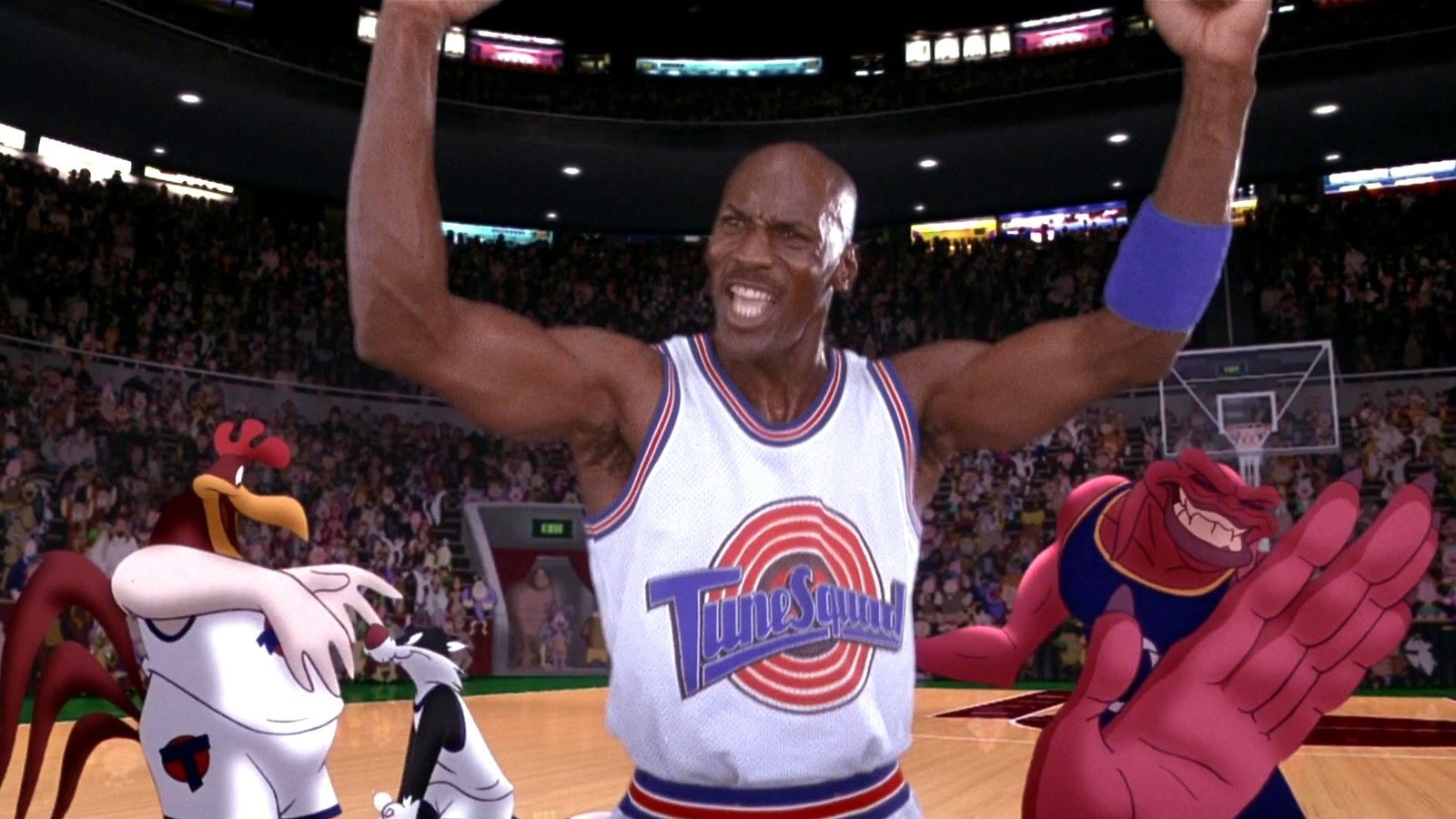
The story starts when the Nerdlucks arrive from space and plan to abduct the Looney Tunes for their amusement park, Moron Mountain. Bugs Bunny offers a winner-takes-all basketball game instead. The small aliens respond by stealing the skills of several professional players, including Charles Barkley and Muggsy Bogues. Their transformation into the powerful Monstars forces Bugs and his friends to recruit Michael Jordan, who had stepped away from basketball to play baseball.
It is an absurd chain of events, by design. But the film’s central idea has more substance than its cartoon spectacle suggests: when two sides face a high-stakes dispute, shared rules can offer a way to compete without making destruction the goal.
A court instead of a battlefield
Many science-fiction stories make alien contact a military problem. In “Independence Day,” humans attack the invaders’ mothership. “Mars Attacks!” turns the encounter into a chaotic fight for survival. “Space Jam,” released in the same crowded year for alien movies, sends its opponents to a basketball court.
That choice changes the terms of the conflict. A game creates a defined space, a common objective and rules that apply to both teams. Success depends on coordination as well as individual ability. The players must communicate, respond to setbacks and trust one another. In that limited sense, basketball offers a useful model for peaceful competition: the sides can test their strengths without treating every opponent as someone who must be eliminated.
But the game is not automatically fair. Bugs chooses basketball partly because he expects the Tunes to have a height advantage over the Nerdlucks. The aliens then use technology to steal athletes’ abilities, giving themselves an overwhelming edge. Their actions make the contest a lesson in the limits of rules: an agreement matters only if both sides follow it and someone can enforce it.
That distinction matters beyond the film. Technology can help settle a dispute when it improves communication, verifies agreements or gives both sides a clearer view of the facts. It can also undermine trust when one side uses it to gain an unfair advantage. The Monstars’ transformation is a comic exaggeration, but the underlying problem is recognizable. Tools do not make a contest fair simply because they make it more sophisticated.
Nor would a real basketball game put humans and unknown extraterrestrials on equal footing. Differences in biology, gravity, physical ability and access to equipment could make the rules meaningless. Sports can create a shared structure, but only after participants agree on what counts as a fair contest. Diplomacy, negotiation and safeguards would still have to do the harder work.
Winning without destroying the opponent
The film’s most useful idea comes after the final buzzer. The Monstars have followed the orders of amusement-park boss Mr. Swackhammer, voiced by Danny DeVito. After their defeat, Jordan urges them to stand up to him. They send Swackhammer away and make peace with the Tunes.
That ending rejects the usual invasion-movie logic. The Monstars are threats during the game, but the film treats them as more than enemies to defeat. They have acted under pressure from a powerful boss, and once they break away from him, the conflict can end without their destruction. Victory opens the door to a different relationship.
Jordan helps make that resolution feel plausible within the film. “Space Jam” blends his public image with cartoon fantasy, casting him as an accomplished athlete who can lead a team through a bizarre challenge. He was not hired to deliver a naturalistic acting performance; the movie asks him to play a version of himself. His role connects the animated world to the real one and gives the Tune Squad a leader its audience already recognizes.
The movie’s solution is not a practical plan for contact with extraterrestrial life. No referee could guarantee a fair game between species with unknown abilities, and a contest would not resolve deeper disagreements about territory, security or resources. Still, the premise offers a clear principle: competition can be safer than violence when opponents accept common rules, and a win need not require humiliation or revenge.
That is a surprisingly durable idea for a film built around cartoon chaos, product tie-ins and “boomshakalaka.” Thirty years after its release, “Space Jam” remains memorable not because basketball could settle every cosmic dispute, but because it imagines a way to stop one from becoming a war.
Expand Your Tech Knowledge
Explore the future of technology with our detailed insights on Artificial Intelligence.
Discover archived knowledge and digital history on the Internet Archive.
Space
