

Quick Takeaways
- NASA engineers Abramson, Hall, and Link started as hobbyist radio-control aircraft builders.
- Their lifelong passion now drives innovative, low-cost aerospace research at NASA.
- Team designs and tests miniature aircraft to evaluate new space and flight ideas.
- Their diverse backgrounds support NASA’s advancements in aeronautics and space exploration.
Passion Meets Precision at NASA’s Flight Research Lab
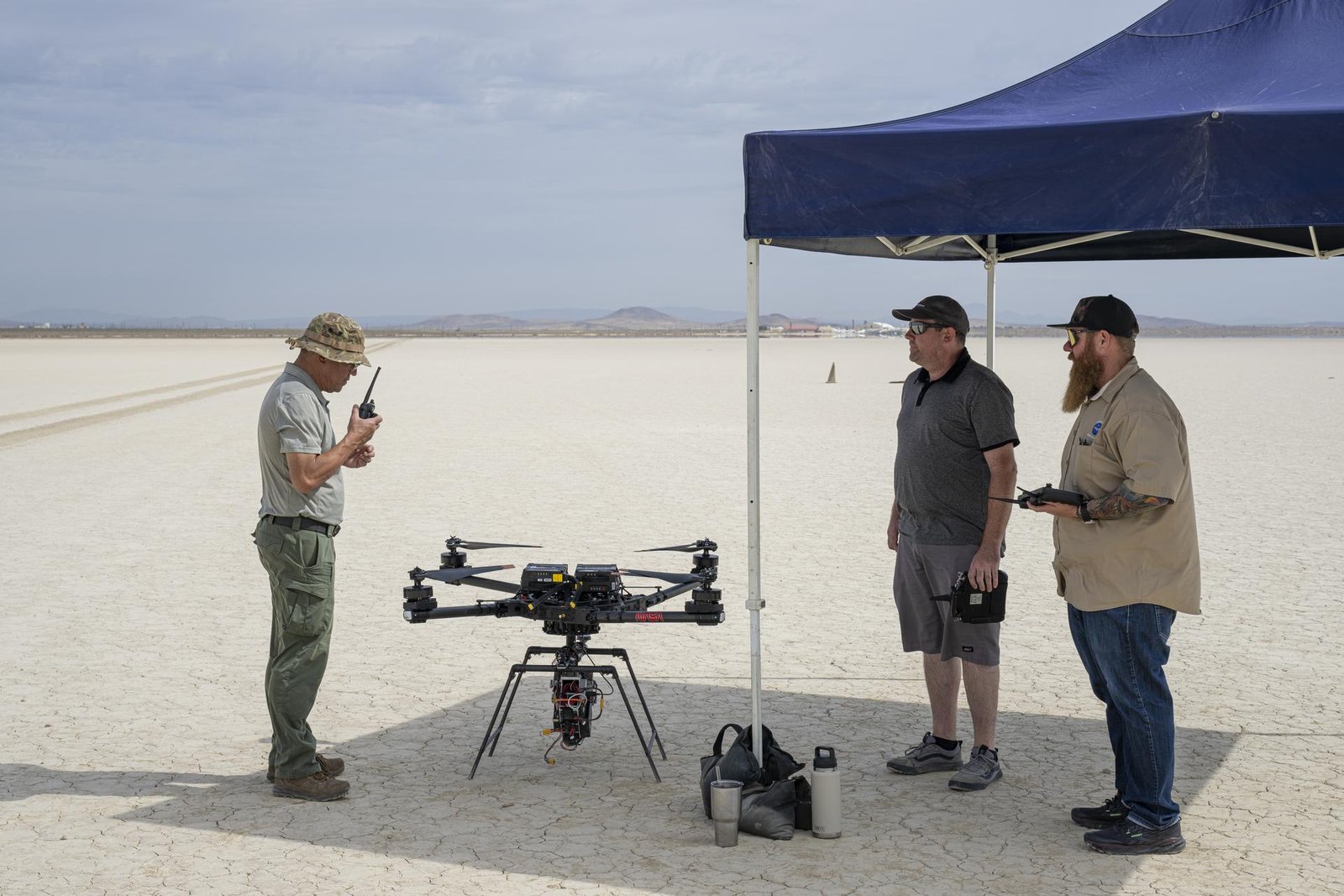
Long before they contributed to NASA’s latest aerospace innovations, Derek Abramson, Justin Hall, and Justin Link were building radio-controlled airplanes in their garages and homes. They tested their ideas at hobby events and became passionate about flight at a young age. That early enthusiasm now drives their work at NASA’s Dale Reed Subscale Flight Research Laboratory, located at the Armstrong Flight Research Center in Edwards, California.
At the NASA Armstrong lab, this lifelong passion transforms into mission-driven innovation. The team supports research in several key areas. They develop advanced navigation systems to make future landings on the Moon and Mars safer and more precise. They also test new aeronautics concepts that need quick, affordable evaluations. The lab’s small, remotely piloted, and autonomous aircraft allow engineers to explore ideas that are challenging, risky, or costly to try at full size. These aircraft act as a testing ground for new technology and ideas, helping NASA push the boundaries of aviation and space exploration.
Bringing Experience and Passion to Aerospace Innovation
Abramson, Hall, and Link all share a deep love for flight. Their personal journeys shaped their careers and their work at NASA. Abramson’s interest started with simple rubber-band-powered planes and radio-controlled models. His early flying experiences led to his first solo flight in high school and eventually a pilot’s license. He served in the U.S. Navy as an avionics technician for aircraft like the EA-6B and F-18. Later, he supported flight tests for the B-1 and CV-22 Osprey planes. As a NASA intern, he brought his skills to work on remotely piloted and autonomous aircraft, combining operational knowledge with engineering expertise.
Justin Hall’s fascination grew after seeing aircraft like the Mach 3 SR-71 fly overhead and watching the Space Shuttle Challenger land from above his father’s shoulders. He’s been building and flying model and remote-controlled aircraft since childhood. His reputation in hobby circles as a skilled pilot earned him the opportunity to fly subscale aircraft for NASA. His practical methods and creative thinking help solve technical challenges and keep flight operations safe and efficient.
Justin Link’s love for aviation started at age five, building and flying balsa-wood planes with his dad. As he grew up, he expanded his hobbies to include radio-controlled cars, boats, helicopters, and aircraft. Aviation runs in his family: his great grandfather served in the Army Air Corps, his grandfathers in the U.S. Air Force, and his dad was an Air Force avionics technician. Link competed in sailplane racing and scaled warbird aircraft, always seeking new ways to improve and innovate. He has over 11 years of experience working with large drones, focusing on research, development, and manufacturing techniques.
Together, they use their diverse experience to design, build, and test new aircraft and technologies. They quickly turn ideas into flight prototypes, supporting NASA’s broader goals in aeronautics, science, and space exploration. Their work exemplifies how a passion for flight, combined with a focus on precision and practicality, can advance innovative aircraft technologies.
Discover More Technology Insights
Dive deeper into the world of Cryptocurrency and its impact on global finance.
Explore past and present digital transformations on the Internet Archive.
Space
