

Fast Facts
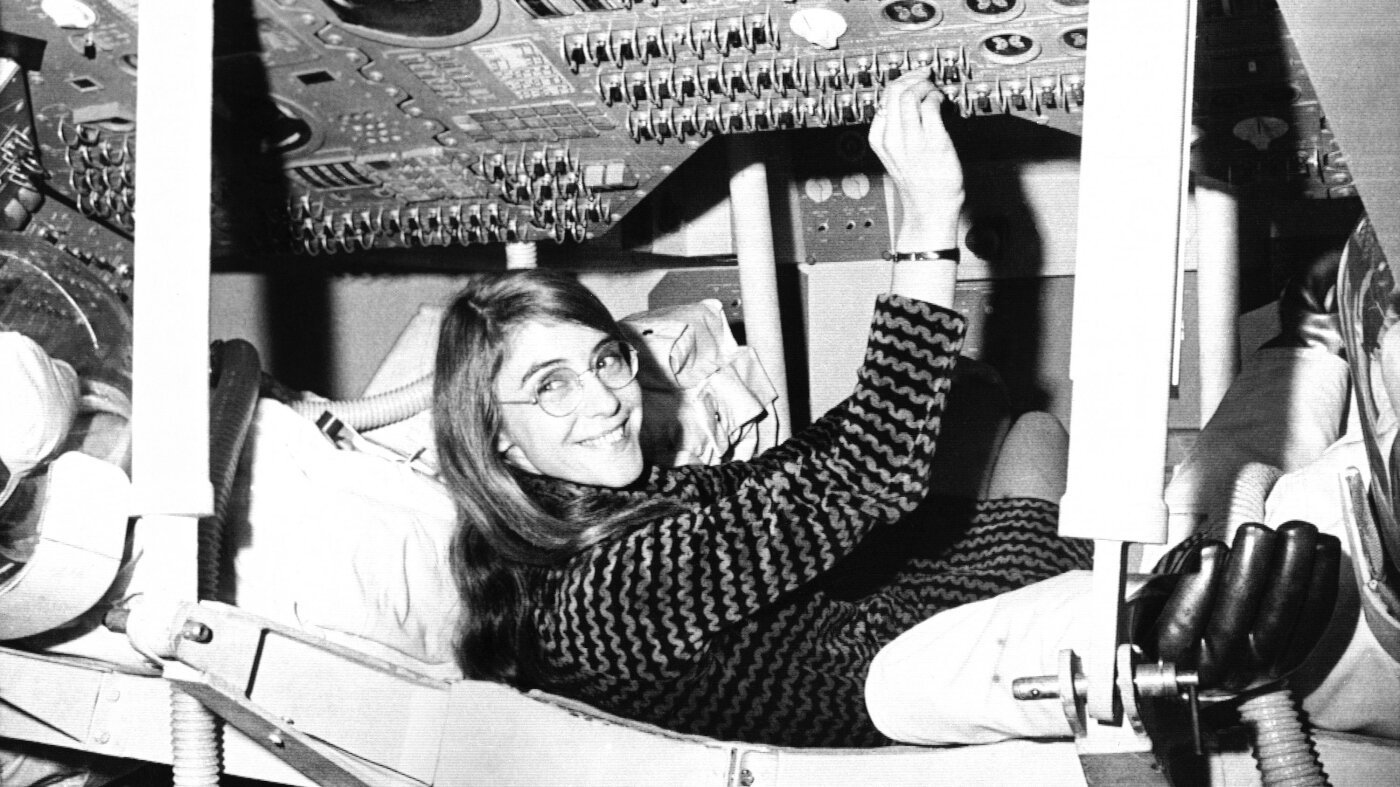
- Margaret Hamilton was a pioneering software engineer who helped land astronauts on the moon.
- She developed reliable, error-resistant code for NASA’s Apollo program.
- Hamilton coined “software engineering” and led teams with groundbreaking innovation.
- She received the Presidential Medal of Freedom and broke gender barriers.
Margaret Hamilton, Software Pioneer of the Apollo Moon Missions, Dies at 90
Margaret Hamilton, a trailblazing computer scientist whose work helped land humans on the moon, has passed away at age 90. Her death, announced by the Massachusetts Institute of Technology (MIT), occurred on September 30, from causes that have not been specified. Hamilton’s career and contributions mark a key chapter in the development of software engineering and space exploration.
Breaking New Ground in Software and Space Exploration
Born in Indiana, Hamilton earned a bachelor’s degree in mathematics with a minor in philosophy from Earlham College in 1958. She moved to Boston a year later, where she initially worked in meteorology at MIT, connecting her early work to chaos theory. Her first experience in software engineering came through projects like the Semi-Automatic Ground Environment (SAGE), the U.S. air defense system. Hamilton developed a keen ability to foresee how humans would interact with computers, especially in high-stakes environments where errors could be deadly.
In 1961, MIT won a NASA contract to develop software for the Apollo missions. Hamilton, noticing a newspaper ad seeking programmers to “send man to the moon,” applied and became the first female programmer hired for the project. Her work advanced from uncrewed flights to critical onboard software for the lunar landings. By 1968, she was assistant director, leading over 100 engineers. Hamilton, in her early 30s, was one of the first to use the term “software engineering,” helping to define this new field.
Her focus on building reliable, defensive software was revolutionary. Rather than designing systems that only worked in perfect conditions, Hamilton emphasized systems that could handle errors and unexpected issues. This approach proved vital during the Apollo 11 lunar landing in 1969, when alarms indicated overloads—specifically, computer overloads three minutes before touchdown. Thanks to her team’s foresight, the onboard software filtered and prioritized tasks, allowing the mission to succeed and humans to step onto the moon.
Legacy Beyond the Moon Landing
After her work at MIT, Hamilton founded two software companies. Her innovations extended well beyond space, influencing how software is designed today. Her achievements earned her the Presidential Medal of Freedom in 2016, awarded by President Barack Obama. The following year, she was featured as part of a “Women of NASA” Lego set, symbolizing her role as a trailblazer for women in science and engineering.
Throughout her career, Hamilton remained humble about her impact. She was known for her problem-solving skills and leadership. She often brought her daughter Lauren to the lab — a moment that led to the famous “Lauren error,” where her daughter accidentally overloaded a system during testing, highlighting how real-world issues shape software development. Hamilton’s work demonstrated the importance of creating adaptive, error-tolerant systems. Her efforts laid a foundation for modern computing and space technology.
Many remember her as a pioneer who broke barriers for women and advanced technology at a critical moment in history. Despite her public recognition later in life, Hamilton was modest about her achievements. She was reluctant to pursue biographies, only agreeing because she thought it would be fun for her great-grandchildren. Her legacy endures both in the history of space exploration and in the ongoing development of reliable, defensive software systems critical to safety and progress.
Continue Your Tech Journey
Learn how the Internet of Things (IoT) is transforming everyday life.
Explore past and present digital transformations on the Internet Archive.
Space
