
Close Menu
    Facebook X (Twitter) Instagram
    Sunday, October 25
    Top Stories:
    • China’s Humanoid Robots Target South Korea’s Physical AI Boom
    • How Scientists Could Detect Dangerous Mirror Life Before It Exists
    • Nvidia’s Jensen Huang Takes Sovereign AI to Kazakhstan, Dismisses Bubble Fears
    Facebook X (Twitter) Instagram Pinterest Vimeo
    IO Tribune
    • Home
    • AI
    • Tech
      • Gadgets
      • Fashion Tech
    • Crypto
    • Smart Cities
      • IOT
    • Science
      • Space
      • Quantum
    • OPED
    IO Tribune
    Home » A daring selfie from the edge of a comet.
    Space

    A daring selfie from the edge of a comet.

    Staff ReporterBy Staff ReporterOctober 24, 2026No Comments3 Mins Read
    Share Facebook Twitter Pinterest LinkedIn Tumblr Reddit Telegram Email
    Share
    Facebook Twitter LinkedIn Pinterest Email

    Fast Facts

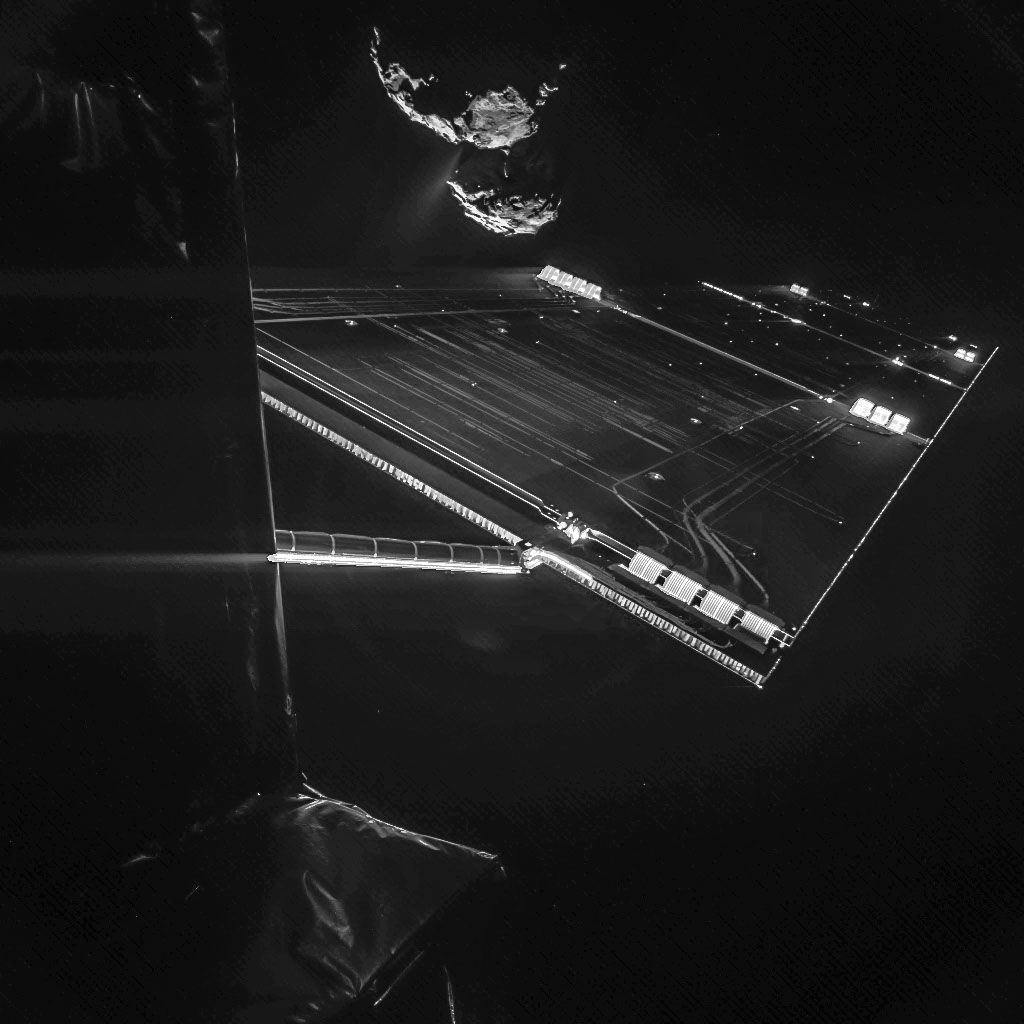
    Rosetta captured this selfie on October 7, 2014, near comet 67P.
    The spacecraft was 16 kilometers from the comet, 472 million from Earth.
    CIVA combined exposures showing sunlight, dust, gas, and Rosetta’s bright solar array.
    This was Philae’s final camera image before separation and descent began.

    APOD: 2026 October 24 — Rosetta’s Selfie

    A spacecraft, a comet and a flash of sunlight share the frame in this striking image from the European Space Agency’s Rosetta mission. The photograph captures a brief moment before the Philae lander left Rosetta and began its journey to the surface of comet 67P/Churyumov-Gerasimenko.

    A close view from deep space

    Philae’s CIVA camera system took the image on Oct. 7, 2014. Rosetta was then about 472 million kilometers from Earth and just 16 kilometers from the comet’s surface. That distance gave the camera a close view of 67P’s unusual, two-lobed nucleus.

    Dust and gas stream away from the comet near the top of the frame. The activity hints at a dynamic world, not a quiet, frozen rock. A bright reflection from one of Rosetta’s 14-meter-long solar arrays adds another striking feature.

    The scene presented a technical challenge. Sunlight reflecting from the array was much brighter than the surrounding landscape. To record detail across that contrast, the team combined a short exposure with a longer one. This approach preserved information in both bright and dim areas, though it required combining multiple exposures rather than relying on one.

    The last view before landing

    The image also documents a turning point in the mission. Philae’s chosen primary landing site lay on the visible side of 67P’s smaller lobe. This was the last picture the lander took with its camera before separating from Rosetta on Nov. 12, 2014.

    After separation, Philae took another image looking back toward the orbiter, then descended toward the comet. The sequence shows how cameras can serve both scientific and practical roles: they record a destination, help teams understand a spacecraft’s surroundings and preserve a visual record of a complex operation. But cameras alone cannot eliminate the risks of landing on an irregular, active body in deep space.

    Rosetta’s selfie makes those challenges visible. A solar array catches the light; cometary material streams into space; and the small lander prepares to leave its carrier. The image is both a portrait of the mission and a snapshot of its next step.

    Continue Your Tech Journey

    Dive deeper into the world of Cryptocurrency and its impact on global finance.

    Explore past and present digital transformations on the Internet Archive.

    Space

    APOD Cosmos NASA Space VT1
    Share. Facebook Twitter Pinterest LinkedIn Tumblr Email
    Previous ArticleEffective Dimension: Beyond Parameter Count
    Next Article Google Quietly Links Your Phone Number to Other Android Accounts
    Avatar photo
    Staff Reporter
    • Website

    John Marcelli is a staff writer for IO Tribune, with a passion for exploring and writing about the ever-evolving world of technology. From emerging trends to in-depth reviews of the latest gadgets, John stays at the forefront of innovation, delivering engaging content that informs and inspires readers. When he's not writing, he enjoys experimenting with new tech tools and diving into the digital landscape.

    Related Posts

    AI

    Why Six AI Models Often Think Like Two

    October 25, 2026
    Gadgets

    Google Quietly Links Your Phone Number to Other Android Accounts

    October 24, 2026
    AI

    Effective Dimension: Beyond Parameter Count

    October 24, 2026
    Add A Comment

    Comments are closed.

    Must Read

    Why Six AI Models Often Think Like Two

    October 25, 2026

    Google Quietly Links Your Phone Number to Other Android Accounts

    October 24, 2026

    A daring selfie from the edge of a comet.

    October 24, 2026

    Effective Dimension: Beyond Parameter Count

    October 24, 2026

    China’s Humanoid Robots Target South Korea’s Physical AI Boom

    October 24, 2026
    Categories
    • AI
    • Crypto
    • Fashion Tech
    • Gadgets
    • IOT
    • OPED
    • Quantum
    • Science
    • Smart Cities
    • Space
    • Tech
    Most Popular

    Take Notes from Lock Screen with Google Keep

    May 5, 2026

    New Update Boosts This Promising Nintendo 3DS Emulator!

    March 31, 2026

    “Invisible Architects: Scaling Ingredient Brands”

    August 14, 2025
    Our Picks

    Unexpected Effects: How Lockdowns Transformed Global Fire Activity

    October 10, 2026

    Could This Gallery Change Your View on AI Art?

    July 10, 2026

    Cyber Monday’s Best Running Headphone Deals You Can’t Miss!

    December 2, 2025
    Categories
    • AI
    • Crypto
    • Fashion Tech
    • Gadgets
    • IOT
    • OPED
    • Quantum
    • Science
    • Smart Cities
    • Space
    • Tech
    • Privacy Policy
    • Disclaimer
    • Terms and Conditions
    • About Us
    • Contact us
    Copyright © 2025 Iotribune.comAll Rights Reserved.

    Type above and press Enter to search. Press Esc to cancel.