

Quick Takeaways
NASA launches a $1 million challenge for student Moon Base designs.
U.S. high school and postsecondary teams can propose solutions across six categories.
Designs address lunar living needs and support NASA’s future crewed Mars missions.
Registration closes January 25, 2027; students gain career-relevant skills without prerequisites.
NASA Announces $1 Million Moon Base Challenge for Students
NASA has opened a $1 million student challenge focused on designing solutions for a future Moon Base. The agency announced the competition Sunday during a MAX POWER event at the Kennedy Space Center Visitor Complex in Florida.
The challenge is open to teams from U.S. high schools and post-secondary schools. Registration runs through Jan. 25, 2027, and teams must sign up through NASA’s STEM Gateway. NASA has not said that the full $1 million will be distributed as prize money; students should consult the official rules for award details.
Six areas for lunar innovation
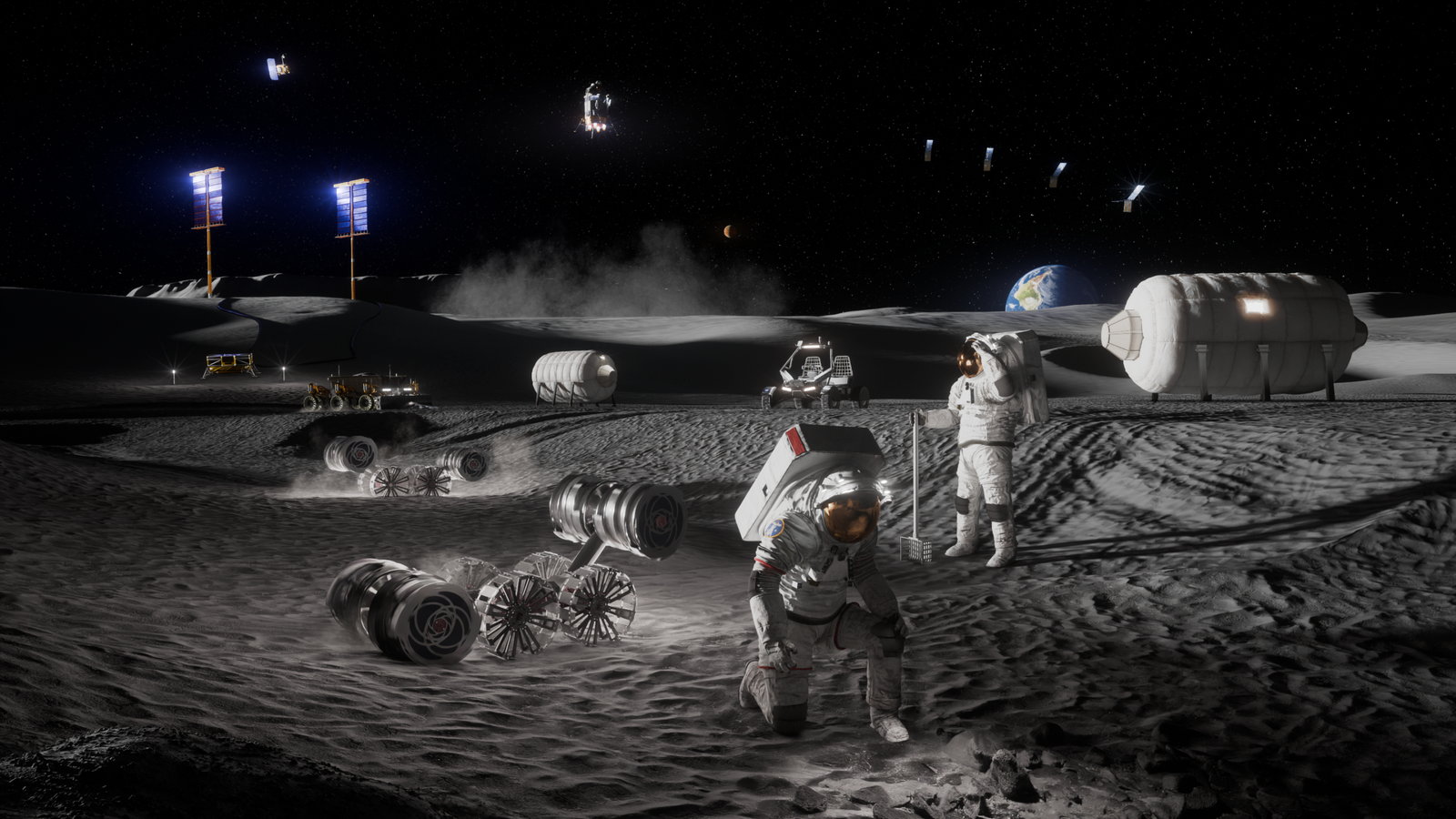
NASA is planning a Moon Base near the lunar South Pole, where astronauts could live, work and explore. A sustained human presence there could also help prepare for crewed missions to Mars. That effort will require expertise from many fields, not only aerospace engineering.
Student teams will develop concepts in six categories: power generation and storage, construction, life-support systems, surface mobility, communications networks and astronaut safety. The challenge is designed around actual environmental and mission-planning conditions on the lunar surface.
The work is intended to resemble tasks used in industry. Deliverables may include trade studies, concept proposals and briefings for stakeholders. Students in technical, vocational and academic programs can take part, and NASA says prior specialized engineering or technical experience is not required.
That broad invitation could bring useful perspectives to problems that demand more than a single technical solution. Yet a strong concept must also work within the Moon’s harsh conditions, including limited resources and the demands of operating far from Earth. A proposal developed for the competition would not necessarily become part of the eventual base. It would still need to meet engineering, safety, cost and mission requirements.
NASA Administrator Jared Isaacman said the agency wants students to collaborate, think creatively and tackle problems without easy answers. Carlos García-Galán, who manages NASA’s Moon Base Program, said student ideas could help the agency consider what future explorers will need to live and work on the Moon.
Building skills as well as concepts
The competition is multiphase and supports NASA’s effort to develop the future aerospace workforce. Participants can practice turning a problem into a proposal and explaining their choices to others — skills that apply across technical careers, whether or not a team’s idea advances.
NASA’s Office of STEM Engagement created the challenge with the Moon Base Program. The Institute of Competition Sciences administers it under a contract with NASA’s Center of Excellence for Collaborative Innovation, within the agency’s Research and Technology Mission Directorate.
Elaine Ho, associate administrator for NASA’s Office of STEM Engagement, said students’ perspectives can help the agency imagine a future in which people live and work beyond Earth. The challenge gives students a structured way to contribute ideas, while NASA can draw on a wider range of approaches as it studies what a lunar base may require.
Competition details, eligibility requirements and official rules are available at moonbasechallenge.org.
Expand Your Tech Knowledge
Explore the future of technology with our detailed insights on Artificial Intelligence.
Access comprehensive resources on technology by visiting Wikipedia.
Space
