

Quick Takeaways
-
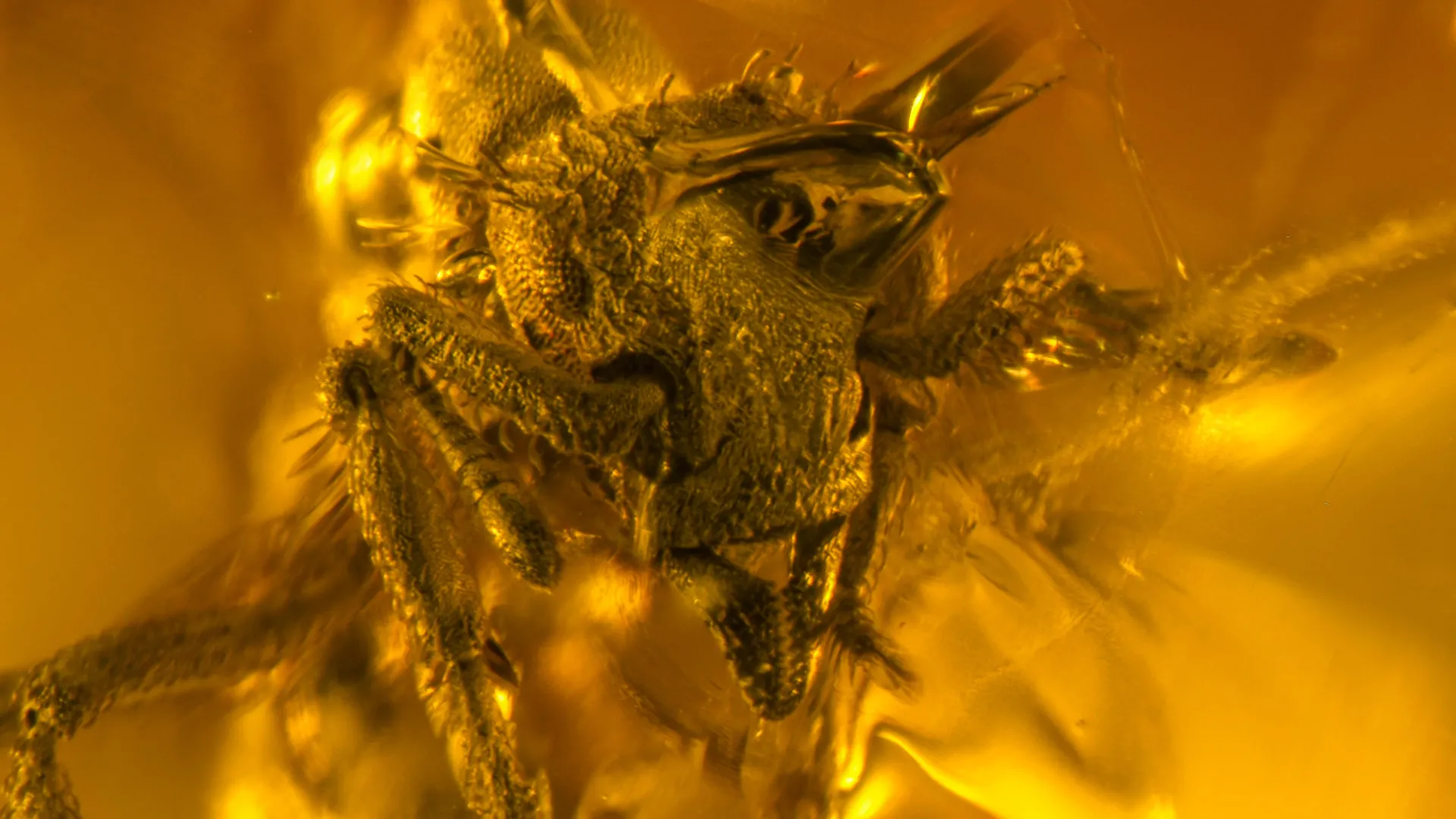
Significant Fossil Discovery: The first fossil of the dirt ant genus Basiceros, named Basiceros enana, has been found in 16-million-year-old amber from the Dominican Republic, revealing a previously unrecognized presence of these ants in the Caribbean.
-
Evolutionary Insights: This discovery challenges previous assumptions about the evolutionary history of Basiceros, indicating a rapid increase in size over time and suggesting that certain adaptations for crypsis (camouflage) existed as far back as 16 million years ago.
-
Biogeographic Complexities: The findings highlight the complex evolutionary history of species distribution, contradicting the idea that modern habitats exclusively reflect ancient lineages.
-
Potential Causes for Extinction: The extinction of Basiceros from the Caribbean during the Miocene could be linked to ecological changes, loss of habitats, or increased competition among predators, emphasizing the importance of understanding these dynamics for contemporary biodiversity conservation efforts.
A Glimpse into Ant Evolution
Ants thrive in almost every environment, but “dirt ants,” or Basiceros, may hold a remarkable secret about their past. Researchers recently discovered a 16-million-year-old fossil of a dirt ant preserved in amber from the Dominican Republic. This extraordinary find provides direct evidence of Basiceros inhabitants in the Caribbean long before their local extinction in the Miocene epoch. Known as Basiceros enana, the newly identified species measures a mere 5.13 millimeters, making it the smallest member of its lineage.
This discovery reshapes our understanding of ant evolution. Scientists used advanced imaging technologies to study the fossil in detail. They compared its features to modern species and traced its lineage through molecular dating. Surprisingly, researchers found that these ants almost doubled in size over 20 million years, contradicting previous beliefs about their growth. This finding emphasizes the complexity of evolutionary history, revealing that the distribution of species often masks their intricate backgrounds.
Lessons for Biodiversity and Extinction
The unique adaptations of Basiceros enana offer insights into the survival strategies of these ants. They developed specialized hairs to blend seamlessly into their environment, allowing them to evade predators. However, despite their advanced traits, these ants eventually disappeared from the Caribbean. Scientists suggest that ecological shifts and competition with other species likely contributed to their extinction.
Understanding the history of Basiceros not only enriches our knowledge of ant evolution but also highlights a pressing need for conservation efforts today. The extinction of these tiny predators mirrors trends we observe in modern ecosystems. Analyzing factors leading to their disappearance can guide us in mitigating ongoing human-driven extinction threats. As we uncover more about the past, we gain tools to protect biodiversity for future generations.
Expand Your Tech Knowledge
Stay informed on the revolutionary breakthroughs in Quantum Computing research.
Explore past and present digital transformations on the Internet Archive.
TechV1
