

Top Highlights
- The Artemis II mission launched successfully on April 1, marking NASA’s first crewed lunar flight since Apollo, with four astronauts on a 10-day trip around the Moon.
- The mission demonstrates the first crewed use of the SLS rocket and Orion spacecraft system, setting the stage for future lunar missions.
- Early in the journey, astronauts experienced a waste-management issue but had backup systems, including waste bags used in Apollo missions.
- Orion separated from the rocket and was actively tested for maneuvering and docking, with the capsule expected to land in the Pacific Ocean on April 10.
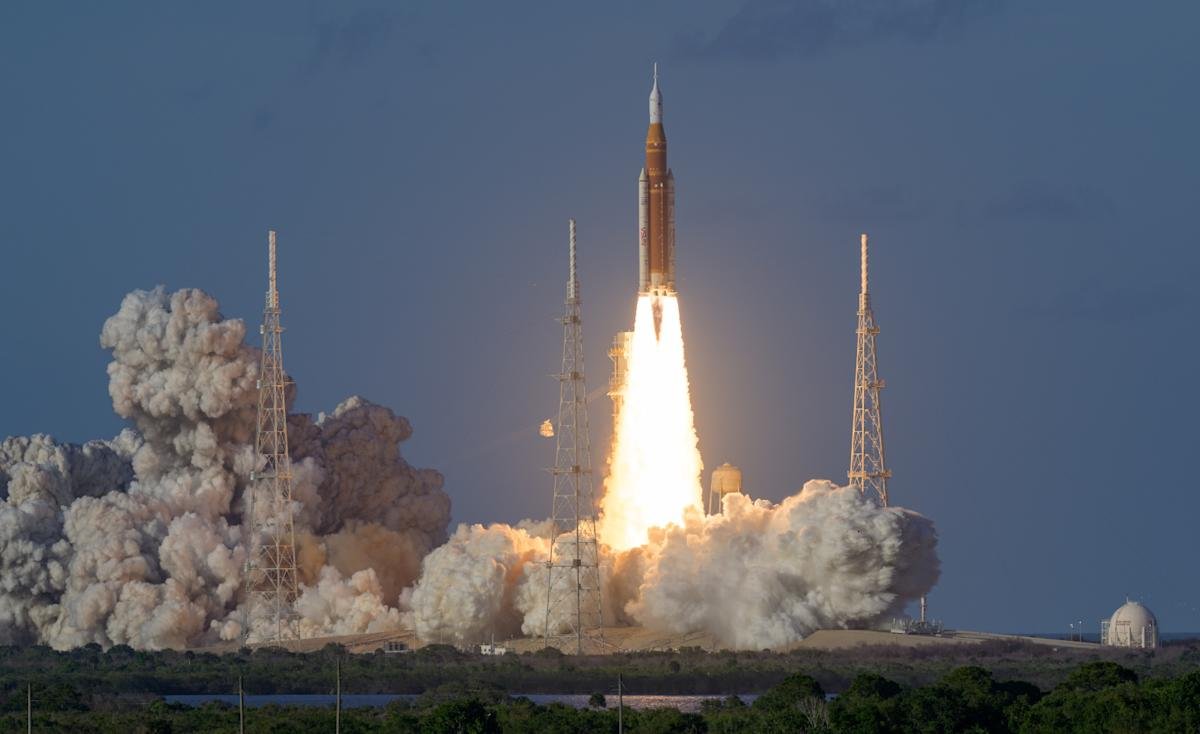
The Artemis II mission has begun its 10-day journey around the moon. Launched from Florida’s Kennedy Space Center on April 1 at 6:35 p.m. Eastern time, it marks a historic step for space exploration. The mission sent NASA astronauts Reid Wiseman, Victor Glover, Christina Koch, and Canadian astronaut Jeremy Hansen into deep space.
This is the first crewed Artemis flight, and it sets the stage for future lunar trips. It also marks the first time a crewed Orion spacecraft and the SLS rocket system have flown together since the Apollo era. The mission offers valuable insights into long-duration space travel and deep-space technology.
Just hours into the trip, astronauts saw stunning views of Earth. However, they faced a challenge: a glitch with the spacecraft’s waste‑management system. Luckily, they have backup options, including collection bags used by Apollo crews.
Later, the Orion capsule separated from the rocket’s upper stage. Victor Glover then manually piloted the spacecraft to test how it will dock with lunar landers by SpaceX and Blue Origin in future missions. The crew is expected to land in the Pacific Ocean on April 10.
Smart cities and urban innovations thrive on technological advancements like these. Just as space agencies test new systems to ensure safety and efficiency, cities worldwide adopt smart solutions to improve living. Better transportation, energy use, and resource management make urban areas more sustainable and livable.
The Artemis II mission reminds us that exploration and innovation go hand in hand. They pave the way for both space adventures and smarter, more connected cities on Earth.
Discover More Technology Insights
Learn how the Internet of Things (IoT) is transforming everyday life.
Stay inspired by the vast knowledge available on Wikipedia.
GadgetsV1
