

Fast Facts
- Patagonia’s autumn brings vibrant colors to its temperate deciduous forests.
- Lenga beech trees thrive in diverse climates, marking southernmost temperate forests.
- Vibrant fall foliage attracts visitors to iconic Patagonian locations and parks.
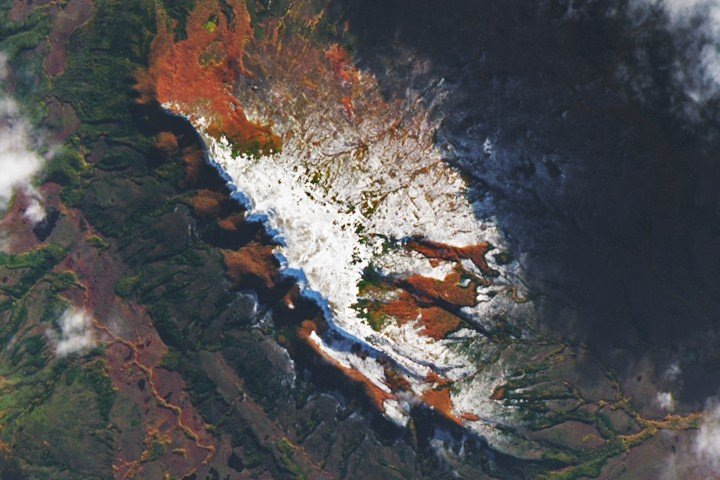
- Landsat 9 captured striking images of the region’s reddish hillsides recently.
Fiery Fall Color in Southern Chile
The vibrant hues of autumn transform the landscape of southern Chile, inviting nature lovers and scientists alike to witness a spectacle unlike any other. This seasonal shift reveals a stunning tapestry of colors across the temperate forests of Patagonia. On April 12, 2026, the Landsat 9 satellite captured a striking image of the Magallanes region, showcasing the vivid reds and yellows that emerge as the days grow shorter and cooler.
The Southern Beech: A Foundation Species
Patagonia hosts the world’s southernmost temperate forests, rich with biodiversity. Southern beeches, particularly the lenga beech (Nothofagus pumilio), play a crucial role in these ecosystems. These trees are uniquely adapted to a range of climates, enduring the harshness of freezing temperatures and low rainfall. The lenga beech extends its presence from around 36 degrees south latitude down to Tierra del Fuego, spanning approximately 2,000 kilometers (1,200 miles) along the Andes.
In the lower elevations of southern Patagonia, where the lenga thrives, it often becomes the dominant species, forming expansive, colorful forests. Their vivid displays are a key attraction for visitors. At elevations of around 600 meters (2,000 feet), the bright red hillsides captured in the April Landsat image highlight their significance in shaping the region’s landscape.
A Palette of Color in Iconic Parks
The spectacle of autumn is not limited to a single site. Iconic locations like Torres del Paine National Park and Conguillío National Park host diverse flora, adding to the vibrant display. Lenga beech trees, along with others such as Nothofagus antarctica, known as ñire or “Antarctic fire,” contribute to the fiery hues. As autumn deepens, these trees present a brilliant contrast against glacial lakes and volcanic peaks.
The seasonal transformation also highlights the interconnectedness of these ecosystems. Understanding these dynamics is essential for conservation efforts, as researchers identify priority areas for habitat protection and management. The colorful autumn displays not only attract tourists but also serve as a reminder of the ecological richness that defines Patagonia. Thus, explorers and scientists alike venture into this terrain to appreciate both its beauty and its complexity.
Stay Ahead with the Latest Tech Trends
Explore the future of technology with our detailed insights on Artificial Intelligence.
Discover archived knowledge and digital history on the Internet Archive.
Space
