

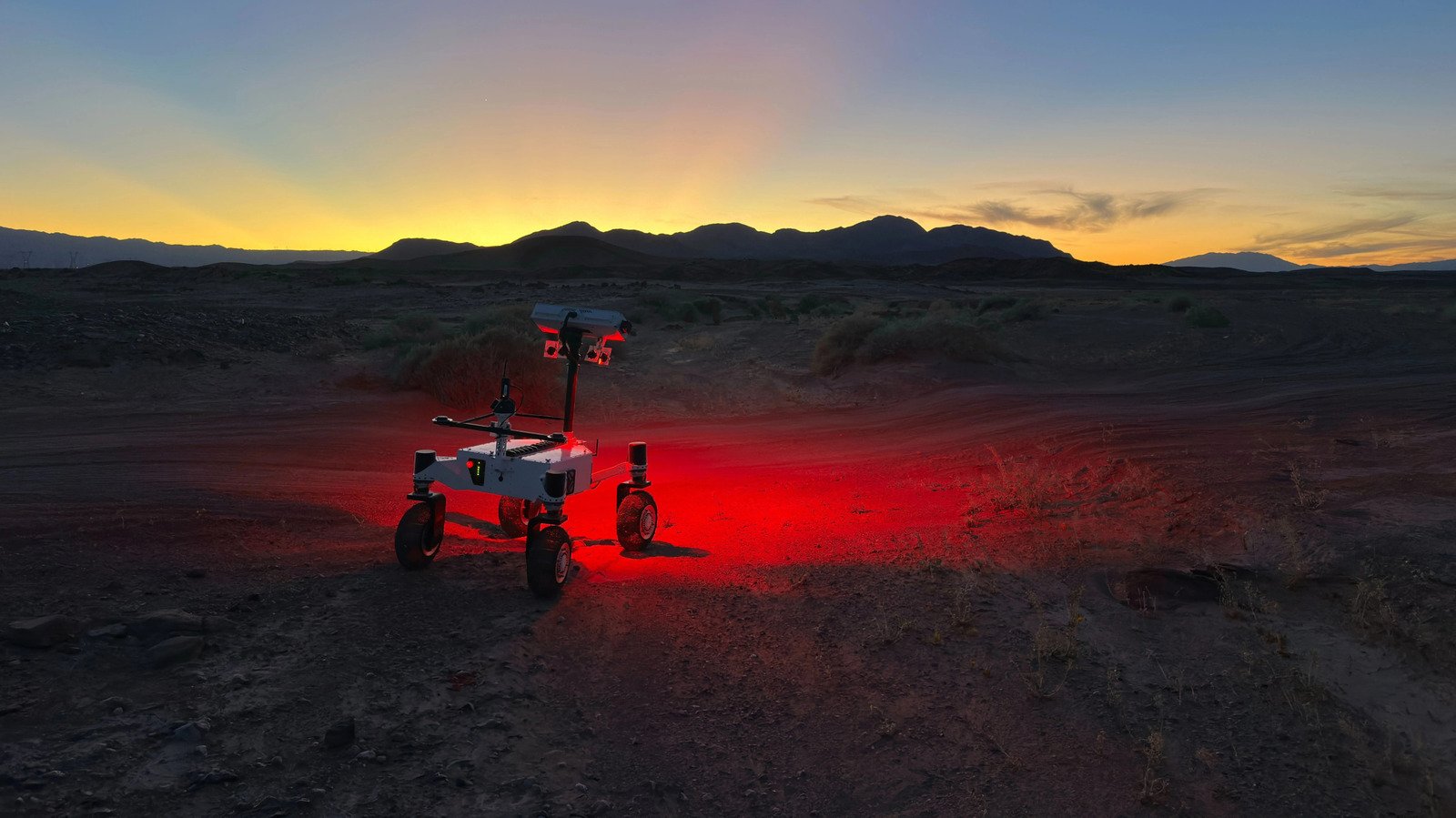
Quick Takeaways
- NASA has developed Ernest, a prototype rover with advanced mobility features designed for extreme terrains on Mars and the Moon.
- Ernest’s design includes four independently steerable wheels that can lift to step over obstacles and switch between active and passive suspension systems.
- During tests in the Colorado Desert, Ernest traveled over 16 miles in 37 hours, reaching speeds up to 0.6 mph—significantly faster than current Mars rovers.
- The rover’s active suspension and enhanced decision-making aim to enable faster, more autonomous exploration, reducing reliance on human commands from Earth.
NASA’s New Rover Can Drive Faster and Handle Tough Terrain
NASA is making exciting advances with its space exploration technology. Recently, the agency tested a new prototype rover named Ernest. Unlike current Mars rovers, Ernest can move faster and better over difficult obstacles. During tests in the Colorado Desert, it traveled about 16 miles in 37 hours. Its top speed reached nearly 0.6 mph, which is faster than typical Mars robots. This means Ernest could cover more ground quickly, making future missions more efficient. NASA hopes this rover will help explore rocky slopes and steep hills that are hard for older models. Improved speed and agility can reduce travel time and help scientists reach their research targets sooner. Overall, Ernest’s enhanced skills mark a big step forward for space roving technology.
Innovative Technology Powers Ernest’s Abilities
What makes Ernest special? Its design shows a focus on flexibility and smart movement. Unlike older rovers that use passive systems, Ernest features active suspension with powered joints. These joints help the rover lift its wheels individually. This allows it to step over obstacles and climb steep slopes more easily. Additionally, Ernest has four wheels that can turn in any direction, giving it high maneuverability. It can switch between different movement styles, like wheel-walking or squirming, depending on the terrain. This active suspension and steering give Ernest a significant edge over traditional rovers. NASA also increased its decision-making abilities, helping it choose the best way to navigate. These upgrades mean Ernest can adapt to tricky terrains, reach difficult spots, and do more science tasks faster.
What This Means for Future Space Missions
The development of Ernest carries important benefits for future exploration. First, its faster speed and better obstacle handling can shorten mission times. That means more data and discoveries within the same schedule. Second, the technology tested on Ernest could eventually be used on actual Mars and Moon missions. Smaller, smarter rovers like Ernest could explore areas previously too dangerous or inaccessible. Also, reducing reliance on human control makes missions more independent and resilient. While Ernest is still in testing, it clearly shows how innovative design and technology can transform space exploration. For space agencies and enthusiasts alike, these advancements inspire hope for more discoveries beyond Earth. Ernest represents a step closer to exploring the universe with smarter, faster, and more capable robots.
Expand Your Tech Knowledge
Dive deeper into the world of Cryptocurrency and its impact on global finance.
Discover archived knowledge and digital history on the Internet Archive.
CellphonesV1
