

Quick Takeaways
-
Evolutionary Shift: Termites evolved from solitary cockroach ancestors that shifted to a wood-based diet, leading to a significant loss of genetic complexity and the emergence of advanced social structures.
-
Monogamy’s Role: The study indicates that termite ancestors were strictly monogamous, resulting in the loss of genes associated with sperm competition, which plays a crucial role in the development of their complex social systems.
-
Nutritional Influence: The roles of termites within their colonies are shaped by food-sharing dynamics during early development, with abundant nutrition leading to worker roles and limited nutrition allowing for future reproductive roles.
-
Social Complexity Through Simplicity: Contrary to traditional views, termites demonstrate that increased social complexity can arise from the loss of genetic complexity, emphasizing a new understanding of social evolution in species.
Gene Loss and Monogamy: The Foundation of Termite Societies
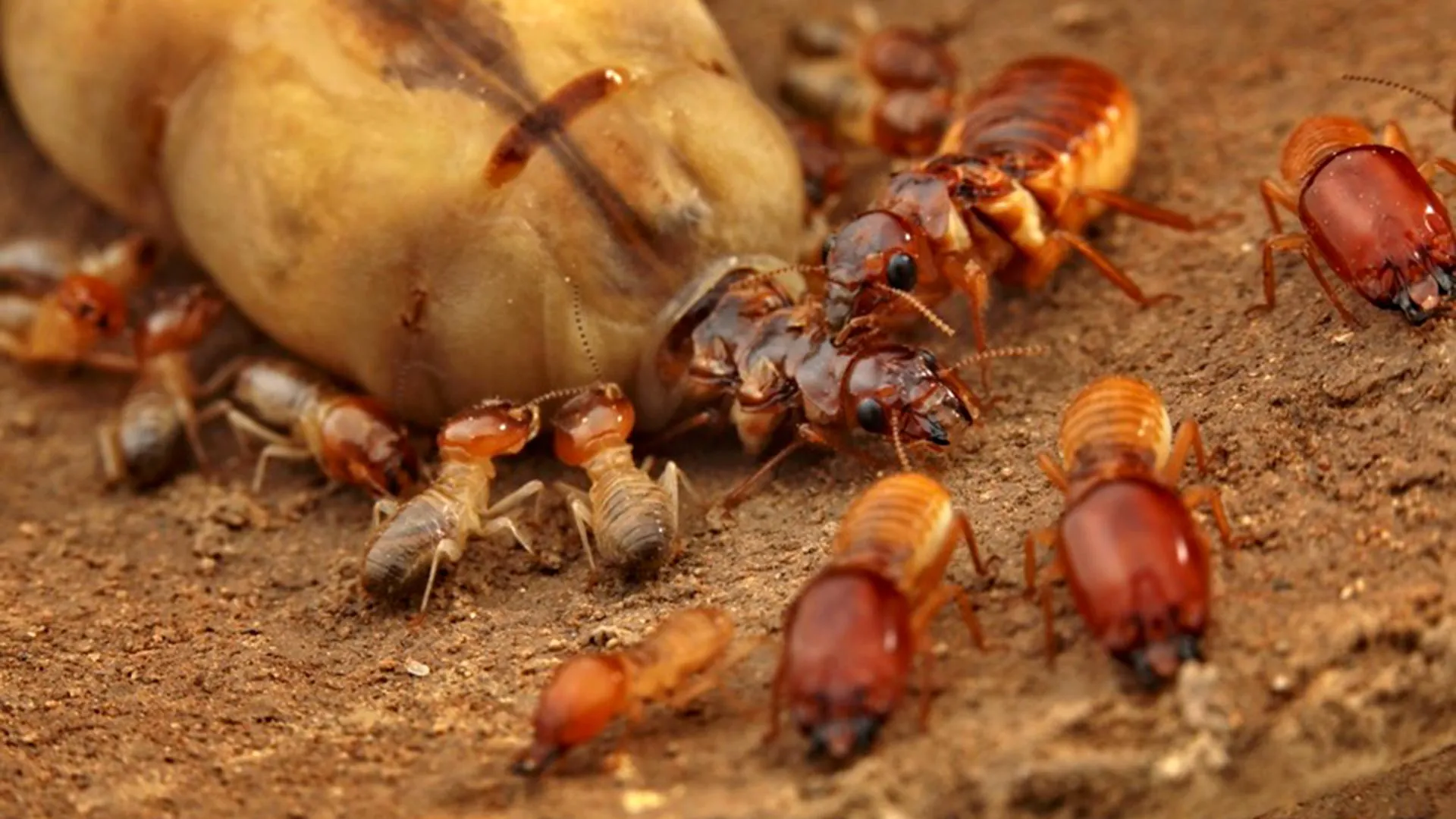
Termites serve as an excellent example of how evolution can take unexpected paths. They emerged from cockroach-like ancestors that shifted their diet to eating dead wood. This transition triggered a series of genetic and behavioral changes, leading to the formation of intricate colonies. Interestingly, studies reveal that termites became socially complex by shedding genes instead of acquiring new ones. This finding challenges the conventional wisdom that suggests more complex societies require more complex genomes. As termites evolved, they lost genes related to metabolism, digestion, and reproduction. Hence, their social behavior reflects a unique evolutionary strategy; they became more cooperative by giving up genetic traits. This gene loss may sound counterintuitive, but it underscores the role of monogamy in their development.
Monogamy also plays a crucial role in shaping termite reproductive strategies. Unlike most animals, termite sperm has lost its tail, which means it cannot swim. This loss indicates that the ancestors of termites had already adopted monogamous practices. As a result, there was less competition among males for female partners. Consequently, termites focused on nurturing genetic ties within their colonies. This aspect fosters a better understanding of complex social systems. Interestingly, even when a reproductive termite dies, monogamous tendencies often persist, reinforcing genetic relatedness among the colony members. The research sheds light on how food-sharing dynamics further refine roles within these societies. By manipulating early nutrition, termites establish division of labor. In this context, young termites become workers or potential kings and queens, depending on their food intake. Such strategies allow them to maintain efficient and stable societies over generations, showcasing the delicate balance of evolution and social structure in nature.
Stay Ahead with the Latest Tech Trends
Stay informed on the revolutionary breakthroughs in Quantum Computing research.
Access comprehensive resources on technology by visiting Wikipedia.
TechV1
