

Fast Facts
-
Wireless Quantum Communication: MIT researchers have developed a wireless communication system using high-speed terahertz waves, enabling quantum computers to send and receive data without the heat issues associated with metal cables.
-
Innovative Transceiver Design: A compact transceiver chip located inside the refrigerator utilizes passive backscatter technology, with tiny antennas acting as mirrors to reflect encoded terahertz waves, significantly reducing power consumption by up to 10 times compared to traditional methods.
-
Compatibility and Scalability: The terahertz system is compatible with standard CMOS fabrication processes, allowing for easy integration into existing technologies and paving the way for the development of larger-scale quantum systems.
- Future Enhancements: Researchers aim to enhance the system’s speed (currently at 4 Gbps) and energy efficiency by utilizing specialized terahertz fibers and exploring more efficient wave generation techniques to make the technology cost-effective and scalable.
MIT Researchers Develop Wireless Solution for Quantum Computing Systems
New research from MIT offers promising advancements in the realm of quantum computing. Traditionally, systems must remain at near absolute zero temperatures to prevent errors in their qubits. However, heat from connecting cables complicates this because it pushes up the temperature inside the refrigerator, known as a cryostat.
To tackle this issue, an interdisciplinary MIT team designed a wireless communication system using terahertz waves. These high-speed waves allow quantum computers to transmit and receive data to room-temperature electronics without metal cables. As a result, the refrigerator can maintain cooler temperatures with significantly less power.
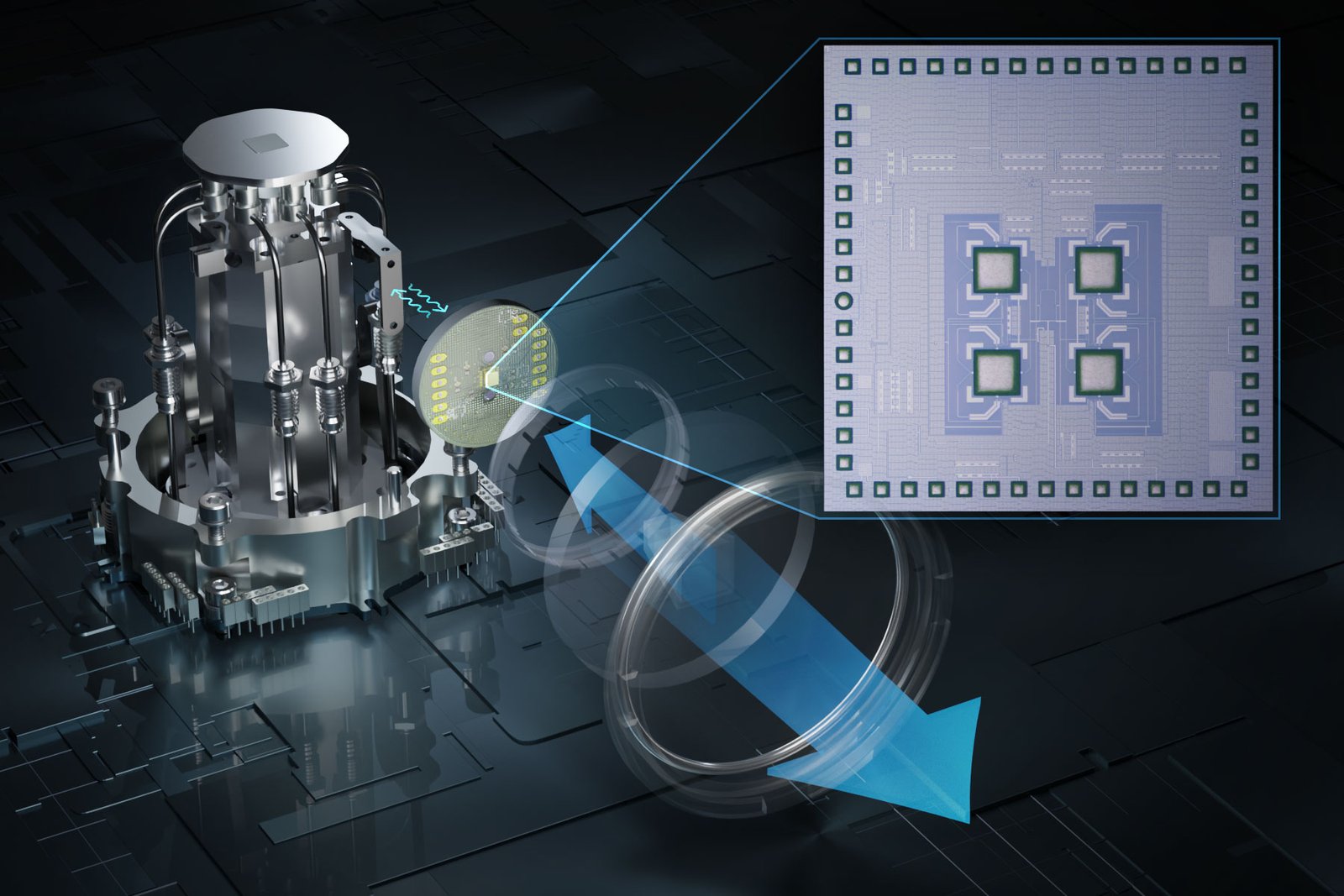
The innovation centers around a small transceiver chip, roughly 2 millimeters on each side. This chip, which resides inside the cryostat, wirelessly connects to a terahertz wave source outside. Utilizing a passive communication technique called backscatter, the chip can both reflect and receive data without introducing much heat into the cryostat.
"By having this reflection mode, you really save the power consumption inside the fridge," said Ruonan Han, an associate professor and senior author of the research. He continued, "Even at this point, we have shown low power consumption inside the fridge that is already better than metallic cables."
This technique yields energy benefits; the new wireless system consumes up to ten times less power than traditional methods. Moreover, the integration of this technology into current systems is feasible, as it can be fabricated with standard semiconductor processes.
The researchers achieved impressive data transmission rates of 4 gigabits per second with their prototype. They believe further improvements could increase this speed dramatically. They are currently investigating terahertz fibers, which promise even better thermal insulation and higher data rates of up to 100 gigabits per second.
As the team refines their designs, the integration of wireless communication into quantum computing systems could unlock greater scalability and energy efficiency. This breakthrough represents a significant step toward developing larger, practical quantum systems that accommodate future technological advancements.
The research showcases the potential of terahertz waves in quantum technology, highlighting a path toward more efficient and powerful computing. The MIT team’s work may pave the way for the next generation of quantum systems, ultimately redefining the field.
Expand Your Tech Knowledge
Explore the future of technology with our detailed insights on Artificial Intelligence.
Stay inspired by the vast knowledge available on Wikipedia.
QuantumV1
