

Essential Insights
- Scientists have created nearly 100 holes at the South Pole for astronomy.
- These holes are used to install the IceCube Neutrino Observatory.
- Detectors in the ice capture blue light from high-energy cosmic neutrinos.
- IceCube’s discoveries led to Nobel Prize recognition for its key collaborator.
APOD: 2026 October 11 – Ice Fishing for Cosmic Neutrinos
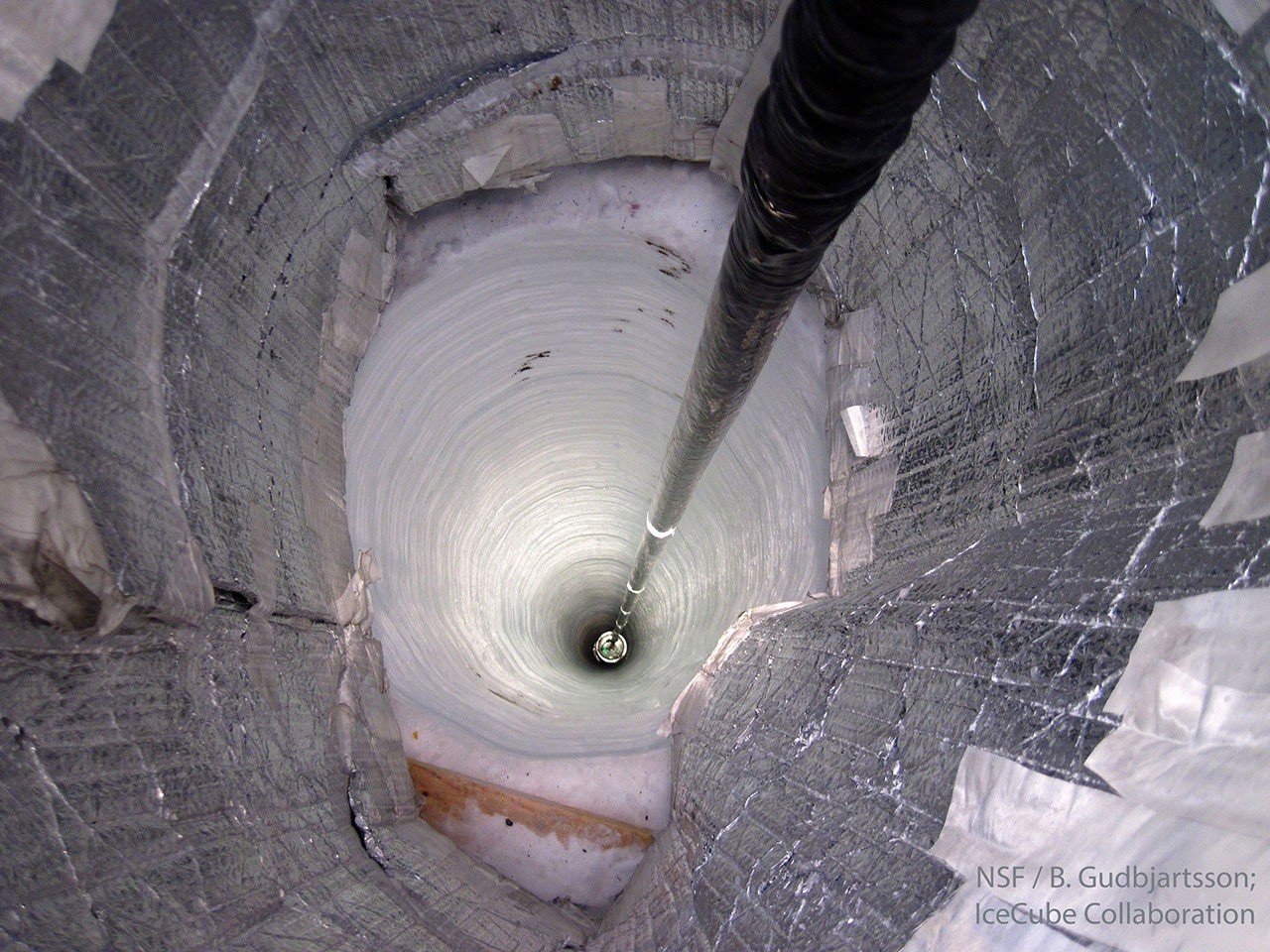
Scientists are making groundbreaking progress at the bottom of the world. Near the South Pole, they are melting nearly 100 holes into the ice. These holes are now part of a giant scientific instrument called the IceCube Neutrino Observatory. This innovative project helps researchers explore some of the universe’s most mysterious particles—neutrinos.
How IceCube Detects Cosmic Neutrinos
To find these tiny particles, scientists lowered long vertical strings into the drilled holes. Each string is knotted with light detectors about the size of basketballs. Once the water refreezes, these detectors sit inside the ice, waiting for signals. When high-energy neutrinos from space hit the ice, they create secondary particles that produce blue light. The detectors sense this light, which acts as a cosmic message. By analyzing the light patterns, scientists can learn where the neutrinos originated. Since its beginning, IceCube has detected many of these illuminating neutrinos, revealing clues about distant cosmic events.
The Significance of the IceCube Project
Built into the Antarctic ice, IceCube is the world’s largest neutrino detector. Its massive size makes it possible to catch these rare particles. In 2010, a final detector string was lowered into the ice, marking a major milestone in the project. The discoveries made with IceCube have been so important that a key leader of the collaboration is expected to receive the Nobel Prize in Physics. This recognition underlines how cutting-edge technology can expand our understanding of the universe. The project not only involves complex engineering but also pushes the boundaries of scientific knowledge about cosmic phenomena.
Expand Your Tech Knowledge
Explore the future of technology with our detailed insights on Artificial Intelligence.
Discover archived knowledge and digital history on the Internet Archive.
Space
