

Essential Insights
- Chinese EV brands now emphasize active suspension and wheel-lifting features in SUVs.
- BYD, Aito, and Li Auto showcase practical wheel-lifting demonstrations for emergencies.
- The trend shifts focus from performance claims to visible hardware innovations.
- Future success depends on turning these features into reliable, everyday recovery tools.
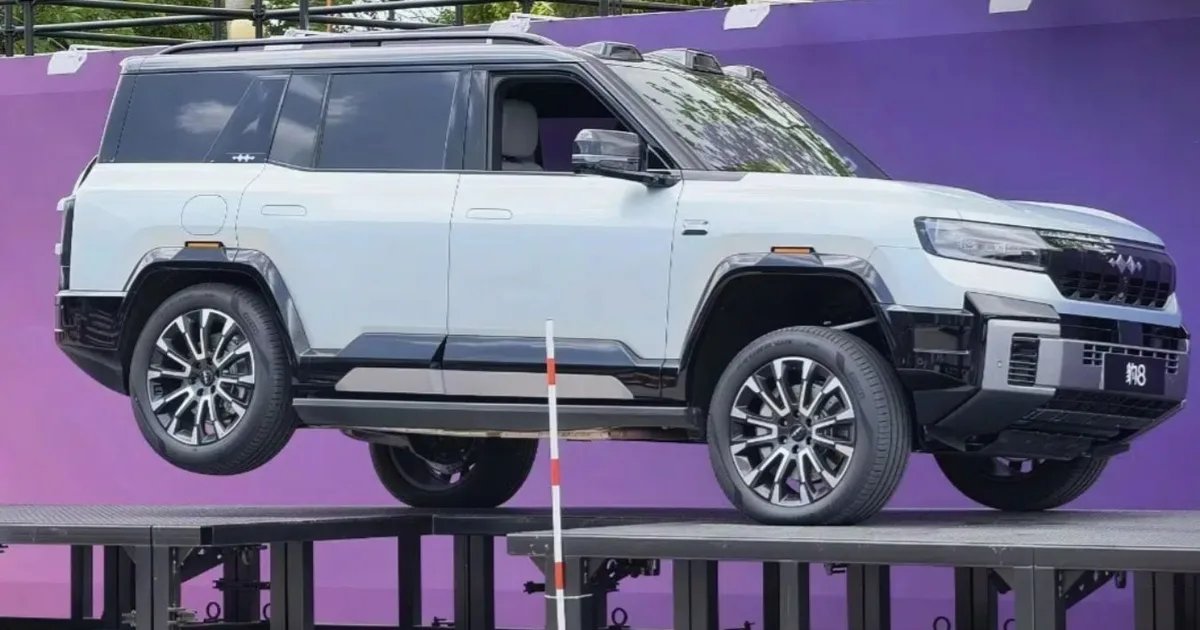
Chinese EV brands have dominated the electric vehicle market with impressive advancements in range and charging speed. Now, they introduce a new feature in premium SUVs: three-wheel driving. Brands like BYD, Aito, and Li Auto showcase active suspension systems that allow one wheel to lift off the ground while remaining in motion. This flashy capability raises the stakes in a crowded market and shifts the focus toward tangible technologies that drivers can easily grasp.
### The Appeal of Visible Innovation
The Denza B8 Flash Charge Edition exemplifies this innovative leap. Its advanced DiSus-P Ultra suspension enables drivers to lift one wheel and navigate challenging terrain without traditional jacks. Demonstrations reveal it can complete a tire change in under two minutes, adding to its allure. While these real-world applications might seem niche, they offer a glimpse into how active suspension can address practical needs. Aito’s M9 and Li Auto’s L9 contribute to this trend, employing similar features that engage consumers on a physical level.
This move from abstract specifications to striking visuals plays well in marketing. In a market flooded with electric vehicles, brands need standout features that captivate prospective buyers. Active suspension becomes that feature, simplifying complex technologies into something people can understand in seconds. The potential for a unique approach to off-road recovery and emergency situations gives manufacturers an edge in communication and consumer interest.
### Practicality Versus Flash
However, the practical implications remain a point of contention. Most consumers will not encounter scenarios where they need three-wheel driving on a daily basis. The technology operates safely only under 15 km/h, far from highway speeds. Luxury SUVs adopt this technology first, raising questions about affordability and scalability. Manufacturers must prove that these innovations translate into reliable solutions for everyday challenges rather than just cinematic spectacles.
The future will reveal whether brands can effectively incorporate this feature into real-world tools, enhancing driver safety and convenience. The winner in this space won’t necessarily be the brand with the flashiest demonstration. Instead, it will be the one that turns this emerging technology into a reliable asset for drivers when obstacles arise. In a rapidly advancing EV landscape, functionality must accompany innovation.
Discover More Technology Insights
Stay informed on the revolutionary breakthroughs in Quantum Computing research.
Stay inspired by the vast knowledge available on Wikipedia.
TechV1
