
Close Menu
    Facebook X (Twitter) Instagram
    Friday, November 27
    Top Stories:
    • Congo Ebola Outbreak Tops 12,000 Cases as Responders Flee
    • Sleep and Anxiety Drugs May Harm Aging Brains
    • Genentech Wins Second Breast Cancer Approval for Oral SERD in a Week
    Facebook X (Twitter) Instagram Pinterest Vimeo
    IO Tribune
    • Home
    • AI
    • Tech
      • Gadgets
      • Fashion Tech
    • Crypto
    • Smart Cities
      • IOT
    • Science
      • Space
      • Quantum
    • OPED
    IO Tribune
    Home » Witness the Cosmic Explosion: The Bright Remnant of a Stellar Cataclysm
    Space

    Witness the Cosmic Explosion: The Bright Remnant of a Stellar Cataclysm

    Staff ReporterBy Staff ReporterOctober 7, 2026No Comments2 Mins Read
    Share Facebook Twitter Pinterest LinkedIn Tumblr Reddit Telegram Email
    Share
    Facebook Twitter LinkedIn Pinterest Email

    Quick Takeaways

    1. Nebula Pa 30 likely results from a historic supernova explosion.
    2. The supernova, observed in 1181, was recorded by ancient astronomers.
    3. It may have been caused by merging white dwarfs, a Type Iax supernova.
    4. Astronomers study the nebula’s features to unravel 845-year-old cosmic mystery.

    Unveiling a Cosmic Mystery: The Supernova Remnant Pa 30

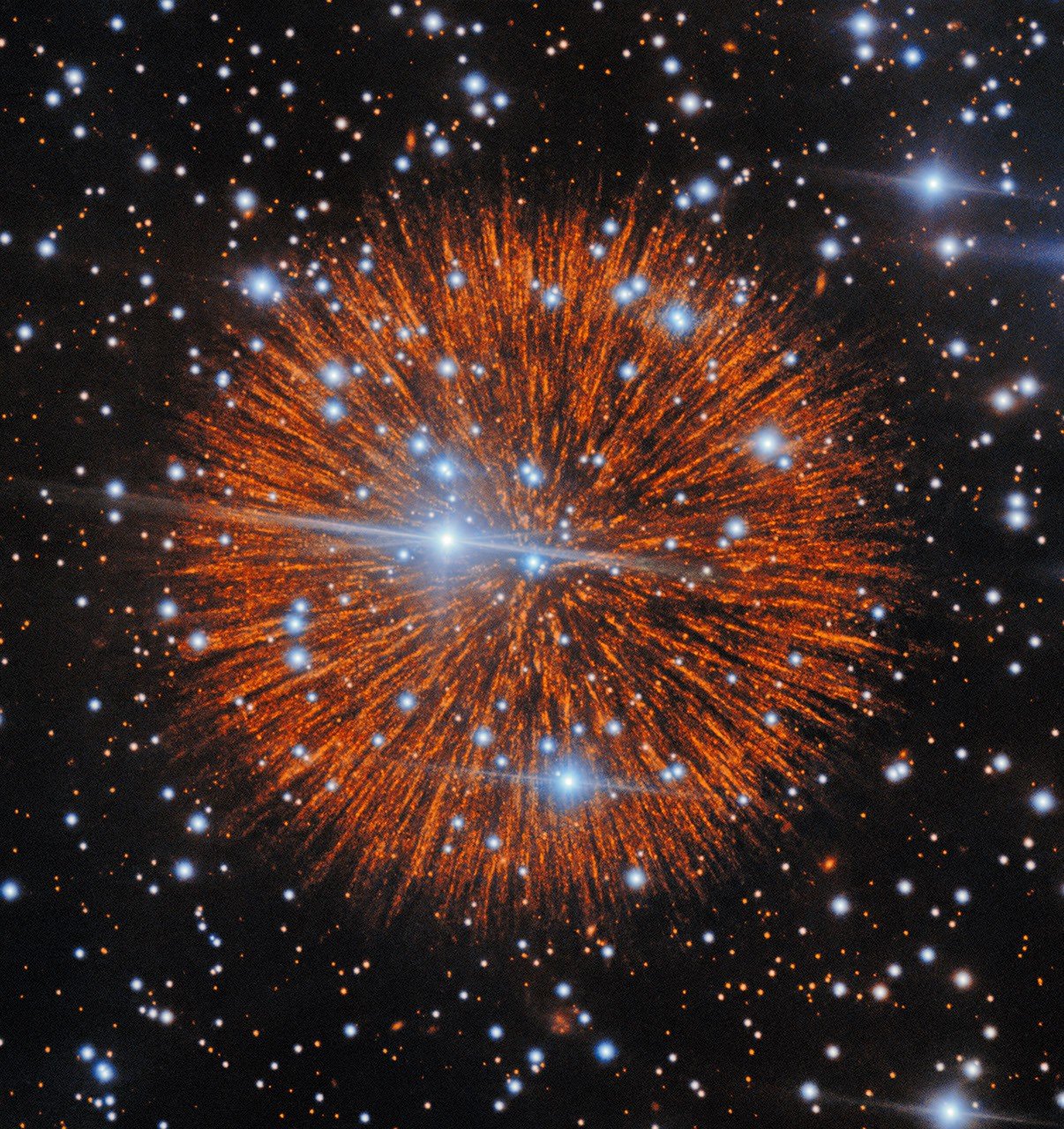
    On October 7, 2026, NASA’s Astronomy Picture of the Day showcased a striking image of the supernova remnant Pa 30. Taken with the Gemini North Telescope in Hawai’i, this picture reveals a complex nebula shaped by an ancient explosion millions of miles away. It’s not a fireworks display — instead, it’s a snapshot of the remnants left behind by a massive stellar event.

    This nebula is believed to be the result of a supernova that was visible to ancient astronomers. Historical records from China, Japan, and Arabic sources describe a bright “guest star” that appeared in the sky in the year 1181. This guest star lingered for approximately 185 days before fading away. Modern scientists think that this was the explosion responsible for creating Pa 30. Although they know it was a supernova, the exact details of this explosion remain a mystery. It’s classified as a Type Iax supernova, a rare and less-understood kind of explosion caused by the merger of two white dwarfs — dense remnants of stars that have exhausted their fuel.

    At the center of the nebula stands a highly energized star, emitting intense heat and strong stellar winds. These winds interact with the surrounding material, creating elongated, radial filaments that stretch outward. If you look closely, you’ll see small, pearl-like knots along these filaments. These knots are about 4 light-days across, a tiny size on the cosmic scale but still enormous in human terms. Their presence hints at complex physical processes triggered by the supernova, contributing to the nebula’s intriguing structure.

    Scientists are still working to understand how the explosion of 1181 led to the elaborate shapes seen today. Continued observations and research aim to uncover the details of this ancient event. Each discovery layers new understanding onto the 845-year-old mystery of Pa 30’s origin, revealing the dynamic history written in the stars.

    Discover More Technology Insights

    Stay informed on the revolutionary breakthroughs in Quantum Computing research.

    Access comprehensive resources on technology by visiting Wikipedia.

    Space

    APOD Cosmos NASA Research Space VT1
    Share. Facebook Twitter Pinterest LinkedIn Tumblr Email
    Previous ArticleCanada and Italy enhance quantum collaboration
    Next Article OpenAI’s New Agent, Your Life, My Love
    Avatar photo
    Staff Reporter
    • Website

    John Marcelli is a staff writer for IO Tribune, with a passion for exploring and writing about the ever-evolving world of technology. From emerging trends to in-depth reviews of the latest gadgets, John stays at the forefront of innovation, delivering engaging content that informs and inspires readers. When he's not writing, he enjoys experimenting with new tech tools and diving into the digital landscape.

    Related Posts

    AI

    Google’s Biggest Research Breakthroughs of 2025

    November 27, 2026
    Space

    Astronomers witness red giant devour stellar bao bun before erupting

    November 27, 2026
    AI

    Veo 3.1 Ingredients-to-Video: What’s New?

    November 27, 2026
    Add A Comment

    Comments are closed.

    Must Read

    Google’s Biggest Research Breakthroughs of 2025

    November 27, 2026

    Astronomers witness red giant devour stellar bao bun before erupting

    November 27, 2026

    Veo 3.1 Ingredients-to-Video: What’s New?

    November 27, 2026

    Morphe v2.4.0 Brings YouTube Videos to Android Auto Before Google

    November 27, 2026

    Earth’s Missing Billion Years: The Mystery SolvedEarth’s Missing Billion Years: The Mystery Solved

    November 27, 2026
    Categories
    • AI
    • Crypto
    • Fashion Tech
    • Gadgets
    • IOT
    • OPED
    • Quantum
    • Science
    • Smart Cities
    • Space
    • Tech
    Most Popular

    Create Your Local AI Coding Agent with Gemma 4

    June 24, 2026

    ETHGas and Ether.fi Join $3B Deal to Revolutionize Institutional Blockspace Markets

    April 15, 2026

    Unlocking the Universe: A 3D Map of 47 Million Galaxies Reveals Dark Energy’s Secrets

    April 29, 2026
    Our Picks

    Nick Szabo Challenges Bitcoin’s Trustless Narrative Amid Legal Risks

    November 18, 2025

    Galaxy Z Flip 8 Cases Are Now Revealing Themselves

    May 17, 2026

    Monarch Tractor Faces Uncertain Future: Layoffs and Shutdown Warning

    November 20, 2025
    Categories
    • AI
    • Crypto
    • Fashion Tech
    • Gadgets
    • IOT
    • OPED
    • Quantum
    • Science
    • Smart Cities
    • Space
    • Tech
    • Privacy Policy
    • Disclaimer
    • Terms and Conditions
    • About Us
    • Contact us
    Copyright © 2025 Iotribune.comAll Rights Reserved.

    Type above and press Enter to search. Press Esc to cancel.