

Essential Insights
- NASA, JPL, and DSN leaders unveiled the new DSS-23 antenna.
- The antenna is part of the DSN’s 2009 Aperture Enhancement Project expansion.
- The DSN supports communication with distant spacecraft across multiple radio frequencies.
- The project added six new 34-meter antennas to improve space mission capabilities.
Ribbon-Cutting Event Celebrates New NASA Deep Space Station 23
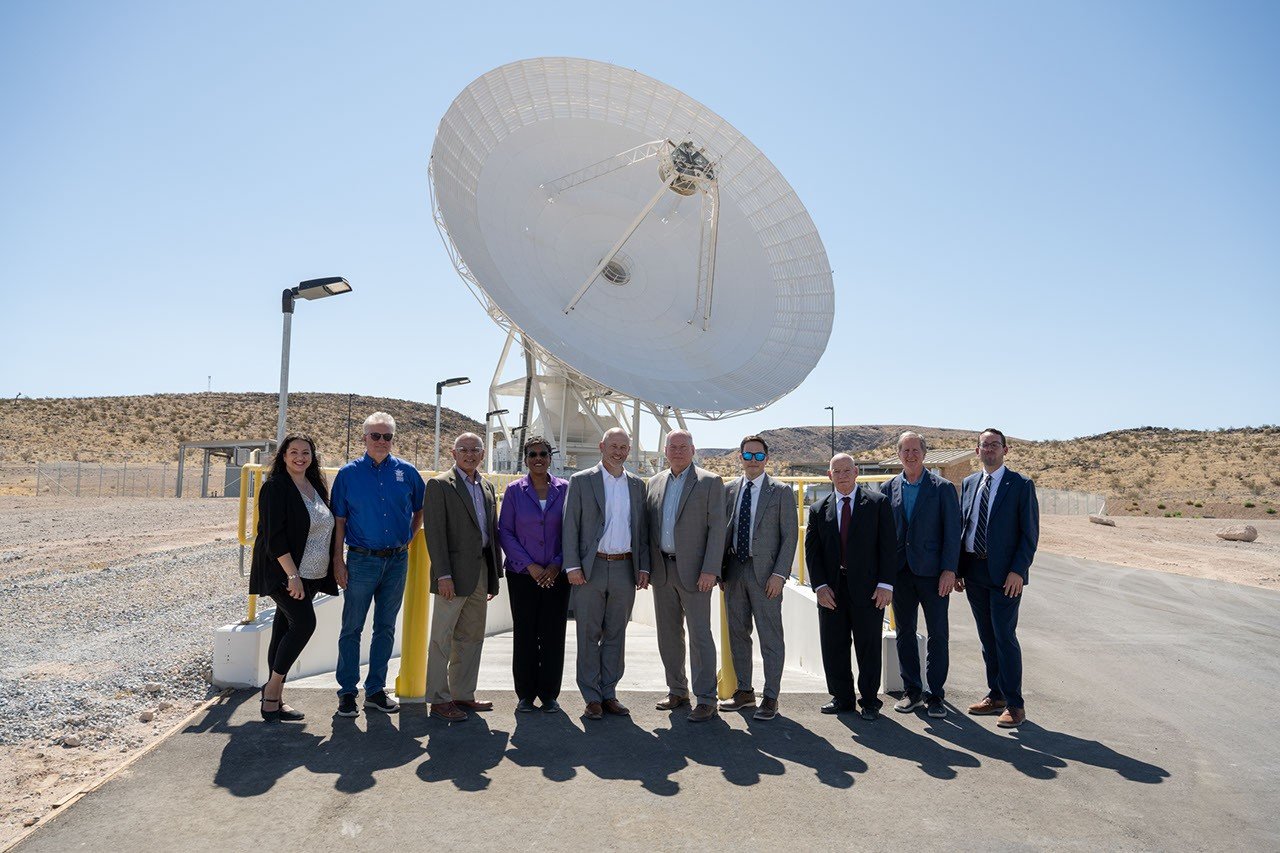
On August 25, 2026, leaders from NASA and the Jet Propulsion Laboratory (JPL) gathered at the Goldstone complex near Barstow, California, to mark a significant milestone. They participated in a ribbon-cutting ceremony for the newly completed Deep Space Station 23 (DSS-23) antenna. This event highlighted the ongoing efforts to upgrade NASA’s Deep Space Network (DSN), a vital system that supports space exploration missions worldwide.
The event drew notable figures, including representatives from NASA Headquarters, JPL, and the DSN. Leaders such as Wanda Peters, deputy associate administrator at NASA Headquarters, and representatives from JPL like Germaine Aziz and Michael Levesque attended the ceremony. They stood in front of the impressive DSS-23 antenna, a symbol of the network’s enhanced capacity and technological progress.
The Upgrades and Their Impact
DSS-23 is part of the DSN’s Aperture Enhancement Project, which began in 2009. The project aims to improve communication capabilities by adding six new 34-meter (114-foot) multifrequency beam-waveguide antennas. These antennas are designed to work across many radio frequencies, making them versatile for a wide range of missions.
The addition of DSS-23 bolsters the DSN’s ability to track, communicate with, and receive data from spacecraft far beyond Earth. These upgrades help scientists gather more precise scientific information and enable commands to be sent quickly and reliably. The improved network also supports new technologies, increasing the readiness for future space missions.
The DSN, managed by JPL for NASA’s Space Communications and Navigation (SCaN) Program, plays an essential role in space exploration. Its antennas serve as the communication link between Earth and distant spacecraft, including missions to Mars, Jupiter, and beyond. The newest station, DSS-23, exemplifies NASA’s commitment to enhancing this critical infrastructure for ongoing and future exploration efforts.
For more details about the DSN and its missions, visit:
https://www.nasa.gov/communicating-with-missions/dsn/
Continue Your Tech Journey
Explore the future of technology with our detailed insights on Artificial Intelligence.
Discover archived knowledge and digital history on the Internet Archive.
Space
