

Top Highlights
NASA’s USRC combines research grants with entrepreneurship training for aspiring aerospace innovators.
Gardner’s team developed experimental drones while learning budgeting, fundraising, and clear communication.
USRC projects expanded Gardner’s network, opened internships, and helped launch AG3 Labs.
AG3’s Army contracts now enable production of thousands of drones each month.
NASA University Challenge Ignites Trajectory of Drone Entrepreneur
A NASA student grant can do more than fund a research project. For Gavin Gardner and his Michigan State University teammates, the University Student Research Challenge (USRC) also provided an early lesson in turning engineering work into a practical, persuasive venture.
The program awards grants to college teams working on projects tied to NASA’s aeronautical research goals. It also asks students to develop skills beyond the lab, including budgeting, managing funds and explaining their work to people without an engineering background.
Gardner learned that distinction firsthand. “Half the battle is building your product,” he said. “The other half is selling the product in a way that everyone else can understand what you’re doing and not talking in nerdy, engineering ways.”
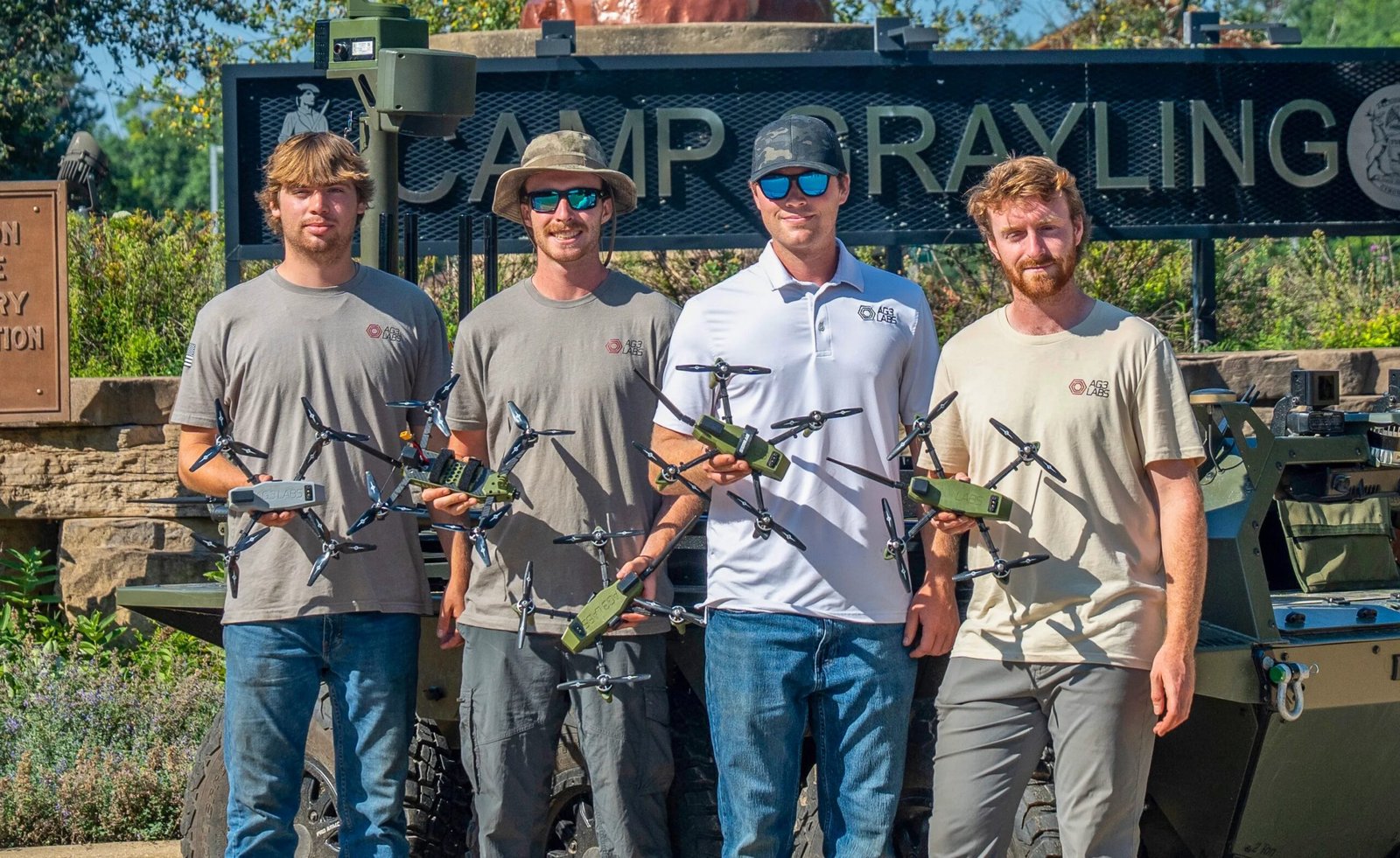
That experience would later help shape a company. In 2024, Gardner, his brother and other USRC alumni founded AG3 Labs, a drone developer focused on military training exercises. The company’s growth reflects both the promise of student-led research and the practical work required to move a technology from prototype to production.
From garage projects to NASA-funded research
Gardner’s interest in engineering began with a middle school trip to Space Camp. At home, he and his brother, Gryson, built on that interest by tinkering with machinery, drones and electronic kits in their Michigan garage.
At Michigan State, Gardner joined a student group focused on drones, gaining hands-on experience building and operating them. In 2021, a friend contacted him about a NASA USRC grant and asked him to help develop a new aircraft for a project called Aerial Intra-city Delivery Electric Drones, or AIDED.
The team imagined a drone that could use public transit as part of its route. It would carry cargo, land on a bus, recharge while traveling, then take off for the final leg of a delivery.
The concept offered a creative answer to a difficult urban logistics problem: A drone might avoid flying the full distance through a city by sharing part of a bus route. The team built and flew a full-scale aircraft to test the idea. But a successful demonstration did not settle the question of whether the system could operate commercially.
Dense-city flights, especially those that pass over people, involve significant regulatory and operational challenges. Gardner said the team was deterred by the number of rules involved in deploying such a novel system. The decision not to pursue a commercial venture showed an important part of technology development: A prototype can prove that something works, while leaving questions about cost, safety and real-world use unanswered.
The team’s technical work and experience helped lead to a second NASA award in 2023. Its next project, the Laser Energized Aerial Drone System, or LEADS, examined whether a laser could transfer power directly to a drone in flight. The work produced a flying prototype.
The projects also expanded Gardner’s professional network. Through contacts in the drone community, he connected with NASA personnel at the Glenn Research Center in Cleveland. They alerted him to internship opportunities, and he later secured an internship while attending graduate school.
A research challenge becomes a business launchpad
As Gardner approached graduation with a master’s degree in spring 2025, he and his collaborators began building a business. In late 2024, he co-founded AG3 Labs with Gryson and other USRC alumni after a friend suggested the military needed low-cost drones to test counter-drone systems.
An initial award from the U.S. Army led to further contracts. Those opportunities helped the company expand its operations. AG3 Labs now has the capacity to build thousands of drones each month, according to Gardner.
The company’s focus differs from the team’s earlier civilian delivery concept. Its work serves military training exercises, where low-cost aircraft can help test systems designed to counter drones. That shift illustrates how research skills and technology can move into a different market when a practical need emerges.
Gardner credits his technical background, but he also points to USRC’s business lessons. Students had to plan budgets, handle substantial sums and promote their work through crowdfunding. Those responsibilities helped them learn to communicate a technical idea in terms other people could understand.
“I don’t think I would discredit our technical expertise in getting us to where we are today,” Gardner said. “But I know that USRC was a booster that really amplified our trajectory at such a young age.”
USRC manager Steven Holz said the program aims to help students grow both technically and entrepreneurially. He described alumni success as evidence of how a grant and guidance can support students as they prepare for careers in aviation and related fields.
Gardner’s path offers a clear example, but it does not suggest that every student project will become a company. A working aircraft still must meet practical, regulatory and market demands. What USRC gave Gardner and his teammates was a chance to test ideas, build relationships and learn how to explain their work. For this team, those experiences became part of the foundation for a business—and a way to carry student research into the aerospace workforce.
Discover More Technology Insights
Learn how the Internet of Things (IoT) is transforming everyday life.
Explore past and present digital transformations on the Internet Archive.
Space
