

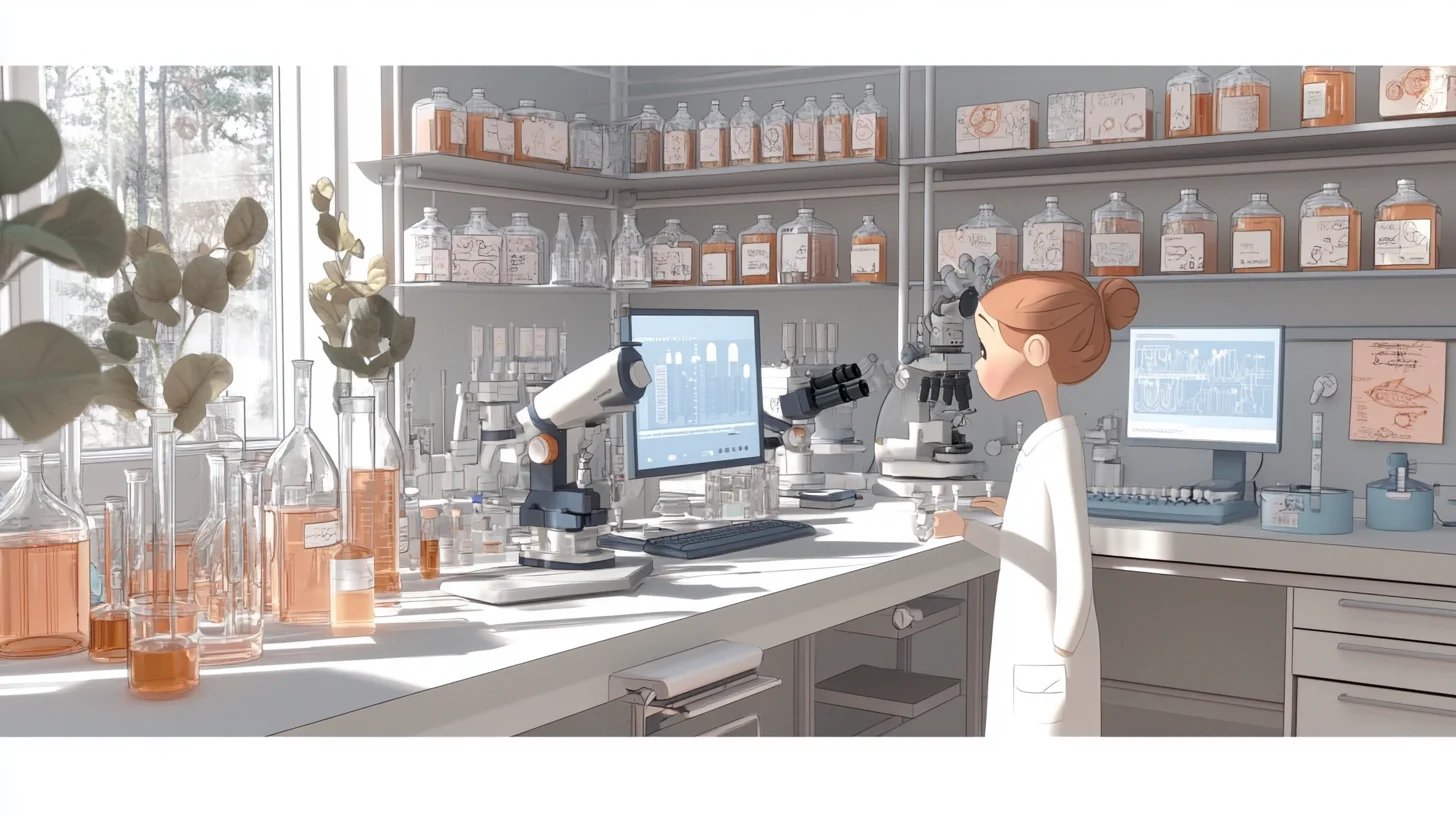
Essential Insights
- Fluorescence lifetime imaging microscopy (FLIM) enhances cellular and tissue imaging accuracy.
- Advanced analysis techniques, such as deep learning and phasor approaches, improve FLIM data.
- FLIM enables monitoring metabolic, calcium, and molecular dynamics in live cells.
- Emerging methods target real-time, high-speed, and noise-resilient imaging for biomedical insights.
Advancing Imaging Speed and Precision
High-fidelity fluorescence lifetime imaging has traditionally been slow and noisy. However, recent developments have introduced event-based denoising techniques that significantly boost speed and clarity. This breakthrough allows scientists to capture rapid biological processes in real time, leading to more accurate observations. For everyday users, this could mean faster disease diagnosis or improved medical imaging. Scientific research benefits too, as it enables more detailed studies of cellular activity with less data noise. Ultimately, this improvement promises a more detailed look into how our bodies function, making complex systems easier to understand.
Scientific Progress in Denoising and Analysis
The core of this innovation is the combination of advanced algorithms and deep learning. Instead of traditional pixel-by-pixel analysis, event-based denoising focuses on relevant signal events, reducing computational load. This approach produces cleaner images with fewer photons, which is crucial in delicate biological samples. As a result, researchers can now perform high-speed imaging without sacrificing quality. This progress also opens doors for new scientific applications, such as monitoring neuron activity or tracking cellular metabolism in real time. By refining the tools for analysis, science gains a more powerful way to explore tiny but vital processes.
Impacts on daily life and health
The ability to quickly and accurately visualize cellular functions impacts real-world health issues. For instance, faster imaging can lead to earlier detection of diseases like cancer or neurological disorders. In research, improved imaging impacts drug development, helping scientists understand how treatments interact within the body. Beyond medicine, agricultural and environmental sciences could benefit from more detailed monitoring of biological systems. As technology continues to evolve, these advancements will enhance both scientific understanding and quality of life, making health care more precise and personalized.
Stay Ahead with the Latest Tech Trends
Learn how the Internet of Things (IoT) is transforming everyday life.
Learn more about cutting-edge innovations supported by the National Science Foundation (NSF).
Sci-BioV1
