

Top Highlights
-
Ancient Sea Crossings: Around 30,000 years ago, early humans successfully crossed from Taiwan to southern Japan, including Okinawa, using primitive canoes and navigational skills without modern tools.
-
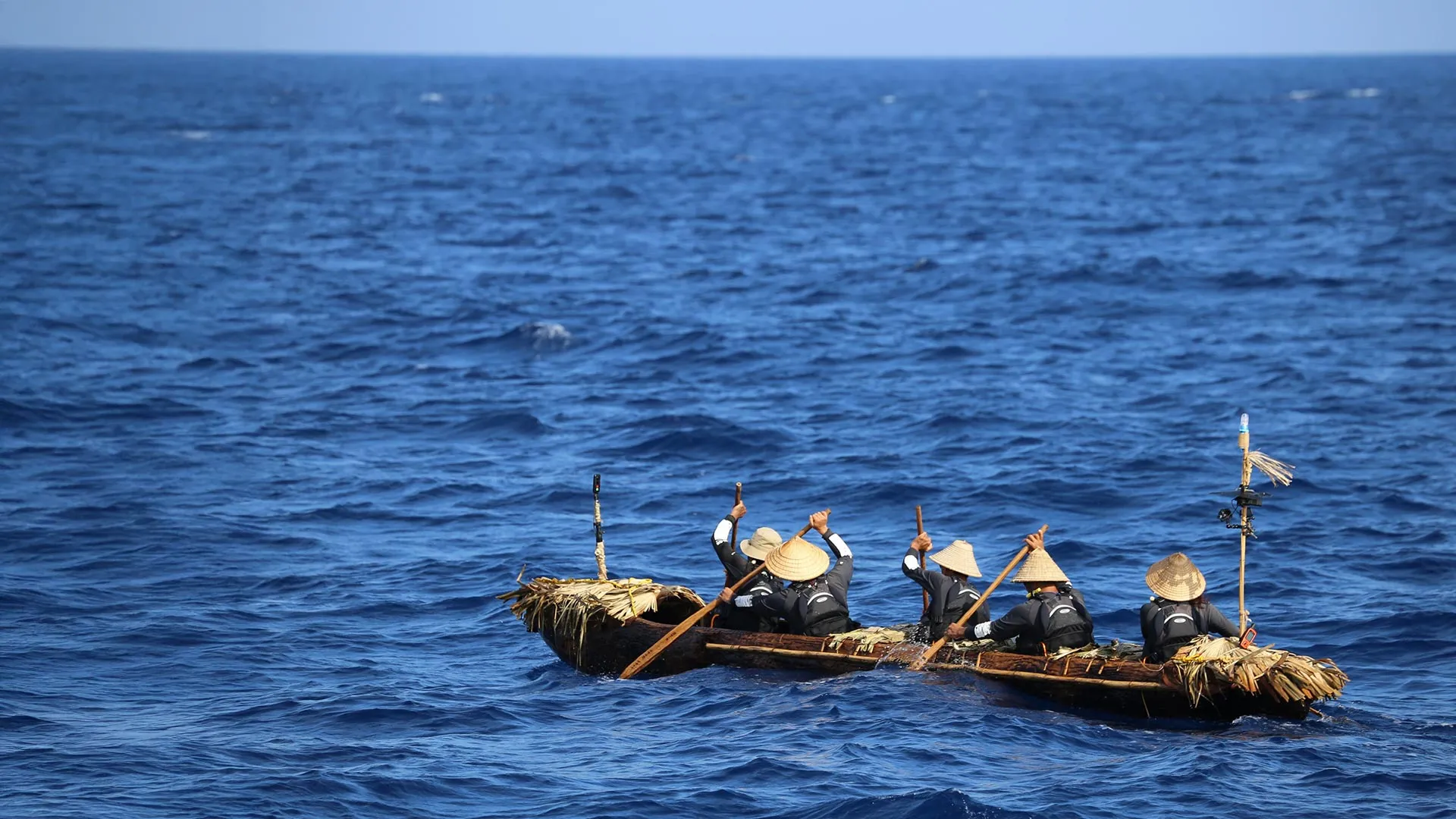
Experimental Archaeology: Researchers, led by Professor Yousuke Kaifu, constructed a 7.5-meter dugout canoe with period-accurate tools, paddling 225 kilometers across treacherous seas to understand ancient seafaring methods.
-
Simulations and Discoveries: Using numerical simulations, the team revealed strategic paddling techniques and optimal starting points, indicating early humans had advanced navigational knowledge in challenging ocean conditions.
- Insights into Hypothetical Journeys: The project demonstrates that early humans were adept seafarers, facing significant challenges with strategies akin to later Polynesian explorers, highlighting their resilience and exploration spirit.
Rediscovering Ancient Maritime Skills
A recent study sheds light on how early modern humans navigated treacherous seas. Researchers from Japan and Taiwan successfully reconstructed how these populations likely crossed vast ocean stretches over 30,000 years ago. Using experimental archaeology, they built period-accurate canoes and navigated using traditional methods. Their efforts allow us to visualize the daring journeys of those Stone Age pioneers. For instance, the team paddled a 7.5-meter dugout canoe from Taiwan to Yonaguni Island—a distance of 225 kilometers. This journey, accomplished using only the sun, stars, and instincts, proves that ancient peoples possessed remarkable navigational skills.
These findings suggest a deep understanding of ocean currents and marine environments by our ancestors. By simulating various journeys, the team discovered that launching from northern Taiwan enhanced their chances of success against the powerful Kuroshio Current. They also learned that effective paddling strategies were crucial to navigating safely. Such insights contribute to our understanding of human migration and resilience. Early modern humans were not merely survivalists; they were bold explorers, unafraid to challenge the unpredictable forces of nature.
The Implications for Today
This research opens avenues for contemporary exploration and understanding of human adaptability. It highlights the potential for ancient wisdom in modern contexts, such as environmental navigation and sustainable practices. The team’s methods encourage us to reconsider lost skills that may still hold value today. Just as ancient Polynesians utilized ocean signs for navigation, modern technology can help us learn from past strategies, perhaps even enhancing our own exploration efforts.
Moreover, as we face pressing challenges like climate change, recognizing our shared human legacy of navigation and exploration can inspire innovative problem-solving. Understanding how our ancestors overcame significant obstacles can motivate current generations to face their own challenges with courage and resourcefulness. Humanity’s journey has always involved risks and exploration, and this study reminds us that we stand on the shoulders of those who dared to venture into the unknown.
Continue Your Tech Journey
Stay informed on the revolutionary breakthroughs in Quantum Computing research.
Access comprehensive resources on technology by visiting Wikipedia.
TechV1
