

Quick Takeaways
- Equinoxes occur twice yearly, marking equal day and night durations worldwide.
- They happen in March and September, signaling seasonal changes globally.
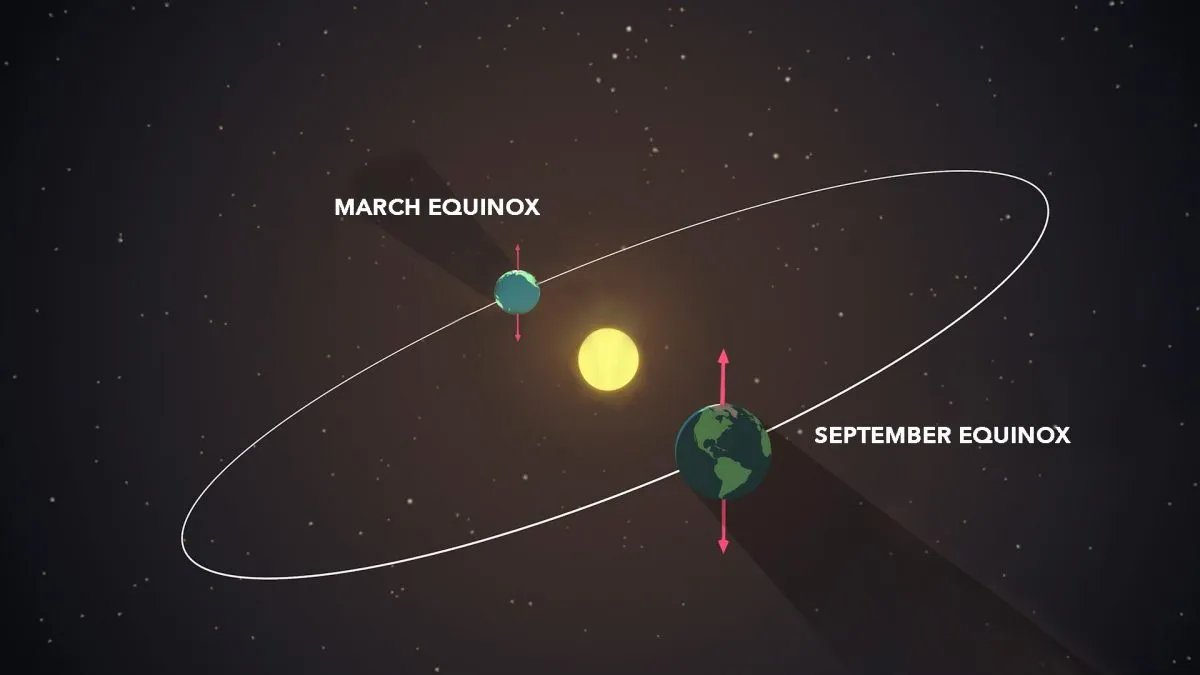
- The Sun crosses Earth’s equator, affecting daylight and seasons in both hemispheres.
- Atmospheric effects prevent perfect day-night equality during equinoxes.
Embracing the Equinox – NASA Science
Depending on where you live, the equinox can feel like a sign of longer nights and darker days, or a time when sunlight grows stronger and temperatures rise. Humanity has long watched these twice-a-year events to help predict seasonal shifts. Many ancient cultures built observatories to track equinoxes and solstices, marking them as points of change in the seasons. Today, you don’t need a special instrument to know when an equinox occurs. Calendars mark these days, which happen in March and September each year. The word “equinox” comes from Latin, meaning “equal night,” and it refers to the moment when day and night are roughly equal. But what exactly is an equinox?
What Is an Equinox?
An equinox takes place twice annually, aligning with the sun crossing the planet’s equatorial plane. In 2026, the spring (or vernal) equinox occurs on March 20 at 14:46 UTC, or 7:46 a.m. Eastern Daylight Time. The fall (or autumnal) equinox happens on September 23 at 00:05 UTC, which translates to September 22 at 5:05 p.m. Pacific Daylight Time. During these moments, the Sun appears to pass directly over Earth’s equator. If you stand on the equator at noon during an equinox, the Sun would be directly overhead. After March, the Sun’s path moves northward in the sky, peaking summer in the Northern Hemisphere. Then, after the September equinox, the Sun shifts southward again, leading to cooler, shorter days.
This solar movement causes the changing seasons. The March equinox signals the start of spring in the Northern Hemisphere and autumn in the Southern Hemisphere. The September equinox does the opposite, bringing fall to the north and spring to the south. The Sun’s position during these times creates equal daylight and darkness on the planet, although the exact timing varies slightly depending on your location and atmospheric effects.
Why Equinoxes Matter in Space and Technology
Understanding equinoxes isn’t just about marking seasons. NASA scientists study these moments to learn more about Earth’s orbit and climate patterns. Equinox events help calibrate satellite instruments and improve weather forecasts. They also guide spacecraft missions that orbit the Earth or other planets. For example, during equinoxes, the Sun shines directly on the equator, affecting satellite communications and solar power systems. NASA uses observatories and satellites to track the position of the Sun, Earth, and other celestial bodies, providing data that helps predict seasonal changes and patterns of sunlight.
Observing how the Sun moves during equinoxes enhances our understanding of planetary dynamics. It shows how tilt and orbit influence climate and day length around the world. As technology advances, scientists can better analyze the subtle effects of atmospheric refraction and light scattering on sunlight during equinoxes. This knowledge contributes to global efforts to monitor climate change and improve weather prediction models.
By embracing the equinox, NASA scientists continue a tradition of observing these celestial events to better understand our planet within the solar system. Whether you see them as signposts of seasonal change or as opportunities for scientific discovery, equinoxes remind us of Earth’s delicate dance around the Sun—a dance that shapes life across the globe.
Discover More Technology Insights
Dive deeper into the world of Cryptocurrency and its impact on global finance.
Access comprehensive resources on technology by visiting Wikipedia.
Space
