

Summary Points
-
Historic Medical Evacuation: NASA’s Crew-11 mission marked the first medical evacuation from the International Space Station (ISS) due to a serious but undisclosed health issue, prompting an early return of the entire crew.
-
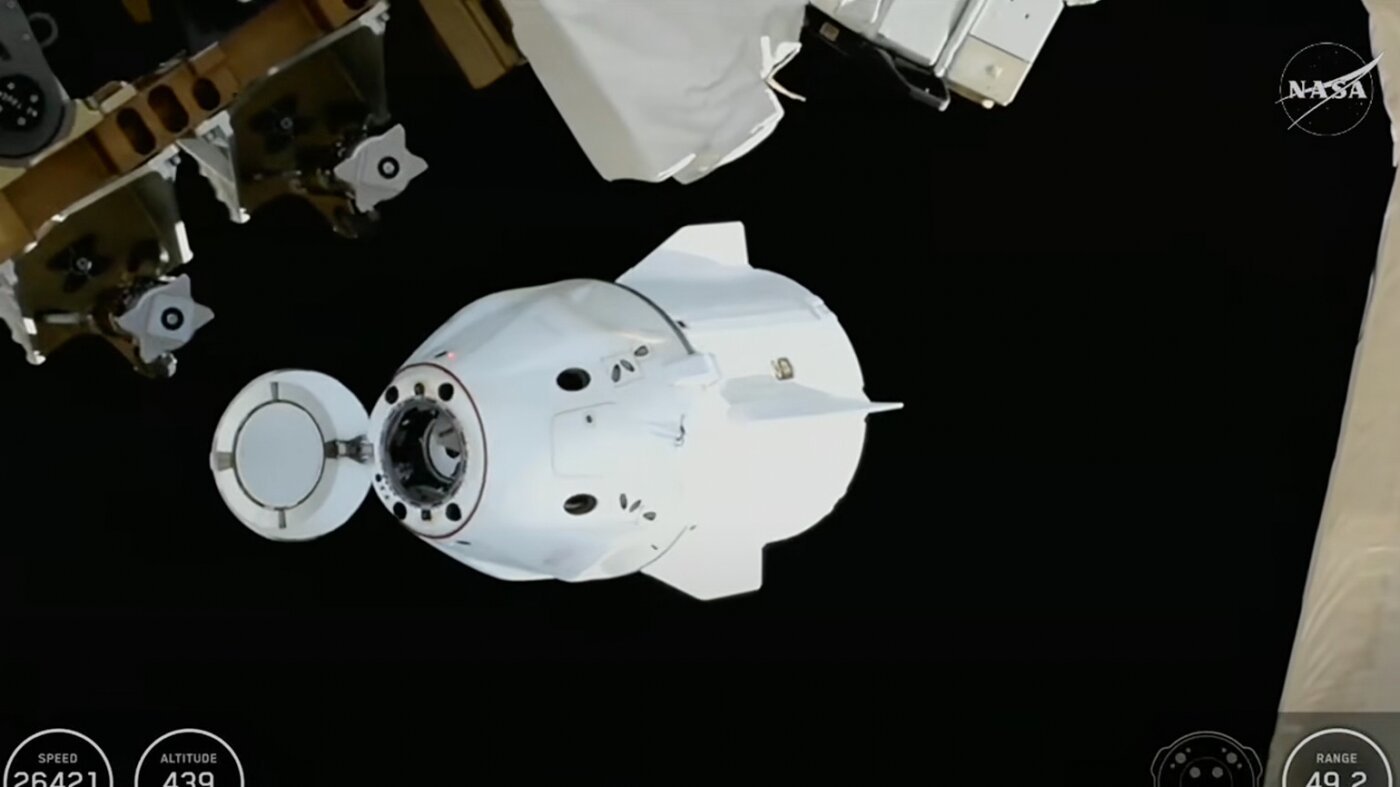
Successful Splashdown: The SpaceX Dragon capsule safely splashed down in the Pacific Ocean off San Diego after a nearly 10-hour return journey from the ISS on Thursday morning.
-
Crew Details: The mission, which began on August 1, 2025, included NASA astronauts Zena Cardman and Mike Fincke, Japan’s Kimiya Yui, and Russia’s Oleg Platonov, totaling 167 days in space and 2,672 Earth orbits.
-
Reduced ISS Operations: With Crew-11’s departure, the ISS is left with only three crew members, which may lead to fewer experiments and maintenance until the next Crew-12 mission scheduled for February 15, 2026.
NASA’s Crew-11 Returns After Shortened 5-Month Mission
NASA’s Crew-11 mission came to an unexpected end when the team splashed down in the Pacific Ocean off San Diego. They traveled in their SpaceX Dragon capsule, completing a 10-hour journey from the International Space Station (ISS). This splashdown marked a significant milestone, as it was the first medical evacuation in NASA’s history.
The crew undocked from the ISS at 5:20 p.m. EST. Surprisingly, the mission, initially set for six months, was shortened by a month due to a medical issue. NASA has not disclosed details about the astronaut involved, citing health privacy regulations. However, the decision to bring the crew home came after a serious but stable medical condition prompted the cancellation of a planned spacewalk.
As a result, NASA recalled all four astronauts, which included members from the U.S., Japan, and Russia. The capsule served as their only means of transportation back to Earth. Thus, all crew members returned together.
The mission began on August 1, 2025, with a SpaceX Falcon 9 rocket launch from Florida’s Kennedy Space Center. Over their 167 days in space, they completed an impressive 2,672 orbits around the Earth, traveling 70.8 million miles. Now, only three astronauts remain aboard the ISS, which may limit upcoming experiments and maintenance.
Looking ahead, the next Crew-12 mission will launch no earlier than February 15, bringing fresh personnel to the ISS. This rotation underscores the importance of technological advancements in space travel. Increased accessibility to the ISS allows for ongoing research that improves life on Earth. New missions highlight the necessity of adaptable planning in space exploration.
Overall, despite the challenges, NASA’s commitment to exploration and scientific discovery remains strong. The resilience of the crew further emphasizes the spirit of collaboration and innovation essential to advancing human spaceflight.
Expand Your Tech Knowledge
Explore the future of technology with our detailed insights on Artificial Intelligence.
Discover archived knowledge and digital history on the Internet Archive.
SciV1
