

Top Highlights
- The 2026-2027 challenge focuses on integrating new energy systems like LNG into aviation.
- Teams design innovative airport layouts accommodating multiple fuel types and aircraft safety.
- Middle and high school students submit creative and technical projects by January 2027.
- Submissions exclude AI use, require parental permission, and emphasize accessibility standards.
The 2026-2027 DWU Middle School Design Challenge: Fueling Flight with New Energy Systems
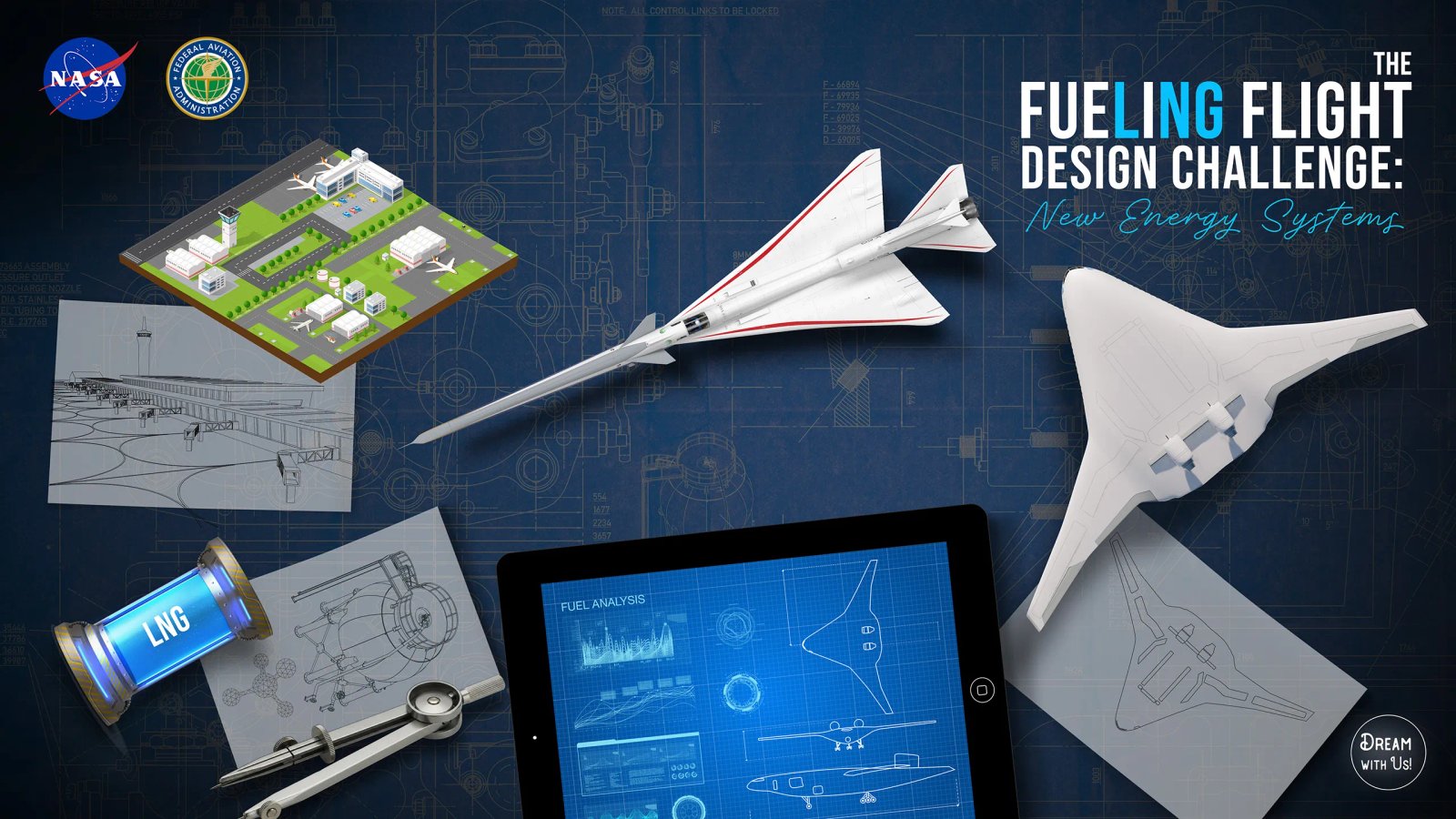
The Dream With Us (DWU) Middle School Design Challenge for 2026-2027 focuses on an innovative theme: “Fueling Flight Design Challenge: New Energy Systems.” This year, the challenge emphasizes how emerging aircraft fuels, specifically liquefied natural gas (LNG), can reshape aviation. As the U.S. expands its National Airspace System (NAS) with more aircraft, NASA and industry partners explore ways to boost safety, reduce costs, improve efficiency, and cut emissions. The challenge invites middle school teams to participate in designing airports that handle both traditional fuels and LNG, offering a glimpse into the future of aviation.
The challenge centers on integrating LNG—a cleaner and more abundant energy source—into airports and aircraft operations. Teams will investigate LNG’s properties, how it can be utilized in aviation, and what infrastructure upgrades are necessary. The goal is to foster innovative thinking about airport design, safety measures, and passenger convenience while considering environmental benefits. Through this, students gain experience in systems thinking, engineering, and sustainable design, preparing them for future careers.
Design Goals and Expectations for Middle School Teams
Middle school teams of 2-4 students will create a conceptual airport—either modifying an existing one or designing a new layout—that incorporates LNG alongside traditional aviation fuels. Their plan must include a detailed layout covering critical components: control towers, hangars, fuel storage areas, terminals, passenger parking, and runways. The design should clearly show how the airport manages dual fuels, focusing on safety, efficiency, and accessibility.
Participants will need to address several key questions: How will LNG be stored and transported safely at the airport? How will fueling stations be designed for both LNG and traditional fuels? What changes are necessary for aircraft that use LNG? And how will the airport infrastructure adapt to accommodate these new aircraft types? Teams should also consider the impact on airport operations, safety protocols, and passenger experience.
The design should highlight benefits such as reduced emissions, increased fuel diversity, and potential cost savings. The project encourages students to think creatively about infrastructure, technology integration, and the benefits of alternative fuels. Their submissions will include technical drawings and a creative presentation—such as a brochure, infographic, or advertisement—that effectively communicates the advantages of their airport design.
Key deadlines include the opening of submissions on September 25, 2026, with entries due by January 22, 2027. Teams must submit PDF files of their technical presentations and high-resolution images of artwork, adhering to accessibility standards. All work must be original, and AI-generated content is not permitted. The challenge aims to inspire young minds to explore the future of aviation while understanding practical limitations and technological possibilities.
Future Perspectives and Industry Impact
This challenge aligns with ongoing efforts to modernize aviation and make it more sustainable. The introduction of LNG as an aircraft fuel offers potential benefits, such as lower greenhouse gas emissions and increased fuel supply stability. However, it also presents challenges: infrastructure upgrades, aircraft modifications, safety regulations, and economic considerations. The design challenge asks students to think critically about these factors, balancing innovation with practicality.
As aviation develops, airports will need to evolve. Facilities must accommodate different fuel types, including LNG, requiring new storage methods, fueling procedures, and safety systems. Gate configurations may change to support diverse aircraft, and additional safety measures could be implemented to manage new hazards associated with LNG.
The ideas generated through this challenge could influence real-world decisions on airport infrastructure and fuel policies. While adoption of LNG in aviation is still emerging, fostering early interest among students helps prepare the next generation of engineers, scientists, and policymakers. They will play a crucial role in shaping a safer, cleaner, and more efficient future for air travel.
This challenge offers a window into the technological advancements and logistical questions that will define aviation in coming decades. It emphasizes that innovation must be practical and safety-focused. By participating, middle school students contribute fresh perspectives and demonstrate curiosity about how sustainable energy solutions can transform industries worldwide.
Stay Ahead with the Latest Tech Trends
Stay informed on the revolutionary breakthroughs in Quantum Computing research.
Stay inspired by the vast knowledge available on Wikipedia.
Space
