
Close Menu
    Facebook X (Twitter) Instagram
    Wednesday, August 19
    Top Stories:
    • Nokia to Exit Mainland China, Closes Most Sites by Year-End
    • Animals Have Been Consuming Nature’s Original Bioplastic for Millions of Years
    • Alibaba Sells Gaming Arm as Focus Shifts to AI and E-commerce
    Facebook X (Twitter) Instagram Pinterest Vimeo
    IO Tribune
    • Home
    • AI
    • Tech
      • Gadgets
      • Fashion Tech
    • Crypto
    • Smart Cities
      • IOT
    • Science
      • Space
      • Quantum
    • OPED
    IO Tribune
    Home » Cosmic Fireworks: Hubble’s July 4th Discovery!
    Space

    Cosmic Fireworks: Hubble’s July 4th Discovery!

    Staff ReporterBy Staff ReporterJuly 4, 2026No Comments3 Mins Read
    Share Facebook Twitter Pinterest LinkedIn Tumblr Reddit Telegram Email
    Share
    Facebook Twitter LinkedIn Pinterest Email

    Essential Insights

    1. NASA celebrates the 250th anniversary of the U.S. with a Hubble image.
    2. NGC 6426 is one of Milky Way’s oldest globular clusters, about 13 billion years old.
    3. The image represents blue stars as hotter and red stars as cooler.
    4. Hubble’s study of globular clusters enhances our understanding of galaxy evolution.

    A Stellar Celebration of 250 Years of Exploration

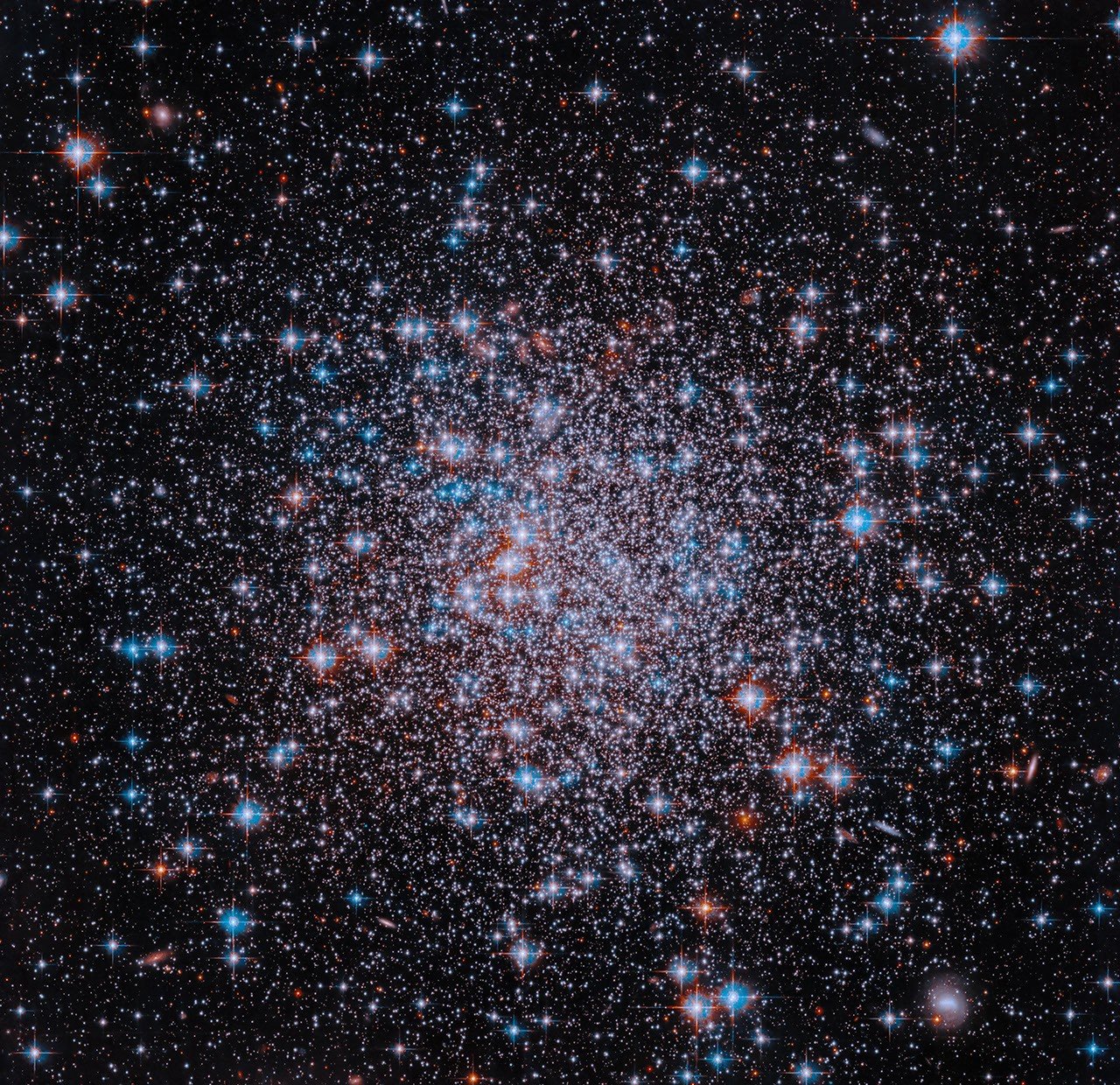
    Red, white, and blue stars glitter like sparkler fireworks in a new image from NASA’s Hubble Space Telescope. Released in honor of the United States’ 250th anniversary, this stunning photograph exemplifies America’s ongoing legacy of scientific exploration.

    The focus of this remarkable image is globular cluster NGC 6426, a spherical collection of stars located in the outer halo of our Milky Way galaxy. Bound together by gravity, NGC 6426 is one of about 150 known globular clusters within our galaxy. These clusters generally form from the same collapsing cloud of gas, leading to similarities in the ages of their stars. Approximately 13 billion years old, NGC 6426 stands out as one of the Milky Way’s oldest stellar groups, nearly as ancient as the universe itself, which is estimated to be 13.7 billion years old.

    Colors in Hubble’s images serve as a visual cue to the stars’ temperatures. Blue stars represent shorter wavelengths of visible light and are significantly hotter. In contrast, the red stars indicate longer wavelengths, including some near-infrared light, marking them as cooler. The interplay of these colors provides a vivid portrayal of the star cluster’s composition.

    The Legacy of Stars and Chemical Evolution

    The stars in NGC 6426 exhibit low metallicity, meaning they contain fewer elements heavier than hydrogen and helium. This characteristic mirrors conditions from the early universe, where hydrogen and helium predominated. At that time, heavier elements began forming through nuclear fusion in massive stars.

    Recent research has uncovered evidence for two chemically distinct populations of stars within NGC 6426. This suggests that slightly younger, more metallic stars have been enriched by materials ejected from the explosive deaths of earlier stars in the cluster. Supernovae, powerful explosions from massive stars, release heavy elements into space, facilitating the birth of new stars and planets.

    Hubble captured this image while studying globular clusters in the Milky Way’s halo. The objective is to determine their ages and contribute to our understanding of the galaxy’s formation and evolution. Over 30 years in orbit, Hubble has reshaped our perspective on the universe. Its findings are augmented by missions like the infrared-sensitive James Webb Space Telescope and the upcoming Nancy Grace Roman Space Telescope, set to launch later this summer.

    Explore More

    Continue Your Tech Journey

    Dive deeper into the world of Cryptocurrency and its impact on global finance.

    Stay inspired by the vast knowledge available on Wikipedia.

    Space

    Astrophysics Astrophysics Division Cosmos Globular Clusters Goddard Space Flight Center Hubble Space Telescope NASA Space Star Clusters Stars The Universe VT1
    Share. Facebook Twitter Pinterest LinkedIn Tumblr Email
    Previous ArticleSchisto & Ladders: Uncovering Education Amidst the Worms
    Next Article Maximize Chatbot Gains with Tokenmining Savings
    Avatar photo
    Staff Reporter
    • Website

    John Marcelli is a staff writer for IO Tribune, with a passion for exploring and writing about the ever-evolving world of technology. From emerging trends to in-depth reviews of the latest gadgets, John stays at the forefront of innovation, delivering engaging content that informs and inspires readers. When he's not writing, he enjoys experimenting with new tech tools and diving into the digital landscape.

    Related Posts

    AI

    Light-powered tiny robots hunt bacteria efficiently

    August 19, 2026
    Gadgets

    Master Your iPhone: Check Battery Health & Cycle Count

    August 19, 2026
    AI

    Flock’s New AI Tool for Police: Our Exclusive Code

    August 19, 2026
    Add A Comment

    Comments are closed.

    Must Read

    Light-powered tiny robots hunt bacteria efficiently

    August 19, 2026

    Master Your iPhone: Check Battery Health & Cycle Count

    August 19, 2026

    Flock’s New AI Tool for Police: Our Exclusive Code

    August 19, 2026

    Soaring to the Future: Students Innovate America’s Infrastructure

    August 19, 2026

    Hints of Quantum Gravity Hidden in Plain Sight

    August 19, 2026
    Categories
    • AI
    • Crypto
    • Fashion Tech
    • Gadgets
    • IOT
    • OPED
    • Quantum
    • Science
    • Smart Cities
    • Space
    • Tech
    Most Popular

    Galaxy S26 Ultra Unveiled: Exciting Upgrades Revealed!

    February 23, 2026

    Galaxy Z Fold 8: Perfecting Design by Softening the Fold

    July 6, 2026

    Telit Cinterion & Nokia: Revolutionizing Industrial Connectivity with AI

    January 10, 2026
    Our Picks

    Get 3 Free Months of Apple Music Family Plan for New Subscribers!

    September 15, 2025

    Transform Your Routine: Discover Laifen’s Prime Day Exclusives!

    June 23, 2026

    Chinese startup targets 5nm chips without EUV by 2029

    July 11, 2026
    Categories
    • AI
    • Crypto
    • Fashion Tech
    • Gadgets
    • IOT
    • OPED
    • Quantum
    • Science
    • Smart Cities
    • Space
    • Tech
    • Privacy Policy
    • Disclaimer
    • Terms and Conditions
    • About Us
    • Contact us
    Copyright © 2025 Iotribune.comAll Rights Reserved.

    Type above and press Enter to search. Press Esc to cancel.