

Quick Takeaways
- SETI researchers searched for signals from interstellar object 3I/ATLAS, but found none.
- 3I/ATLAS, discovered in July 2025, is a natural comet-like object.
- The study ruled out artificial signals, supporting its natural origin.
- Observations emphasize the importance of detecting potential technosignatures from interstellar visitors.
The Search for Extraterrestrial Technology
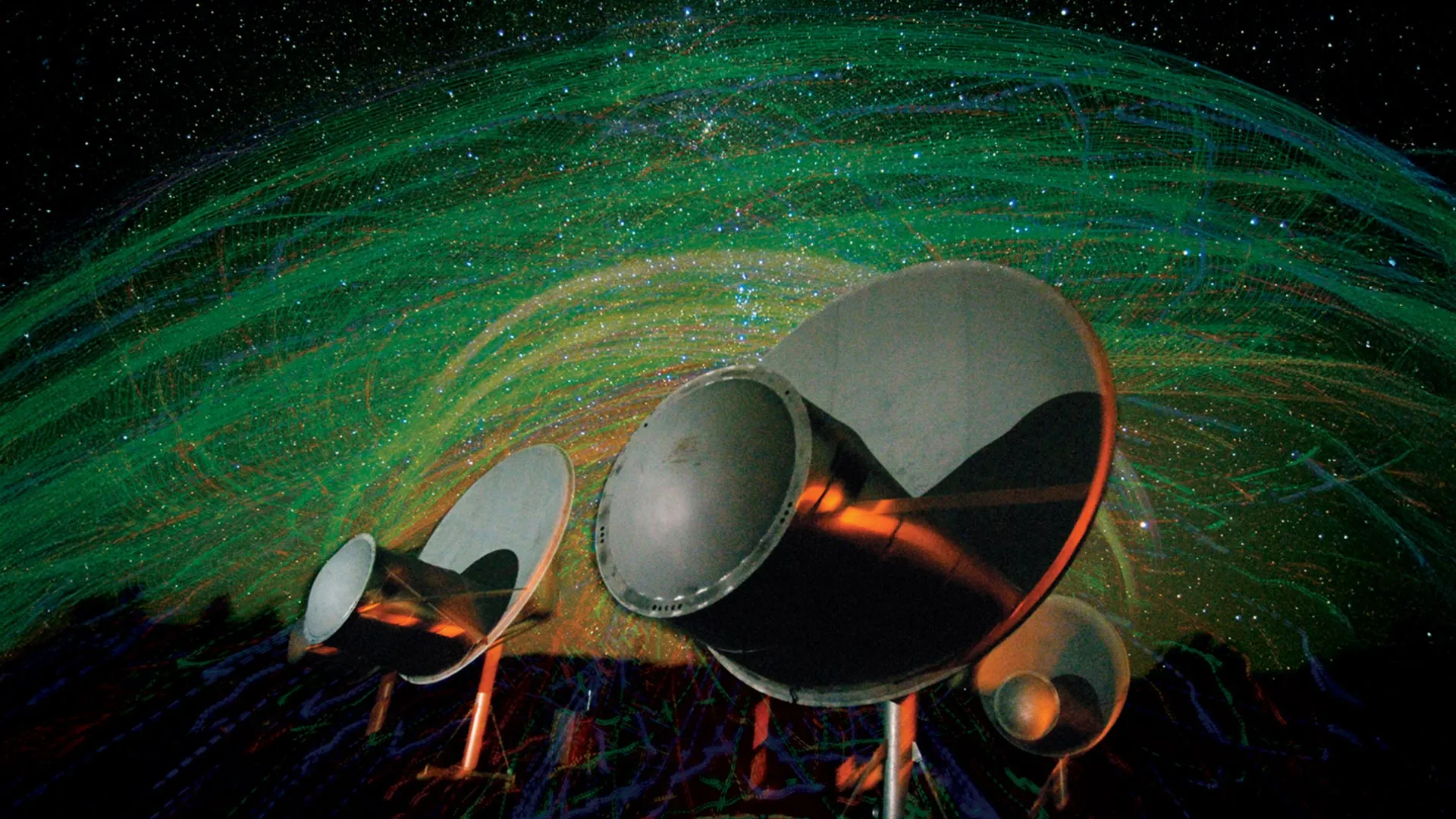
The recent flyby of 3I/ATLAS reignites the intrigue surrounding interstellar objects. Identified in July 2025, this comet-like visitor is the third confirmed interstellar object to travel through our Solar System, following 1I/’Oumuamua and 2I/Borisov. Scientists at the SETI Institute seized the opportunity to search for signs of advanced technology. They employed the Allen Telescope Array (ATA) in Northern California to scan a wide array of radio frequencies, hoping to detect technosignatures.
For over seven hours, researchers combed through nearly 74 million signals. Most turned out to be interference from human-made sources. After filtering through the noise, only about 200 candidates matched the object’s trajectory. Yet, further analysis showed that all these signals originated from terrestrial technologies or satellites. This search reaffirmed that 3I/ATLAS is likely a natural phenomenon. The absence of extraterrestrial signals adds weight to our understanding of these interstellar visitors as products of nature, not advanced civilizations.
Broader Implications for Scientific Inquiry
The study does not just serve to verify the natural origins of 3I/ATLAS; it also sheds light on our capacity to detect technosignatures with existing technology. The research team ruled out the possibility of strong radio transmissions from 3I/ATLAS, using criteria that align with household appliance power levels. This sets a realistic baseline for detecting signals from potential extraterrestrial technology.
Moreover, the rapid response by the ATA highlights the efficiency of modern observational tools. The ability to initiate investigations within 24 hours of an interstellar discovery allows scientists to maintain a pulse on our universe. As astronomers identify more interstellar objects, each presents a new chance to explore the potential for life beyond Earth. These investigations expand our comprehension of both natural phenomena and the ongoing search for intelligent life.
Expand Your Tech Knowledge
Stay informed on the revolutionary breakthroughs in Quantum Computing research.
Stay inspired by the vast knowledge available on Wikipedia.
TechV1
