

Summary Points
-
Funding Announcement: NASA awarded Intuitive Machines $180.4 million for lunar payload deliveries under the CLPS initiative, aimed at enhancing lunar science and technology as part of the Artemis program.
-
Payloads Overview: The mission will deliver seven payloads, including NASA instruments designed to study the lunar regolith and radiation environment at the Moon’s South Pole, facilitating future sustainable human presence.
-
Key Instruments: Notable payloads include: SCALPSS for imaging lunarsurface impacts, NIRVSS for mineral detection, MSolo for volatile characterization, LVRaD for radiation monitoring, and a lunar time capsule of human civilization called “Sanctuary.”
-
Strategic Goals: Regular lunar deliveries are essential for understanding the exploration environment, accelerating human presence on the Moon, and preparing for eventual Mars missions.
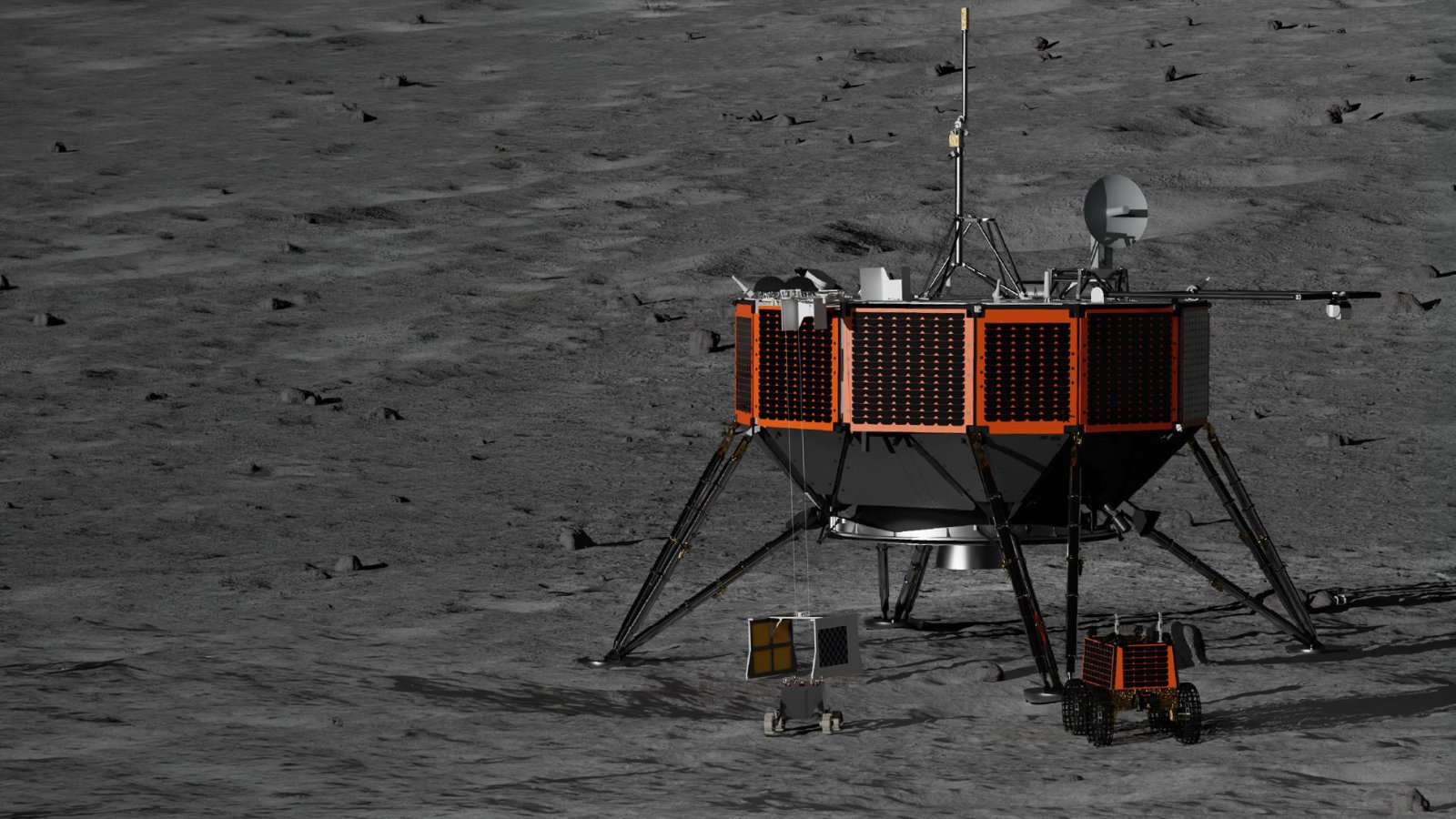
NASA has selected Intuitive Machines of Houston for an exciting lunar project. The agency awarded the company $180.4 million to deliver crucial science and technology to the Moon’s surface. This initiative falls under NASA’s Commercial Lunar Payload Services (CLPS) program and the Artemis program.
The mission includes seven payloads, five of which are NASA’s. These payloads aim to enhance our understanding of lunar regolith, the Moon’s surface material, and the radiation environment at the South Pole. This science is essential for establishing a sustainable human presence during future Artemis missions.
Experts at NASA are optimistic. Joel Kearns, a deputy associate administrator, emphasizes the importance of commercial lunar landings. He believes these investigations will support long-term sustainability and deepen our knowledge of the Moon, paving the way for future human missions.
Intuitive Machines will manage the complete process of landing payloads on the Moon, aiming for a touchdown in 2030. This contract marks the company’s fifth partnership with NASA. Previously, it successfully delivered payloads during its IM-1 and IM-2 missions.
“This project highlights the importance of ongoing lunar deliveries,” said Adam Schlesinger, who oversees the CLPS initiative. As NASA prepares to send humans and advanced robotic missions to the Moon, regular deliveries will enhance our understanding of the exploration environment. This knowledge fuels progress toward a sustained human presence, potentially easing future missions to Mars.
Various instruments will play crucial roles in this mission. For example, the Stereo Cameras for Lunar Plume Surface Studies (SCALPSS) will capture detailed images of lunar regolith during the lander’s descent. This data is vital for predicting how the Moon’s surface reacts to heavy spacecraft.
Moreover, the Near-Infrared Volatiles Spectrometer System (NIRVSS) aims to identify critical minerals and ice types on the Moon. Its capabilities will help scientists understand how various substances interact with lunar soil.
Another important instrument, the Mass Spectrometer for Observing Lunar Operations (MSolo), will analyze the volatile materials around the lander post-touchdown. Understanding these materials could unlock resources on the lunar surface.
Additionally, the Lunar Vehicle Radiation Dosimeter system (LVRaD) will measure the radiation environment, preparing for future human activities on the Moon. These sensors will also help us learn more about the Moon’s geological resources.
Other innovative tools include the Multifunctional Nanosensor Platform (MNP) and NASA’s Laser Retroreflector Array (LRA). The former will study how engine exhaust affects lunar regolith, while the latter will support navigation by reflecting laser beams for orbit determinations.
Finally, the “Sanctuary on the Moon” project will deliver a time capsule containing a wealth of human history, aiming to preserve our civilization for future explorers.
Through the CLPS initiative, NASA continues to purchase lunar services from American companies. This partnership not only advances lunar exploration but also contributes to a greater understanding of the technology needed for potential human exploration of Mars. Efforts like these showcase the innovative pathways that can enhance quality of life on Earth and beyond.
Continue Your Tech Journey
Stay informed on the revolutionary breakthroughs in Quantum Computing research.
Explore past and present digital transformations on the Internet Archive.
SciV1
