

Summary Points
Early life needed compartments to concentrate chemistry and enable complex reactions.
Lipid bubbles may have inherited molecular compositions, varied, and competed through growth.
Models suggest protocell selection, but inheritance accuracy and lipid origins remain disputed.
Despite competing origin theories, researchers broadly agree compartments enabled Darwinian evolution.
The Case for a Bubble at Life’s Start
Life needs a container
Every living cell separates its chemistry from the world around it. That boundary keeps molecules close enough to interact. Without one, the ingredients of early life may have scattered before they could form reliable chemical systems.
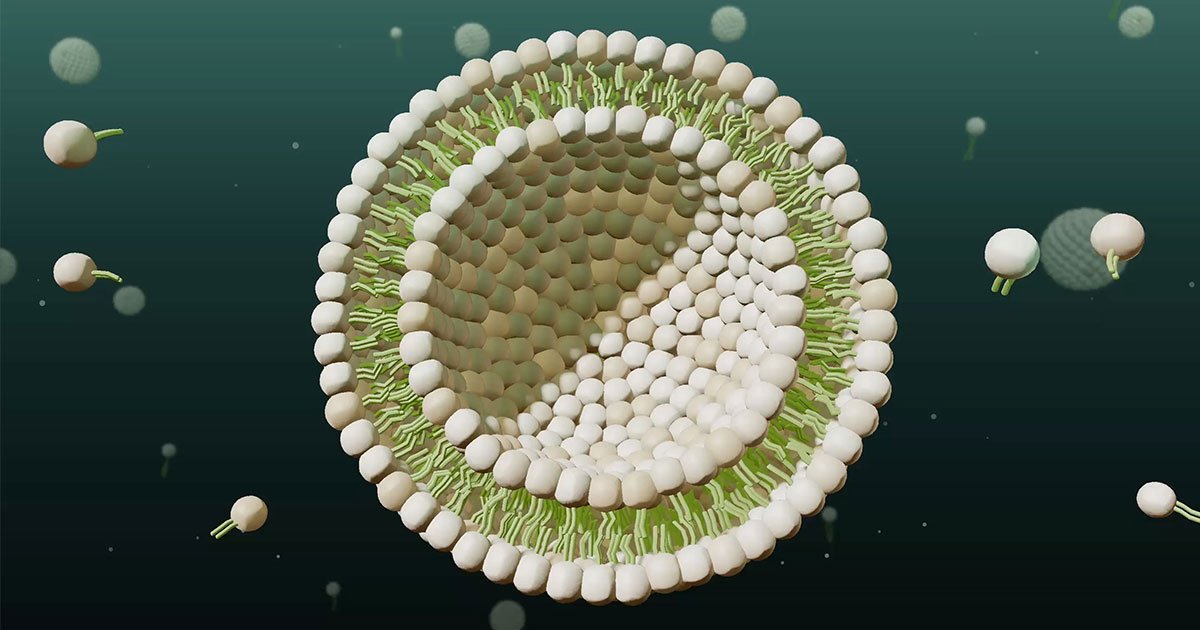
This simple need has inspired the “lipid-first” idea: perhaps membrane-like bubbles helped life begin. Some small molecules naturally gather in water, with water-attracting ends facing outward and water-repelling ends tucked inside. Under suitable conditions, they can form enclosed compartments.
A bubble could do more than hold ingredients. Imagine two molecules that help produce each other, forming a self-sustaining loop. As the bubble grows and divides, its contents pass into smaller bubbles. The offspring may inherit a similar mix, though not an exact copy. A stray molecule can alter the mix. If that change helps a bubble grow and divide faster, its descendants may become more common.
That is a basic route to natural selection: inheritance, variation and competition. A computer model published in 2000 showed that such chemical communities could, in theory, pass on their compositions and compete. The result offered a possible path to evolution before DNA or RNA took center stage.
A promising idea, not a settled origin story
The proposal has practical appeal because it addresses a central problem: how could related molecules stay together long enough to cooperate? Lipids also have a useful property. In water, they can assemble into sheets that close into spheres, trapping water and dissolved chemicals inside.
But the bubble’s material remains unsettled. Researchers have considered mineral walls and coacervates, which are concentrated, droplet-like mixtures. Some also study whether hot-spring pools, with cycles of drying and refilling, could help lipids trap and organize simple molecules.
There are serious limits to the lipid-first case. Critics question whether early Earth could readily make the needed lipids. They also point to a lack of experimental evidence that a lipid-based system can evolve. One analysis argued that bubbles may not pass their molecular compositions to offspring accurately enough for natural selection to work.
So the bubble is not a complete explanation for life’s beginning. It is a candidate for one essential function: keeping chemistry together. Even researchers who favor other origin theories agree that some kind of compartment would have helped early chemical systems persist and evolve. The first boundary may not have been a modern cell membrane. But without a boundary of some kind, life’s chemistry may never have had room to begin.
Expand Your Tech Knowledge
Explore the future of technology with our detailed insights on Artificial Intelligence.
Explore past and present digital transformations on the Internet Archive.
QuantumV1
