

Top Highlights
- NASA announced top student solutions for lunar lander life support systems.
- California Polytechnic State University won the competition with a hydration project.
- The challenge encourages future engineers for Moon and Mars exploration.
- Innovative student ideas aim to enhance crew safety during deep space missions.
Exciting Innovations from the 2026 Human Lander Challenge
NASA has announced the winners of the 2026 Human Lander Challenge, showcasing outstanding contributions from university students across the nation. This competition focused on developing solutions for environmental control and life support systems crucial for future crewed lunar landers. The challenge is part of NASA’s broader Artemis program, which aims to return American astronauts to the Moon by 2028.
The challenge culminated on June 25 with final presentations at NASA’s Marshall Space Flight Center in Huntsville, Alabama. Since September 2025, student teams have been working diligently to design systems that enhance the performance and reliability of life support technologies. These technologies are essential for astronauts on deep-space missions.
As Natalie Martinez-Vlasoff, a lead in advanced capabilities integration at NASA Marshall, pointed out, “the development of robust, efficient, and reliable life support systems remains a critical focus area.” The emphasis on systems-level approaches shows promise in improving reliability and crew safety during space missions.
Awards and Recognition
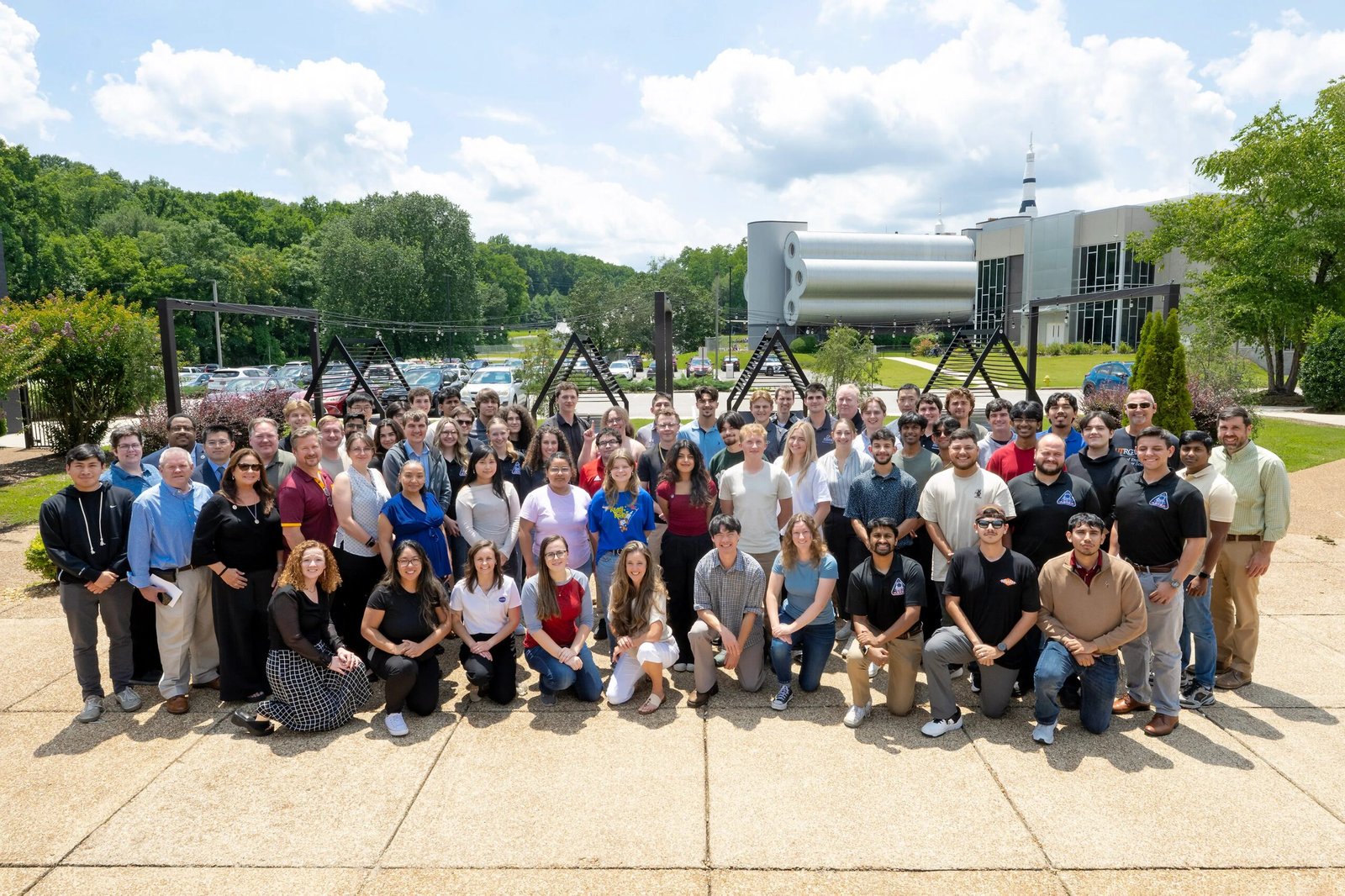
The finalists presented their projects at the U.S. Space & Rocket Center in Huntsville on June 22. They showcased their innovative designs to a panel of NASA and aerospace experts. An awards ceremony recognized the top teams from the 12 finalists.
California Polytechnic State University won the overall prize of $10,000 for its Peltier-based Hydration Accumulation Terminal project. Purdue University took second place, earning $5,000 for its Enhanced Potable Water Dispenser. Embry-Riddle Aeronautical University, Daytona Beach, secured third place with its Advanced Quality Orbital Rehydration Assembly, receiving a $3,000 award.
These student-developed solutions reflect a crucial step in fostering the next generation of engineers and scientists. The Human Lander Challenge encourages innovative thinking and hands-on problem-solving, aligning with NASA’s mission to send astronauts to the Moon and, ultimately, to Mars. Solutions from this challenge could play a role in the development of next-generation Artemis landers.
The Human Landing System Program, managed by NASA Marshall and administered by the National Institute of Aerospace, sponsors this forward-thinking initiative. Through such competitions, NASA not only advances technology but also inspires new talent to engage in space exploration. For more information about the Artemis program, visit NASA’s Artemis page.
Expand Your Tech Knowledge
Dive deeper into the world of Cryptocurrency and its impact on global finance.
Discover archived knowledge and digital history on the Internet Archive.
Space
