

Essential Insights
- NASA’s CAPSTONE 02 mission aims to enhance cislunar navigation and communication.
- Scheduled for 2027, it will test advanced techniques with two spacecraft.
- CAPSTONE 02 expands from initial orbit validation to operational demonstrations.
- This mission builds the foundation for future lunar and deep space missions.
Advancements in Cislunar Navigation with CAPSTONE 02
NASA is making significant strides in establishing cislunar infrastructure as part of its Artemis program and plans for a Moon Base. At the heart of this initiative is the CAPSTONE 02 mission, set for launch in 2027. This groundbreaking mission aims to propel advancements in navigation and communication technologies critical for future lunar exploration.
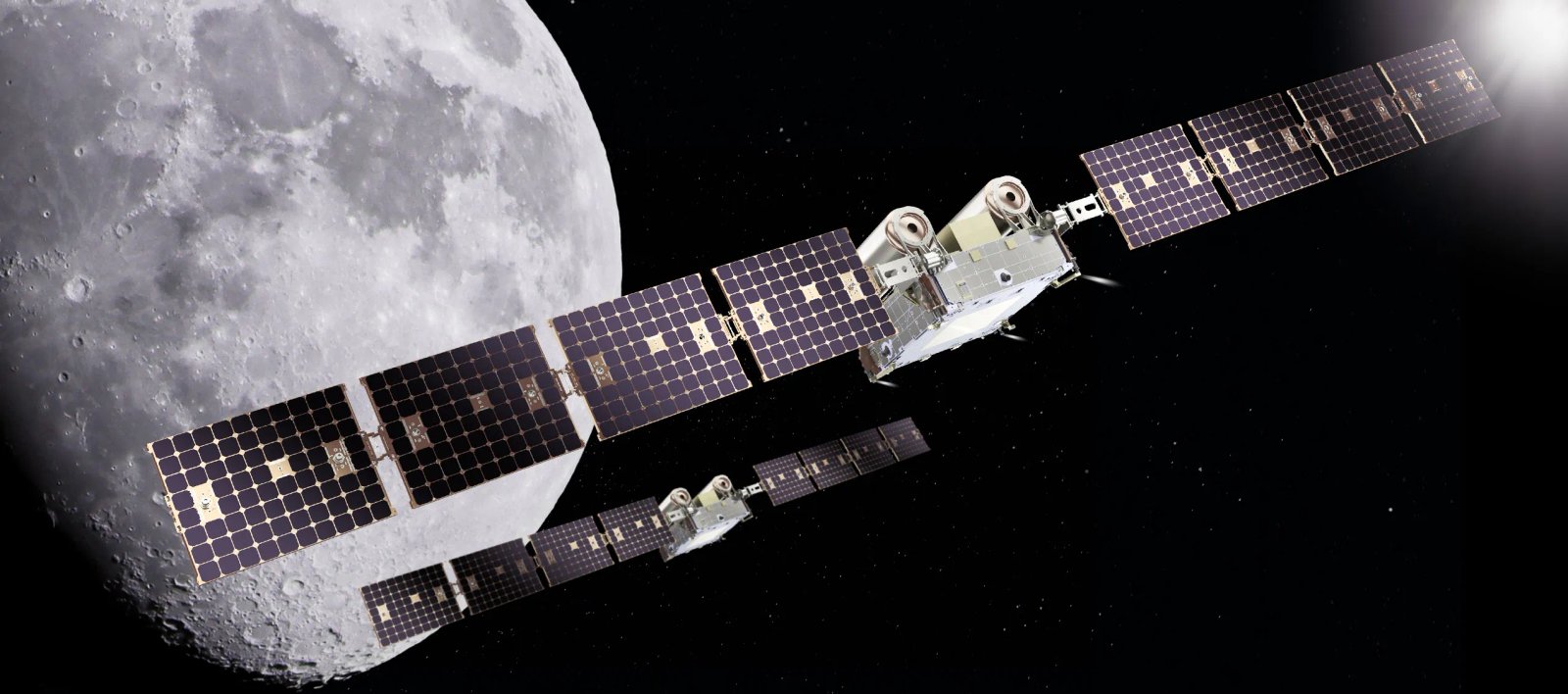
Under a contract with Advanced Space, CAPSTONE 02 will utilize two small spacecraft, each weighing approximately 400 kilograms (882 pounds), to demonstrate rendezvous and proximity operations as well as autonomous navigation. These operations will take place in lunar orbit, allowing engineers to gather invaluable data on navigation techniques in a unique gravitational environment influenced by both the Earth and the Moon.
The original CAPSTONE mission was already a pioneer, becoming the first U.S. commercial mission to the Moon and validating crucial aspects of communication and navigation in a near rectilinear halo orbit. Building on these achievements, the upcoming mission will transition from validation to more complex demonstrations, offering critical insights for future lunar infrastructure and exploration plans.
One of the primary goals of CAPSTONE 02 is to test relative navigation technologies that ensure safe crew transfer to and from lunar landers. The dual spacecraft will engage in a series of operations, switching roles between “chaser” and “target,” which will simulate various scenarios that space missions might face. These tests are vital because they cannot be fully replicated on Earth due to the unique conditions of cislunar space.
Building a Foundation for Future Lunar Missions
CAPSTONE 02 is also set to serve as an operational testbed for three navigation software suites developed by NASA. These applications will collect data during a low-energy transfer trajectory, testing navigation capabilities from the Earth to lunar orbit. The mission will incorporate an optical imaging payload from Lawrence Livermore National Laboratory, which will not only aid navigation but also capture images of the Moon.
By automating routine navigation tasks and reducing reliance on ground-based data, the technologies demonstrated in CAPSTONE 02 could pave the way for innovative mission concepts that involve increased inter-satellite coordination. This capability could significantly enhance mission efficiency in cislunar space.
As Sean Fuller, the Moon Base CAPSTONE manager, points out, CAPSTONE 02 represents a crucial step in developing cislunar capabilities. By refining these operational concepts, the mission lays essential groundwork for lunar infrastructure and future deep space missions. Funded by NASA’s Human Spaceflight Mission Directorate, with support from the Research and Technology Mission Directorate, this mission underscores NASA’s commitment to advancing space exploration technology.
For further details on the CAPSTONE mission and its objectives, visit NASA’s dedicated page here.
Expand Your Tech Knowledge
Stay informed on the revolutionary breakthroughs in Quantum Computing research.
Discover archived knowledge and digital history on the Internet Archive.
Space
