

Fast Facts
-
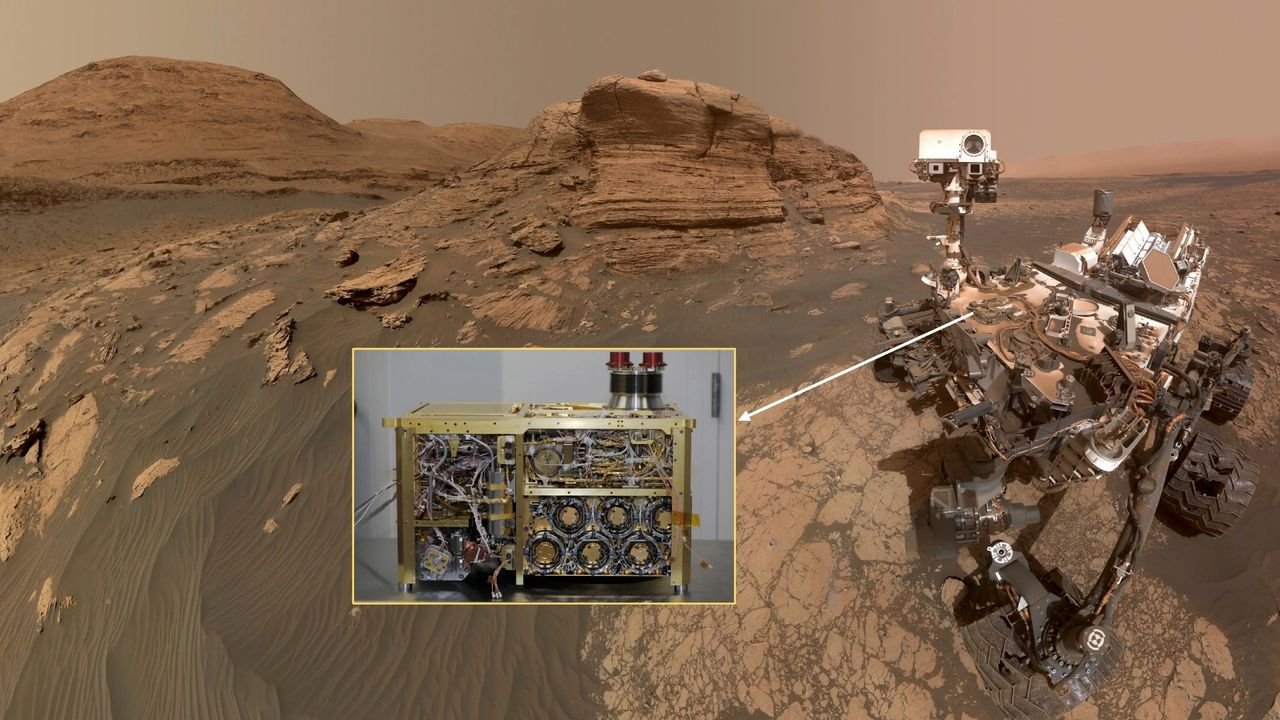
Organic Molecule Detection: NASA’s Curiosity rover discovered over 20 diverse organic molecules in Mars’ Gale crater, indicating potential building blocks for life.
-
Innovative Experiment: Curiosity’s SAM instrument utilized tetramethylammonium hydroxide (TMAH) in a groundbreaking chemical experiment, marking the first of its kind on another planet.
-
Ancient Martian Sediments: The identified chemicals suggest preservation of complex organic material in 3.5-billion-year-old clay-rich sandstones despite harsh environmental conditions.
-
Future Exploration Implications: Findings from the TMAH experiment inform future missions, enhancing the search for life’s signatures and indicating that organic carbon can endure over long geological timescales on Mars.
NASA’s Curiosity rover has made groundbreaking discoveries on Mars. Scientists announced the detection of over 20 organic molecules in the Glen Torridon region of Gale Crater. These molecules are key components in the study of life’s origins.
First, Curiosity used a specialized instrument called the Sample Analysis at Mars (SAM) to conduct its experiments. This marks the first time this technique has been employed on another planet. SAM analyzed clay-rich sandstone dating back roughly 3.5 billion years, revealing nitrogen and sulfur-bearing compounds. While these compounds hint at ancient life, researchers cannot yet determine if they originated from biological processes or non-living geological activities.
The research team, led by an associate professor at the University of Florida, emphasized that the experiment required thorough verification. They utilized additional equipment to confirm their findings. This commitment to accuracy yielded strong evidence that the organic molecules came from ancient carbon sources preserved in Martian rock.
Interestingly, Curiosity’s discoveries might connect with findings from NASA’s Perseverance rover, which has also detected organic compounds. This suggests that organic carbon could be more widely distributed across Mars than previously believed, which may improve our understanding of the planet’s history.
The discoveries from this mission could enhance future explorations. The insights gained may guide the design of upcoming life detection instruments, such as those planned for the European Space Agency’s Rosalind Franklin rover, set to explore Mars further.
These advancements not only deepen our understanding of Mars but also influence technology development. As scientists learn more about how organic compounds can survive in harsh environments, they may uncover new methods for biomarker detection on other celestial bodies. The ongoing research exemplifies the importance of planetary exploration and its potential to inform our quest for life beyond Earth.
Discover More Technology Insights
Learn how the Internet of Things (IoT) is transforming everyday life.
Access comprehensive resources on technology by visiting Wikipedia.
SciV1
