

Fast Facts
- CO2 shortages threatened Maine Beer’s brewing operations in 2021.
- NASA-inspired technology captures CO2 for reuse in industry and brewing.
- Earthly Labs licenses Mars-derived CO2 capture tech, expanding markets.
- Technology now supports breweries, wineries, energy, and helium sectors globally.
NASA’s Machines for Mars Make Beer Bubbly
In recent years, innovations from space exploration have found surprising uses on Earth. One example involves NASA’s efforts to develop equipment for surviving on Mars. These machines can capture and produce gases like carbon dioxide (CO2) and hydrogen, which are essential for life support and fuel. Now, this space-age technology is helping breweries, wineries, power plants, and other industries improve their operations and cut costs.
From Martian Missions to Beer Bottles
Back in the 1990s, NASA’s Johnson Space Center started working with Pioneer Astronautics on systems that could generate resources on Mars. Their goal was to capture CO2 from the thin Martian atmosphere. The CO2 could then be combined with hydrogen to produce water and methane. These systems needed to be compact, efficient, and automated — qualities critical for space missions. Pioneer Astronautics won multiple Small Business Innovation Research (SBIR) contracts to develop these devices.
Later, Pioneer founder Robert Zubrin adapted these systems for the oil and gas industry, creating Pioneer Energy. He realized that the same CO2 capture technology could be used on Earth. Breweries, for example, face frequent shortages of CO2, which is vital for carbonating beer. Usually, they buy CO2 from suppliers, but shortages and rising prices can cause problems. In 2015, Pioneer created the Craft Brewery Recovery System to capture and reuse CO2 from the brewing process. Although the company eventually licensed out this technology, it sparked new interest in space-derived resource systems.
“There was potential for our beer to go stale in the tanks,” said Dave Love, from Maine Beer Company. Because of supply issues, breweries like Maine Beer began exploring solutions rooted in NASA technology. The result was a way for breweries to produce their own CO2 on-site, reducing reliance on suppliers and lowering costs.
Expanding the Reach of Space Tech
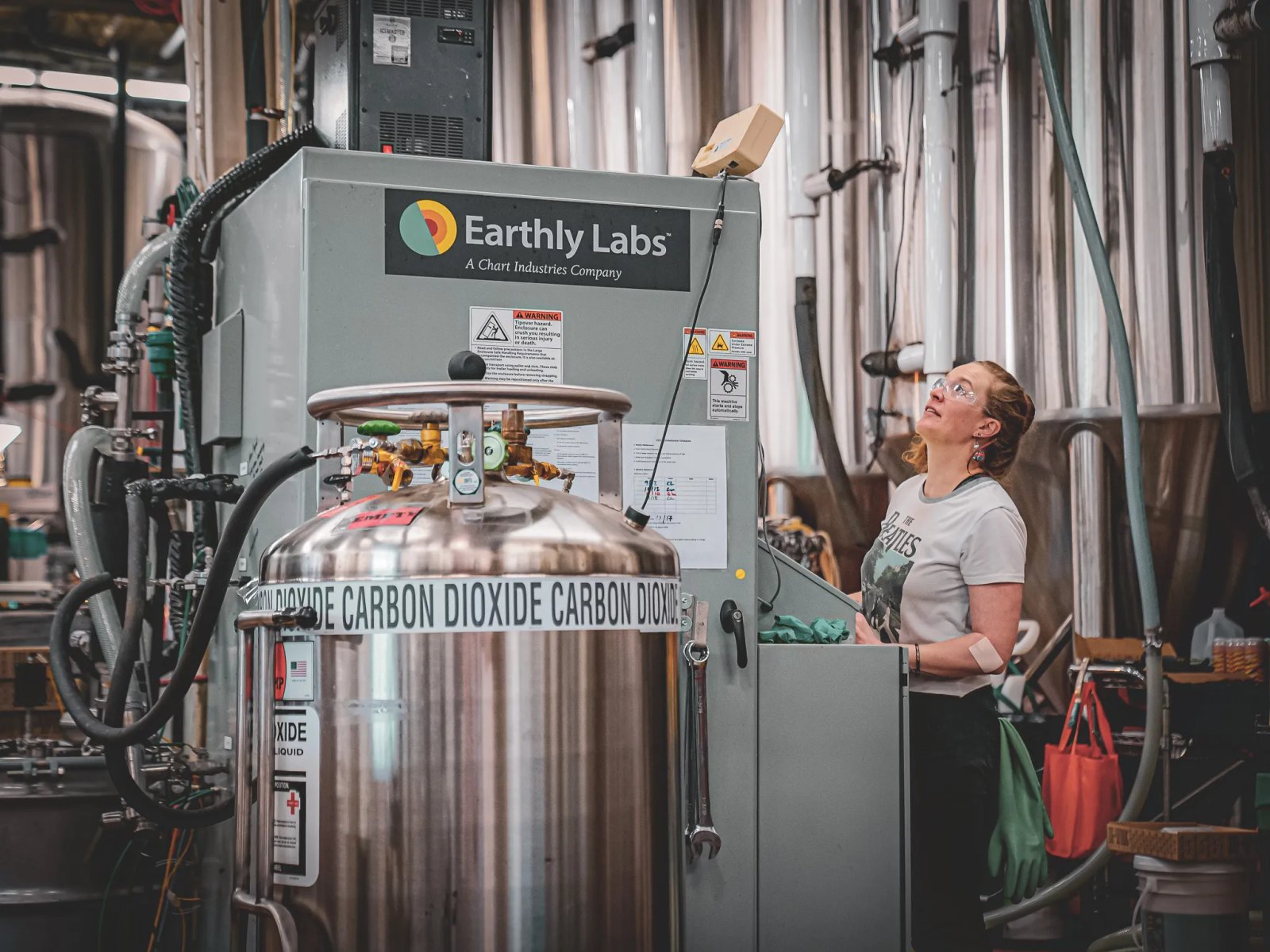
After licensing the brewing system, Earthly Labs, based in Austin, Texas, stepped in to develop small-scale carbon capture devices. Founded in 2016 by Amy George, Earthly Labs focused on making CO2 capture affordable and practical for multiple industries. Since the pandemic caused volatility and shortages in the CO2 market, demand for this technology surged.
Earthly Labs’ systems now serve wineries, distilleries, and energy producers. Power plants and helium producers, for example, generate CO2 as a by-product. Instead of releasing it into the atmosphere, these companies can capture and sell it. Helium extraction benefits from similar technology. Helium is crucial for making microchips and fiber cables. It’s found underground mixed with gases like methane and CO2, which need to be separated.
In 2021, Earthly Labs was acquired by Chart Industries Inc., a leader in cryogenic equipment. The company is scaling up these resource capture systems for larger applications, including power generation, enhancing efficiency, and reducing emissions.
Technologies initially designed to support missions to Mars now prove useful on Earth in many industries. They offer a way to make operations more sustainable, cost-effective, and resilient against resource shortages. From bubbling beer to powering industries, space-inspired science continues to impact daily life in unexpected ways.
Continue Your Tech Journey
Dive deeper into the world of Cryptocurrency and its impact on global finance.
Access comprehensive resources on technology by visiting Wikipedia.
Space
