

Summary Points
-
MIT physicists achieved the first electronic "flat band" in a three-dimensional material by trapping electrons in a kagome-inspired crystal structure, allowing them to exhibit coordinated quantum behaviors.
-
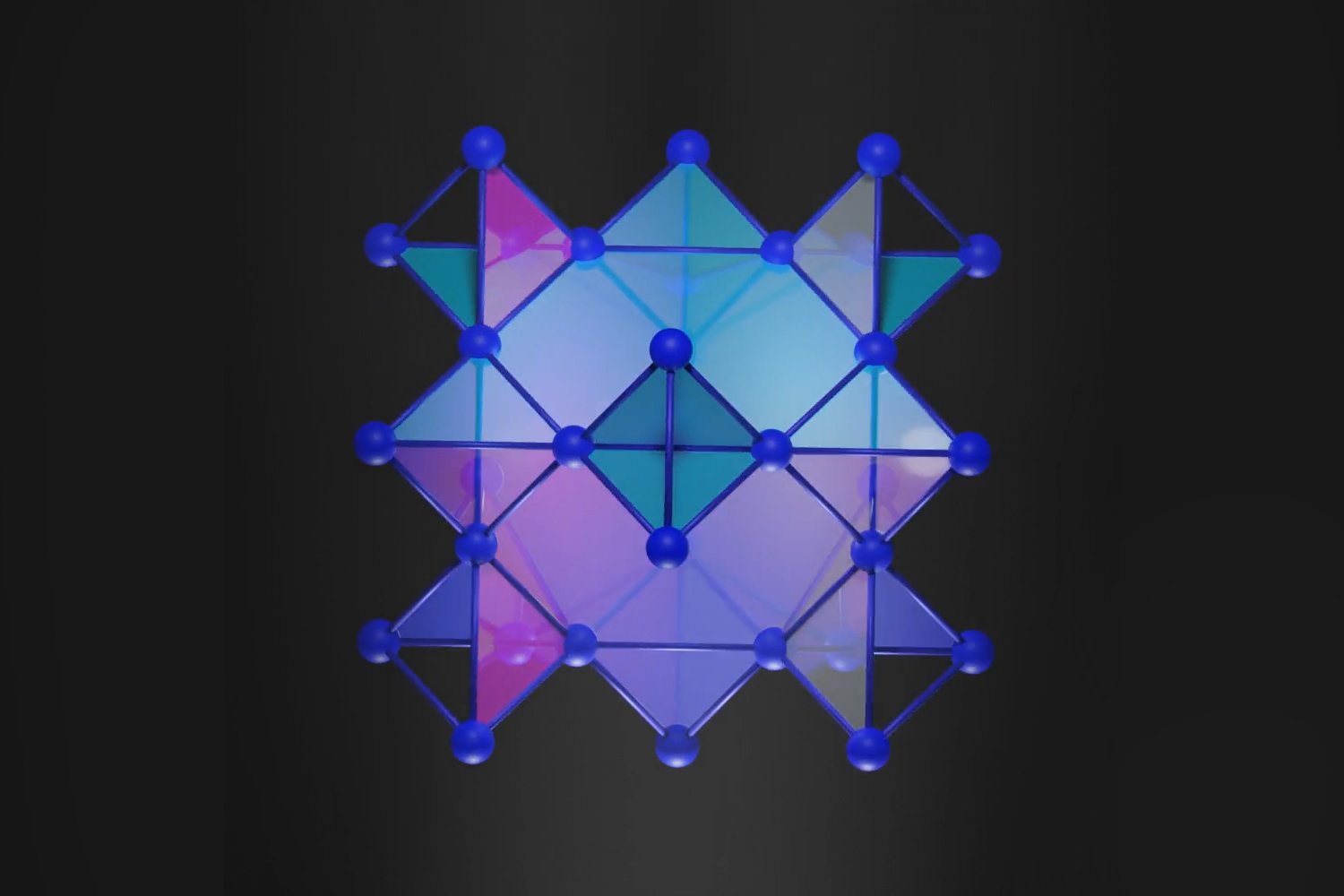
This new discovery was made possible by synthesizing a pyrochlore crystal with a special geometric arrangement that cages electrons, preventing them from escaping into the third dimension.
-
The research team successfully manipulated the electronic states, transforming the crystal into a superconductor with zero resistance by adjusting the atomic composition.
- The findings open doors for exploring a variety of rare electronic states in 3D materials, potentially leading to advancements in ultra-efficient power lines, supercomputing quantum bits, and faster electronic devices.
Physicists Trap Electrons in a 3D Crystal for the First Time
By [Your Name]
Physicists at MIT have made a groundbreaking advancement by successfully trapping electrons in a three-dimensional (3D) crystal. This achievement marks the first instance of creating an electronic “flat band” within a 3D material. Scientists believe this discovery could lead to new technologies, including ultra-efficient power lines and faster electronic devices.
Traditionally, electrons within materials behave like commuters in a busy city, each moving independently. However, trapping them allows these particles to occupy the same energy state and act collectively. Researchers describe this unique condition as a “zombie-like state” where electrons can exhibit exotic behaviors, potentially leading to superconductivity.
The team synthesized a crystal with an atomic structure reminiscent of the Japanese art of “kagome,” which features woven patterns. By positioning atoms in this specific geometry, researchers created an environment where electrons could be contained and interacted more harmoniously, rather than jumping between atoms.
Critically, previous attempts focused on two-dimensional materials, where electrons often escaped easily. The MIT researchers aimed for a 3D arrangement to ensure electrons remained trapped in all directions. They found success using a structure called pyrochlore, known for its symmetrical atomic arrangement. The researchers combined calcium and nickel, heated them to high temperatures, and allowed them to naturally form the crystalline structure.
After synthesizing the crystal, the team employed angle-resolved photoemission spectroscopy (ARPES) to measure the energy of the electrons. This innovative method allowed them to target uneven surfaces and gauge electron energies accurately, despite the challenging landscape of the 3D material.
Remarkably, the electrons exhibited the same energy level, confirming the flat-band state. Furthermore, by altering the composition to include rhodium and ruthenium, the researchers induced a superconducting state, showcasing their ability to manipulate these electronic properties.
“Now that we know we can create a flat band from this geometry, we have a great motivation to explore other structures for new physics,” said Joseph Checkelsky, an associate professor of physics at MIT. This research opens the door to understanding and developing advanced quantum materials. Scientists can now consider new pathways for harnessing electronic properties that could revolutionize technology in various fields.
As researchers continue to delve into the possibilities presented by this discovery, the world waits to see how these advancements could reshape the landscape of computing and energy transfer.
Stay Ahead with the Latest Tech Trends
Explore the future of technology with our detailed insights on Artificial Intelligence.
Access comprehensive resources on technology by visiting Wikipedia.
QuantumV1
https://news.mit.edu/2023/physicists-trap-electrons-3d-crystal-first-time-1108
