
Close Menu
    Facebook X (Twitter) Instagram
    Sunday, September 13
    Top Stories:
    • US and China Race to Develop Self-Improving AI: High Stakes Ahead
    • Revolutionary Bone Marrow-on-a-Chip Reveals Immune Cell Secrets
    • Empower AI Shopping with 10 Digital Wallets for Seamless Payments
    Facebook X (Twitter) Instagram Pinterest Vimeo
    IO Tribune
    • Home
    • AI
    • Tech
      • Gadgets
      • Fashion Tech
    • Crypto
    • Smart Cities
      • IOT
    • Science
      • Space
      • Quantum
    • OPED
    IO Tribune
    Home » Organic Molecules Found in 66-Million-Year-Old Dinosaur Bones: A Paleontology Breakthrough
    Tech

    Organic Molecules Found in 66-Million-Year-Old Dinosaur Bones: A Paleontology Breakthrough

    Lina Johnson MercilliBy Lina Johnson MercilliAugust 15, 2026No Comments3 Mins Read
    Share Facebook Twitter Pinterest LinkedIn Tumblr Reddit Telegram Email
    Share
    Facebook Twitter LinkedIn Pinterest Email

    Fast Facts

    Scientists show some fossils retain original organic molecules, like collagen.
    Advanced methods confirmed collagen fragments in dinosaur bones, challenging previous beliefs.
    Findings suggest fossil proteins can survive millions of years, debunking contamination fears.
    Revisited fossil images could reveal more preserved tissues, aiding dinosaur research.

    Revolutionizing Paleontology with Organic Molecules

    For decades, scientists believed that fossilization destroyed all original organic molecules in bones, teeth, and tissues. This meant that proteins and other biological materials could not survive for tens of millions of years. Paleontologists thought that the intense pressure, mineralization, and chemical changes during fossilization would completely break down these fragile molecules. As a result, they viewed fossilized bones mainly as mineralized structures, not sources of original biological information.

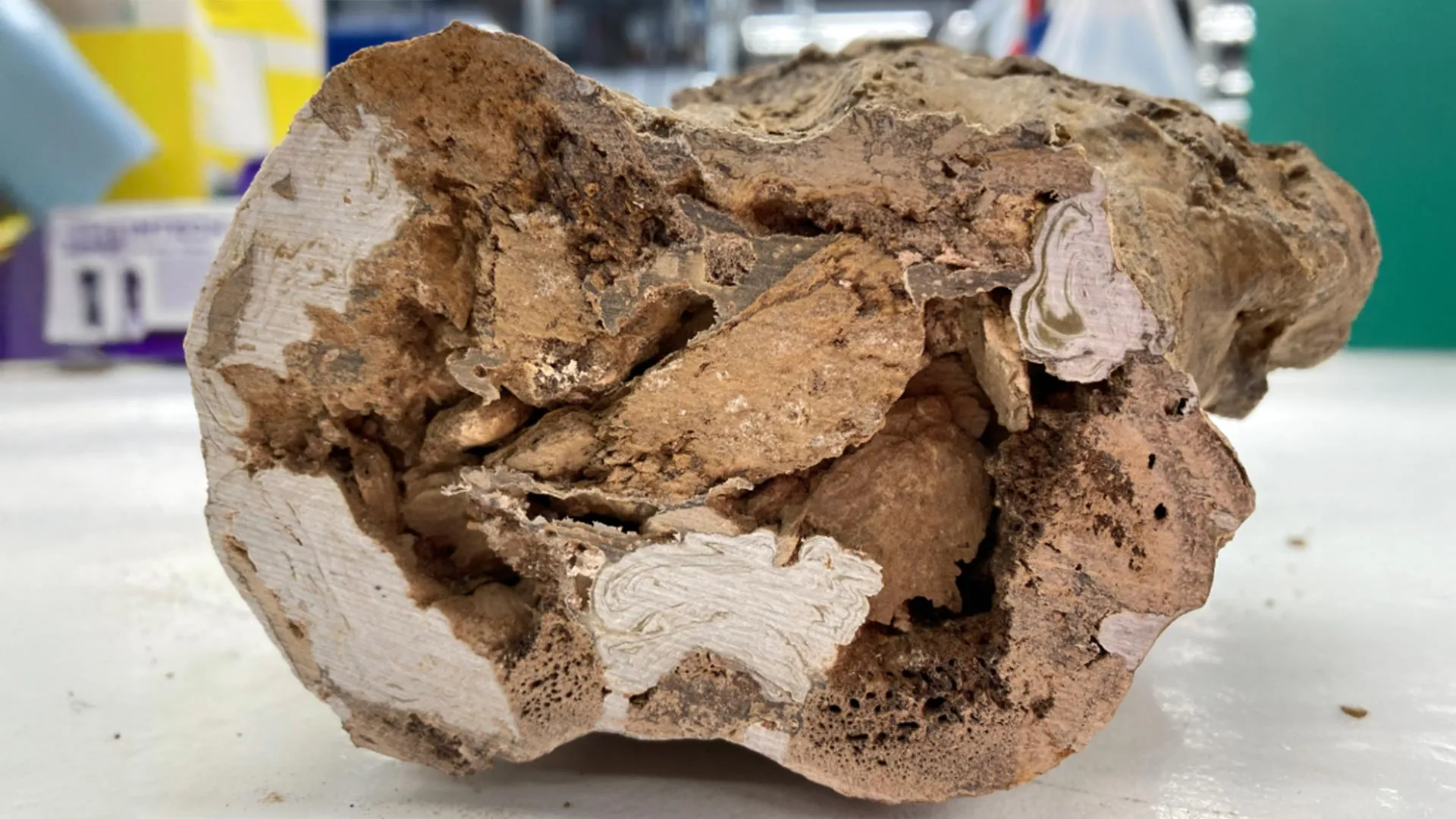
    However, recent research by the University of Liverpool challenges this long-held idea. Using advanced techniques like protein sequencing and mass spectrometry, scientists found traces of collagen in a 66-million-year-old dinosaur bone. The fossil, a hip bone from Edmontosaurus, was well preserved and came from the famous Hell Creek Formation in South Dakota. These findings suggest that some original organic molecules can survive beyond what many experts previously thought. This breakthrough could open new doors for studying ancient life and understanding how fossils retain biological clues from millions of years ago.

    Implications for Science and Future Discoveries

    The discovery of preserved collagen in such old fossils has important implications. It answers ongoing questions about whether organic molecules found in fossils could be contamination. The new evidence shows that at least some of these molecules are genuine parts of the original bone. This challenges skeptics and encourages scientists to rethink fossil analysis methods.

    Furthermore, the findings could enable researchers to revisit decades-old fossil images made with specialized microscopy. Cross-polarized light images may contain hidden patches of preserved collagen. Recognizing these areas could help identify promising fossils for molecular analysis. This approach might reveal new details about dinosaur relationships and evolution, which traditional methods cannot provide.

    The survival of proteins over millions of years remains a scientific puzzle. Proteins tend to break down over time, especially in such ancient fossils. The results prompt new questions: How do some molecules persist? What conditions allow their preservation? These questions will guide future research to understand the chemistry and biology of fossilization better.

    Different research teams collaborated to confirm these findings. They used multiple methods, including detecting hydroxyproline, an amino acid specific to collagen, and sequencing collagen fragments. Their combined efforts strengthen the case that original biological molecules can survive in fossils far longer than imagined. This research stands to transform paleontology by offering molecular insights into the past, revealing secrets once thought impossible to recover.

    Continue Your Tech Journey

    Explore the future of technology with our detailed insights on Artificial Intelligence.

    Access comprehensive resources on technology by visiting Wikipedia.

    TechV1

    Innovation Management Tech technology VT1
    Share. Facebook Twitter Pinterest LinkedIn Tumblr Email
    Previous ArticleScientists Melted Diamond—Results Surprised Everyone
    Next Article Why Your Brain Repeats the Same Choices—Even When Better Options Are There
    Avatar photo
    Lina Johnson Mercilli
    • Website

    Lina Johnson Marcelli is the editor for IO Tribune, bringing over two decades of experience in journalism to her role. With a BA in Journalism, she is passionate about delivering impactful stories that resonate with readers. Known for her keen editorial vision and leadership, Lina is dedicated to fostering innovative storytelling across the publication. Outside of work, she enjoys exploring new media trends and mentoring aspiring journalists.

    Related Posts

    AI

    Unveiling Anthropic’s J-Space: A Mathematical Breakdown

    September 13, 2026
    Science

    Morning Meals Burn 44% More Calories Than Night

    September 13, 2026
    AI

    The 95% Illusion: Rethink Confidence Intervals

    September 13, 2026
    Add A Comment

    Comments are closed.

    Must Read

    Unveiling Anthropic’s J-Space: A Mathematical Breakdown

    September 13, 2026

    Morning Meals Burn 44% More Calories Than Night

    September 13, 2026

    The 95% Illusion: Rethink Confidence Intervals

    September 13, 2026

    US and China Race to Develop Self-Improving AI: High Stakes Ahead

    September 13, 2026

    Revolutionary Bone Marrow-on-a-Chip Reveals Immune Cell Secrets

    September 13, 2026
    Categories
    • AI
    • Crypto
    • Fashion Tech
    • Gadgets
    • IOT
    • OPED
    • Quantum
    • Science
    • Smart Cities
    • Space
    • Tech
    Most Popular

    Get Ready: Apple’s Foldable iPhone Set for September Launch!

    April 7, 2026

    Is Your IoT System Ready for Scale?

    June 18, 2026

    Revolutionizing Energy: Massive Data Center Runs on Used EV Batteries

    June 27, 2025
    Our Picks

    Bitcoin BCMI Hits Historic Low—Is a Major Reversal on the Horizon?

    April 17, 2026

    From Doodles to Masterpieces: Helping AI Sketch Like a Human Artist | MIT News!

    June 2, 2025

    Securing Wireless Communication in Next-Gen Devices

    August 20, 2026
    Categories
    • AI
    • Crypto
    • Fashion Tech
    • Gadgets
    • IOT
    • OPED
    • Quantum
    • Science
    • Smart Cities
    • Space
    • Tech
    • Privacy Policy
    • Disclaimer
    • Terms and Conditions
    • About Us
    • Contact us
    Copyright © 2025 Iotribune.comAll Rights Reserved.

    Type above and press Enter to search. Press Esc to cancel.