

Summary Points
- Artemis II captivated millions with its historic 10-day lunar mission.
- NASA tested laser communications, transmitting data more efficiently than radio systems.
- The optical terminal enabled high-definition imagery, enhancing science and crew support.
- Successful data transfer sets the stage for future missions to Mars.
NASA Laser Terminal Enhances Views During Artemis II Mission
Millions of people watched the historic launch of Artemis II and followed its 10-day journey around the Moon. NASA astronauts Reid Wiseman, Victor Glover, Christina Koch, and Canadian Space Agency astronaut Jeremy Hansen ventured farther into space than any humans before. A significant upgrade in technology made this experience more vivid: laser communications.
Advancements in Optical Communications
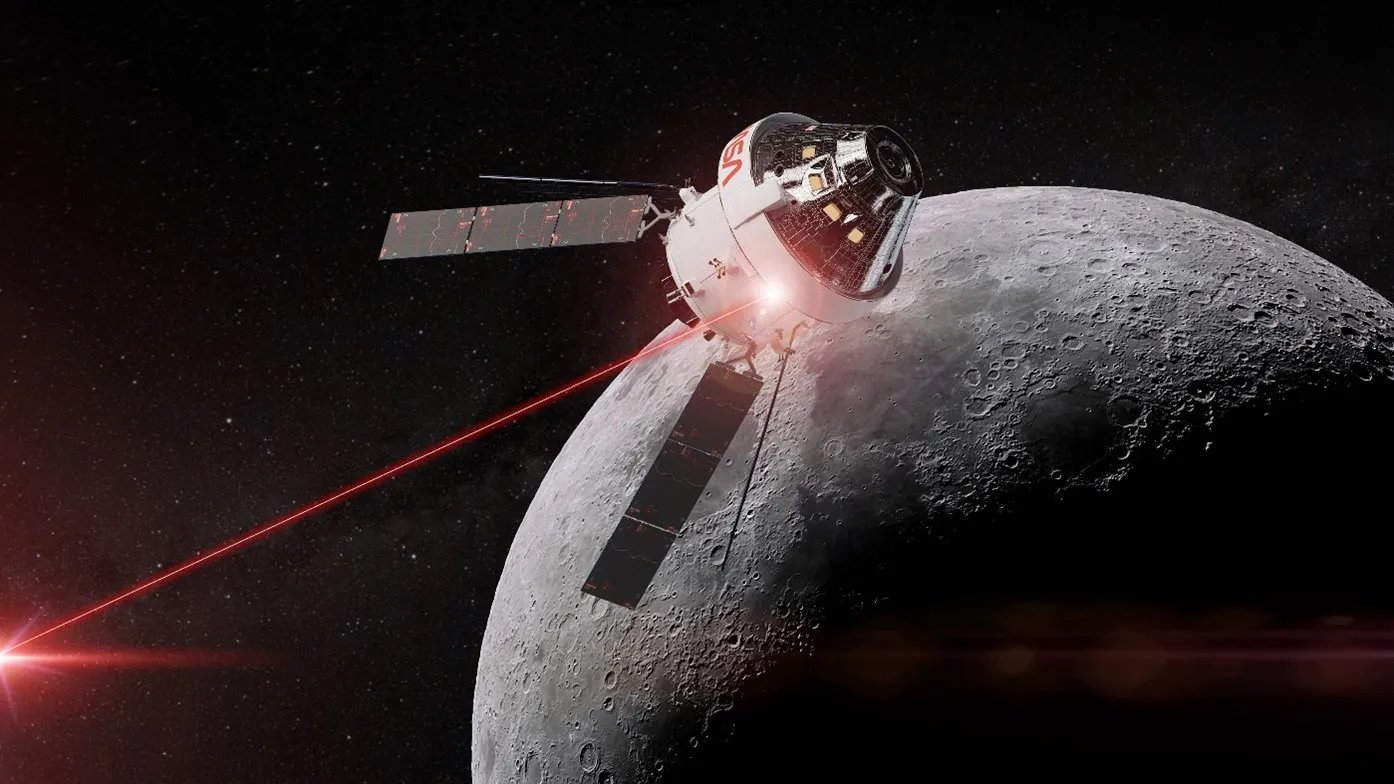
Laser, or optical, communications systems use invisible infrared light to send data. This method allows for higher data transmission rates compared to traditional radio frequency systems. During Artemis II, NASA tested an optical communications system designed to showcase the advantages of laser technology for future deep-space missions.
The optical terminal, mounted on the Orion spacecraft, marked the first instance where laser communications supported a crewed lunar mission. It transmitted high-definition video, flight procedures, photos, and both engineering and science data back to Earth via laser signals, provided there was a clear line of sight with ground stations.
Dr. Kelsey Young, the Artemis II lunar science lead, emphasized the impact of this technology. “Access to high-resolution imagery and scientific data during critical mission phases is a game changer,” she stated. The ability to acquire faster insights supports better decision-making for the crew engaged in lunar science exploration.
Throughout its journey, the laser communication system transferred 484 gigabytes of data—akin to downloading about 100 high-definition movies. The remarkable clarity of images, such as Earthset and Earthrise, showcased the full capabilities of the optical system. The terminal also facilitated vital communications with the crew aboard Orion.
Ground Station Collaborations
NASA relied primarily on its Near Space Network and Deep Space Network for traditional radio frequency communications. However, these systems are limited to low data rates at lunar distances. In contrast, the optical system achieved downlink speeds of 260 megabits per second, exceeding many initial objectives.
Key ground stations, including those at NASA’s Jet Propulsion Laboratory in Southern California and the White Sands Complex in New Mexico, played a crucial role. These locations were chosen for their ideal conditions, ensuring strong communication links with Orion. Notably, a collaboration with the Australian National University allowed for dual-stream video for over 15.5 hours, contributing to NASA’s “Live Views from Orion.”
This international partnership achieved rates of 260 megabits per second, proving that off-the-shelf components can be effectively used to develop optical ground stations more efficiently. Greg Heckler, SCaN’s deputy program manager for capability development, highlighted the importance of such improvements. “Space communications isn’t just about moving bytes; it’s about delivering the images and voices that bring a mission to life,” he said.
The successful use of laser communications during Artemis II marks a significant leap forward. As NASA prepares for increasingly complex missions to the Moon, this technology could pave the way for future crewed missions to Mars. Enhanced communications will not only support astronauts but also engage the public, making space exploration a collective experience.
Discover More Technology Insights
Dive deeper into the world of Cryptocurrency and its impact on global finance.
Access comprehensive resources on technology by visiting Wikipedia.
Space
