
Close Menu
    Facebook X (Twitter) Instagram
    Wednesday, July 22
    Top Stories:
    • UCLA Scientists Create Clear Mineral Sunscreen
    • Restoring Sleep: A Breakthrough in Alzheimer’s Research
    • Snap’s Settlement: Tackling Social Media Addiction
    Facebook X (Twitter) Instagram Pinterest Vimeo
    IO Tribune
    • Home
    • AI
    • Tech
      • Gadgets
      • Fashion Tech
    • Crypto
    • Smart Cities
      • IOT
    • Science
      • Space
      • Quantum
    • OPED
    IO Tribune
    Home » Unlocking Cosmic Journeys: The Future of Solar Sail Technology
    Space

    Unlocking Cosmic Journeys: The Future of Solar Sail Technology

    Staff ReporterBy Staff ReporterJuly 22, 2026No Comments3 Mins Read
    Share Facebook Twitter Pinterest LinkedIn Tumblr Reddit Telegram Email
    Share
    Facebook Twitter LinkedIn Pinterest Email

    Fast Facts

    1. New solar sail program aims for high accelerations up to 2 mm/s².
    2. Proposed sails could revolutionize missions beyond current propulsion capabilities.
    3. Innovative design eliminates complex membrane unfolding during deployment.
    4. Phase I focuses on testing prototypes for solar-stationary observation missions.

    Revolutionizing Solar Sail Technology

    The quest for efficient space propulsion has reached new heights with the introduction of coilable stacked solar sails. These sails promise an unprecedented characteristic acceleration of up to 2 mm/s² and effective areas exceeding 10,000 m². Such advancements could reshape the future of space exploration, enabling missions that were once unthinkable with chemical and electric propulsion systems.

    Current solar sails face significant hurdles. The primary challenge lies in achieving high characteristic acceleration, which has been a longstanding goal. As sail size increases, so does the complexity of their deployment mechanisms. Unfolding large sail membranes during launch remains a formidable obstacle. The innovative design of coilable stacked solar sails aims to tackle this issue head-on, eliminating the need for complex unfolding processes.

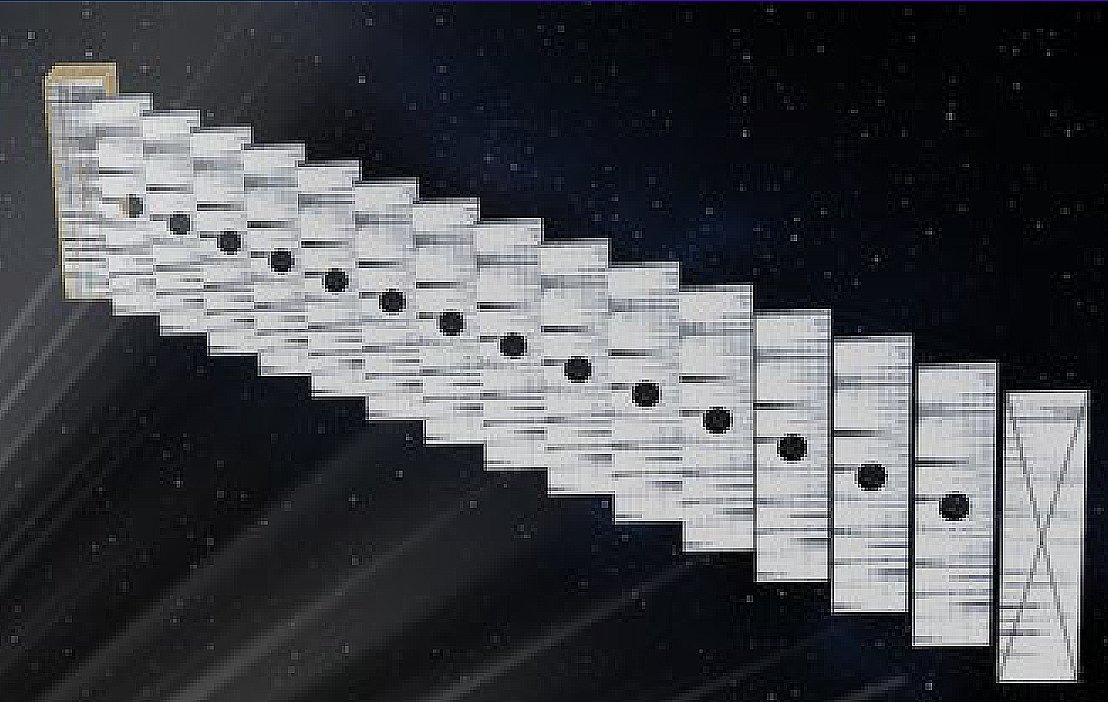
    The key to this new architecture is a lightweight, coilable truss structure. This truss supports stacked sail membranes, each with an area ranging from 50 to 150 m². By using tensegrity engineering, the design maintains structural integrity without heavy rigid frames. In the deployed formation, the sail membranes create a “staircase” structure, efficiently capturing solar radiation. In its stowed state, the entire assembly remains compact, fitting within a guide container or “mothercraft,” which allows for controlled deployment.

    Applications and Potential Missions

    The implications of coilable stacked solar sails extend far beyond mere advancements in technology. Their capability to provide high acceleration opens up new possibilities for various scientific missions. Imagine Earth and Venus pole-sitter spacecraft or low-cost probes designed for fast transit to outer planets and even interstellar space.

    Solar-stationary observation missions can benefit significantly from this technology. Probes could be placed into halo orbits at 0.4 AU perihelion and 60° solar latitude, facilitating advanced imaging and data collection. This could lead to breakthroughs in our understanding of both terrestrial and extraterrestrial phenomena.

    However, the road to widespread adoption is not without its challenges. While the technology shows great promise, practical considerations remain. Ensuring reliability and performance in varying environmental conditions is crucial. The deployment mechanisms also need to be foolproof, emphasizing the importance of rigorous testing and validation.

    Overall, coilable stacked solar sails represent a transformative leap in spacecraft propulsion. As researchers continue to refine and test these sails, the potential for groundbreaking discoveries in space exploration continues to grow, inviting both excitement and caution as we embark on this new frontier.

    Stay Ahead with the Latest Tech Trends

    Learn how the Internet of Things (IoT) is transforming everyday life.

    Access comprehensive resources on technology by visiting Wikipedia.

    Space

    Cosmos NASA NASA Innovative Advanced Concepts (NIAC) Program NIAC Studies Research and Technology Mission Directorate Space technology VT1
    Share. Facebook Twitter Pinterest LinkedIn Tumblr Email
    Previous ArticleUCLA Scientists Create Clear Mineral Sunscreen
    Avatar photo
    Staff Reporter
    • Website

    John Marcelli is a staff writer for IO Tribune, with a passion for exploring and writing about the ever-evolving world of technology. From emerging trends to in-depth reviews of the latest gadgets, John stays at the forefront of innovation, delivering engaging content that informs and inspires readers. When he's not writing, he enjoys experimenting with new tech tools and diving into the digital landscape.

    Related Posts

    Tech

    UCLA Scientists Create Clear Mineral Sunscreen

    July 22, 2026
    AI

    Ex-Intel CEO Sparks Moore’s Law Revival with Light

    July 22, 2026
    Fashion Tech

    Garmin Launches Screenless Cirqa Health Tracker This Week!

    July 22, 2026
    Add A Comment

    Comments are closed.

    Must Read

    Unlocking Cosmic Journeys: The Future of Solar Sail Technology

    July 22, 2026

    UCLA Scientists Create Clear Mineral Sunscreen

    July 22, 2026

    Ex-Intel CEO Sparks Moore’s Law Revival with Light

    July 22, 2026

    Garmin Launches Screenless Cirqa Health Tracker This Week!

    July 22, 2026

    Galaxy May Have Once Turned on Its Side

    July 22, 2026
    Categories
    • AI
    • Crypto
    • Fashion Tech
    • Gadgets
    • IOT
    • OPED
    • Quantum
    • Science
    • Smart Cities
    • Space
    • Tech
    Most Popular

    Ripple’s XRPL EVM Sidechain Launch Date Revealed!

    June 11, 2025

    BitMEX Study: Crypto Funding Rates Positive 92% of the Time, Exposing Market Bias

    October 14, 2025

    Meta’s Billion-Dollar Leap: Acquiring China’s Manus AI Start-Up

    December 30, 2025
    Our Picks

    Samsung Galaxy S26: Common Issues & Easy Fixes

    March 29, 2026

    Unlocking Savings: Standard Chartered’s Talent Marketplace Success

    August 6, 2025

    Nature Reimagined: Glow-in-the-Dark Plants That Recharge!

    October 5, 2025
    Categories
    • AI
    • Crypto
    • Fashion Tech
    • Gadgets
    • IOT
    • OPED
    • Quantum
    • Science
    • Smart Cities
    • Space
    • Tech
    • Privacy Policy
    • Disclaimer
    • Terms and Conditions
    • About Us
    • Contact us
    Copyright © 2025 Iotribune.comAll Rights Reserved.

    Type above and press Enter to search. Press Esc to cancel.