
Close Menu
    Facebook X (Twitter) Instagram
    Sunday, September 13
    Top Stories:
    • US and China Race to Develop Self-Improving AI: High Stakes Ahead
    • Revolutionary Bone Marrow-on-a-Chip Reveals Immune Cell Secrets
    • Empower AI Shopping with 10 Digital Wallets for Seamless Payments
    Facebook X (Twitter) Instagram Pinterest Vimeo
    IO Tribune
    • Home
    • AI
    • Tech
      • Gadgets
      • Fashion Tech
    • Crypto
    • Smart Cities
      • IOT
    • Science
      • Space
      • Quantum
    • OPED
    IO Tribune
    Home » Orion’s Lifeline: Securing Safety for Artemis II
    Space

    Orion’s Lifeline: Securing Safety for Artemis II

    Staff ReporterBy Staff ReporterSeptember 21, 2025No Comments2 Mins Read
    Share Facebook Twitter Pinterest LinkedIn Tumblr Reddit Telegram Email
    Share
    Facebook Twitter LinkedIn Pinterest Email

    Top Highlights

    1. Upcoming Launch: NASA’s Artemis II crewed mission is set for 2026, with final integration of the Orion spacecraft’s launch abort system underway.

    2. Safety Measures: The launch abort system features a 44-foot structure designed to ensure crew safety during emergencies by quickly detaching the crew module from the rocket.

    3. Engineering Details: The abort system comprises three solid rocket motors that work in unison to safely guide the crew module away from the launch vehicle in case of an emergency.

    4. Operational Efficiency: During a standard launch, the abort system will be discarded after the initial ascent phase, reducing Orion’s weight for the remainder of the mission.

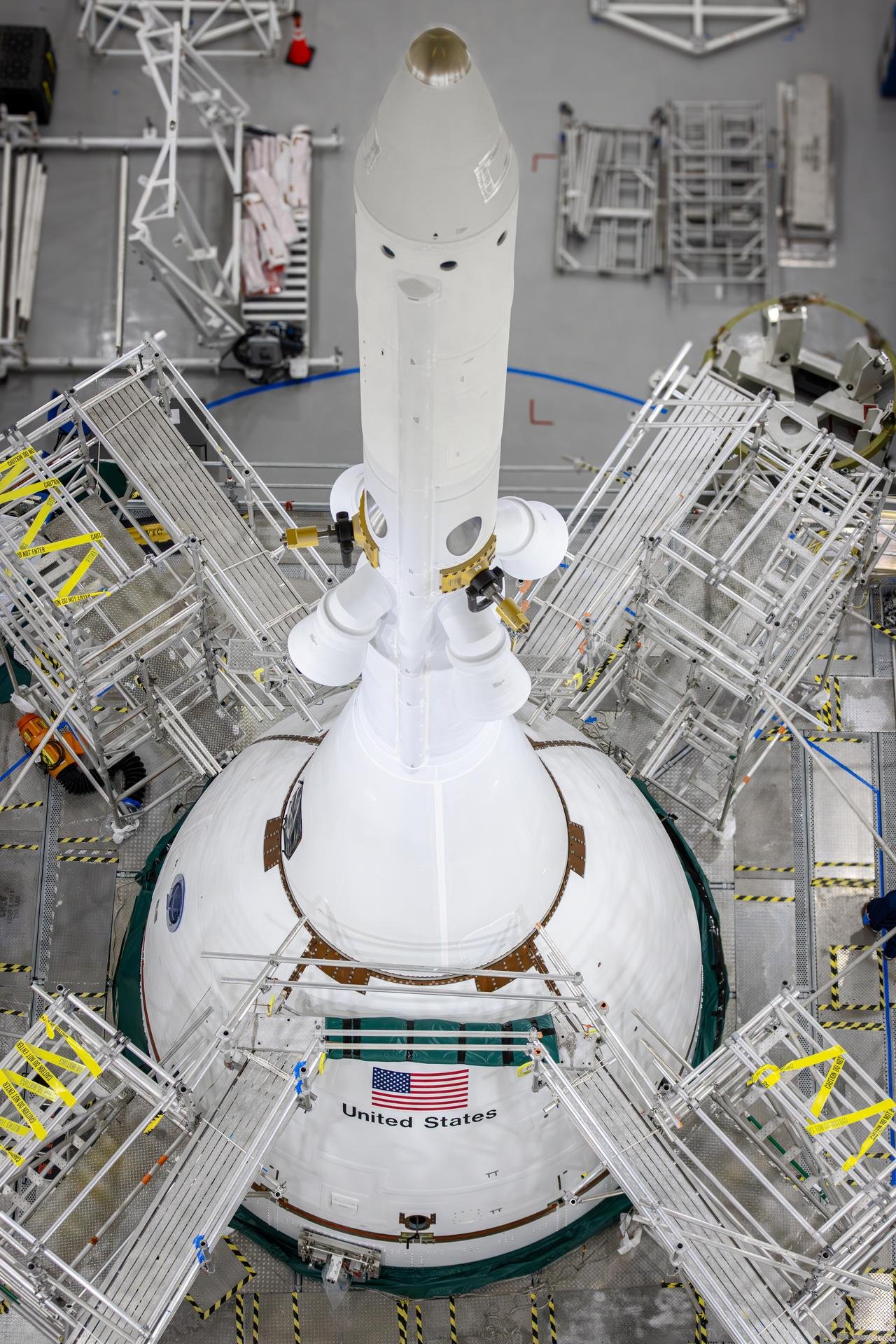
    NASA continues to make strides for the Artemis II mission, slated for 2026. Recently, the agency integrated critical hardware for the Orion spacecraft’s launch abort system. This integration took place on Sept. 17 at the Launch Abort System Facility in Florida.

    This 44-foot-tall structure stands as a vital part of the safety protocol. In a rare emergency, it will quickly carry the four-person crew to safety during launch or ascent atop the Space Launch System rocket. The abort system consists of three solid rocket motors designed to work in harmony. Specifically, the abort motor pulls the crew module away from danger. Next, the attitude control motor directs and stabilizes the capsule. Finally, the jettison motor separates the system from the crew module before parachute deployment.

    Over the upcoming weeks, teams will finalize crucial tasks. Following that, they will transfer the spacecraft to the Vehicle Assembly Building. Here, Orion will stack on top of the rocket, ready for its eventual journey to the launch pad. Once on the pad, this stacked configuration will take one step closer to the Moon.

    This advanced technology not only aims for lunar exploration but also elevates safety standards. With each development, astronauts gain more assurance during missions. Moreover, such innovations may lay the groundwork for future space travel, ultimately enhancing humanity’s understanding of the cosmos. Each step forward enriches the landscape of space exploration and inspires generations to come.

    Expand Your Tech Knowledge

    Stay informed on the revolutionary breakthroughs in Quantum Computing research.

    Discover archived knowledge and digital history on the Internet Archive.

    SciV1

    Artemis Artemis 2 Cosmos Exploration Ground Systems Kennedy Space Center NASA Orion Multi-Purpose Crew Vehicle Space VT1
    Share. Facebook Twitter Pinterest LinkedIn Tumblr Email
    Previous ArticleSolana Targets 15% Surge; Digitap’s Presale Rockets Towards $200K!
    Next Article Robotaxi Showdown: The Key Battlegrounds to Watch
    Avatar photo
    Staff Reporter
    • Website

    John Marcelli is a staff writer for IO Tribune, with a passion for exploring and writing about the ever-evolving world of technology. From emerging trends to in-depth reviews of the latest gadgets, John stays at the forefront of innovation, delivering engaging content that informs and inspires readers. When he's not writing, he enjoys experimenting with new tech tools and diving into the digital landscape.

    Related Posts

    Space

    Unlocking Space: NASA Accelerates Open Science & Data Sharing with Artemis Accords

    September 13, 2026
    AI

    When Should We Reevaluate Our Assumptions?

    September 13, 2026
    IOT

    Solve Networks Empowers Global IoT with eSIM Connectivity

    September 13, 2026
    Add A Comment

    Comments are closed.

    Must Read

    Unlocking Space: NASA Accelerates Open Science & Data Sharing with Artemis Accords

    September 13, 2026

    When Should We Reevaluate Our Assumptions?

    September 13, 2026

    Solve Networks Empowers Global IoT with eSIM Connectivity

    September 13, 2026

    Could We Fold Space to Travel Across the Universe? The Science Behind Warp Travel

    September 13, 2026

    Fix Android Auto Issues Easily With a Simple Update

    September 13, 2026
    Categories
    • AI
    • Crypto
    • Fashion Tech
    • Gadgets
    • IOT
    • OPED
    • Quantum
    • Science
    • Smart Cities
    • Space
    • Tech
    Most Popular

    Sky-High Connectivity: Starlink Brings In-Flight Wi-Fi to American Airlines

    May 26, 2026

    Unlocking Autism: Insights from CRISPR-Edited Stem Cells

    June 14, 2025

    Scientists Uncover the Century-Old Secret in Our Air

    February 9, 2026
    Our Picks

    Grab Your Anker Magnetic Power Bank — Up to 42% Off!

    September 12, 2025

    Unlocking growth: China chips drive DeepSeek V4’s rising demand

    May 4, 2026

    Covert Dock 3: Unleashing Power for Switch 2 & ROG Xbox Ally

    September 24, 2025
    Categories
    • AI
    • Crypto
    • Fashion Tech
    • Gadgets
    • IOT
    • OPED
    • Quantum
    • Science
    • Smart Cities
    • Space
    • Tech
    • Privacy Policy
    • Disclaimer
    • Terms and Conditions
    • About Us
    • Contact us
    Copyright © 2025 Iotribune.comAll Rights Reserved.

    Type above and press Enter to search. Press Esc to cancel.